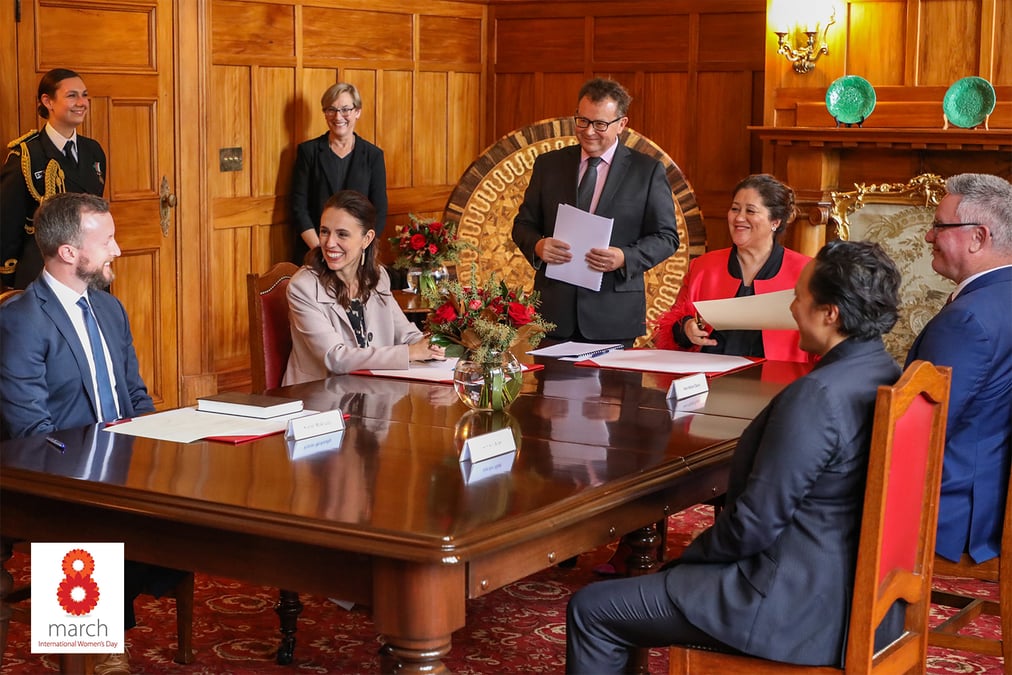
I was a new mother trying to protect my young family from Covid in 2020, and that was when I first noticed Jacinda Ardern’s leadership. Our own prime minister was spreading misinformation about the strong immune system of Nepalis and our herbal concoctions being antidotes.
Later in 2024, Ardern showed up after the mass shooting at mosques in New Zealand with tears in her eyes, and the strong message: “They are us.” It was refreshing to see such empathetic leadership, especially as political news was dominated by elected authoritarians, while Nepal was held hostage by repeat prime ministers.
Ardern’s book A Different Kind of Leadership should be essential reading for all Nepalis with political aspirations, especially the new generation that wants real change. The theme that repeats throughout the book is to be human before becoming a politician.
The book is not just about Ardern showing up for her people as one of them, it is also about why she decided to show up the way she did, and what brought her to politics to begin with — resolve, a little bit of luck, and stepping up when she had to.
Political ambition is not a bad thing. But stepping up to lead when the situation demands it, and knowing when it is time to leave, is what makes a leader. Ardern was given the opportunity to become her party’s deputy leader at a relatively young age, and her party leader resigned — two events uncommon in Nepali politics.
Ardern mentions multiple times not thinking of herself as politician material because she has a thin skin, and she talks equally often of her feelings of being intimidated in political spaces, up until she accepted the position of party leader.
But she was accountable at a time when we in Nepal were getting used to non-reactions and non-answers from the loud, confident men who played with power.
Somehow, somewhere, not least because of the malestream ideas we have been fed about politics and politicians, we imagine that leadership should look a certain way. Strong, macho, loud, confident or even better, overconfident. We imagine that empathetic leadership is soft, is scared to make people angry, is ineffective.
LOOKING AFTER PEOPLE
Ardern’s leadership was effective. New Zealand had less Covid fatalities than most developed countries, and it went in and out of lockdown with relative ease. Ardern’s approval ratings were high at a very unstable time in politics globally.
A significant portion of the chapters that talk about Ardern’s time in office also delve into her struggles being a working mother. But she does not consider herself a supermom who did it all. She portrays herself as simply a working mom, one with lots of support, and discusses how common it is for parents, especially mothers, to juggle work and family. She comes across as one of us.
There is a section in the book where Ardern’s daughter asks her the question she has been dreading, and which many of us working moms also face, “Mummy, why do you have to work so much?” Ardern explains that she has a “very important job” and explains it to her three-and-half-year-old as “looking after people”.
I put down the book when I reached that sentence. I want the next prime minister of my country to read this book, and then lead. I want the next prime minister of Nepal to think that he (all the top contenders for the job are men, page 9) is looking after people, making sure no Nepali child is undernourished, that people can make a living without risking their lives, hearing the concerns of citizens and solving them.
I want him to lead like a woman, like Sushila Karki has been leading for the last six months, with quiet determination and integrity, and without fanfare. I want him to remember that leadership is just service, and that, like Maya Angelou wrote, ‘Your legacy is what you do every day.’ It is not loud speeches and the making of some imagined, glorified history.
Karki was picked to lead us back during the black days of early September when the country was in flames. The very first video of her on 9 September, the day after young people and students had been shot by the government that was meant to protect them shows her angry and emotional, her voice shaking.
It was Karki’s actions in those days of fragility that showed us, once again, that the leader we deserve gets emotional on our behalf, but also knows how to do the work.
After five years of leading her country through a global pandemic, Ardern realised that she is exhausted, that she does not have enough in her anymore to keep leading New Zealand, and she steps down.
Towards the end of the book, Ardern tells readers like herself, sensitive and self-doubting, that if we want to be leaders, we should channel our anxieties and sensitivities to humble ourselves, to read more and seek out advice, and prepare ourselves for the challenges.
Nepal’s next prime minister has to have these qualities: humility, teamwork, diligence and accountability. Good intention, ambition, university degrees, professional achievements are not enough to change the country’s trajectory.
And when they have completed the task, or when they know they cannot do it they must have the courage to step down like Jacinda Ardern.