
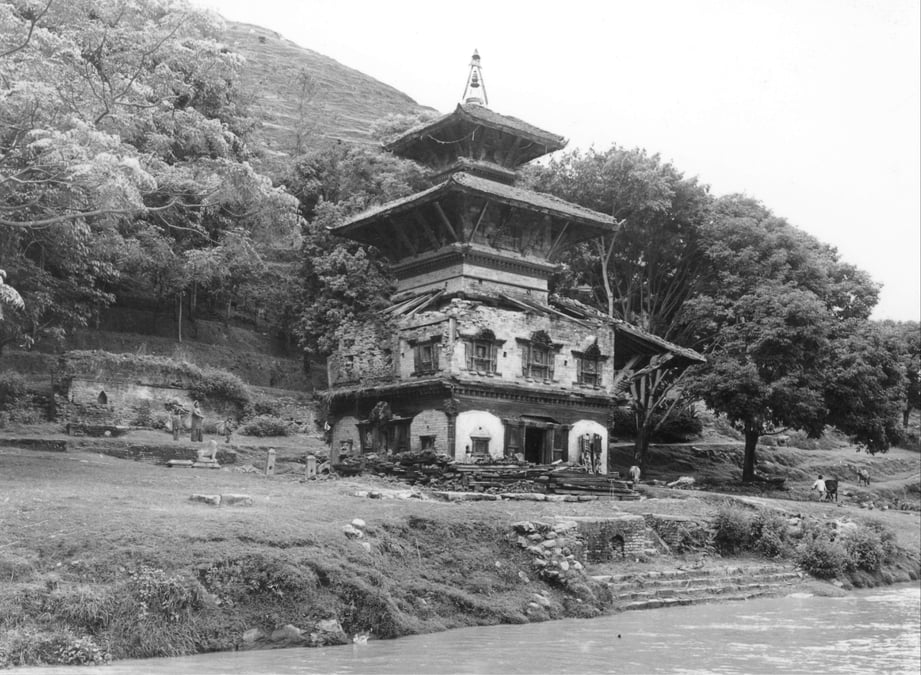
One of the few Newa towns situated outside Kathmandu Valley, Panauti still evokes the feeling of a place frozen in time.
Largely untouched by haphazard urbanisation, this town 32km east of Kathmandu used to be a kingdom revered for the sacred confluence of the Punyamati and Rosi rivers.
The Bramhayani temple is the site of a 12 yearly Makar Mela which is attended by devotees from as far away as India.
Panauti’s crumbling monuments were restored in the 1990s by the French government. Temples, resting places, traditional homes were rebuilt and locals trained to revive their craft. Panauti and France marked 50 years of cooperation in September.
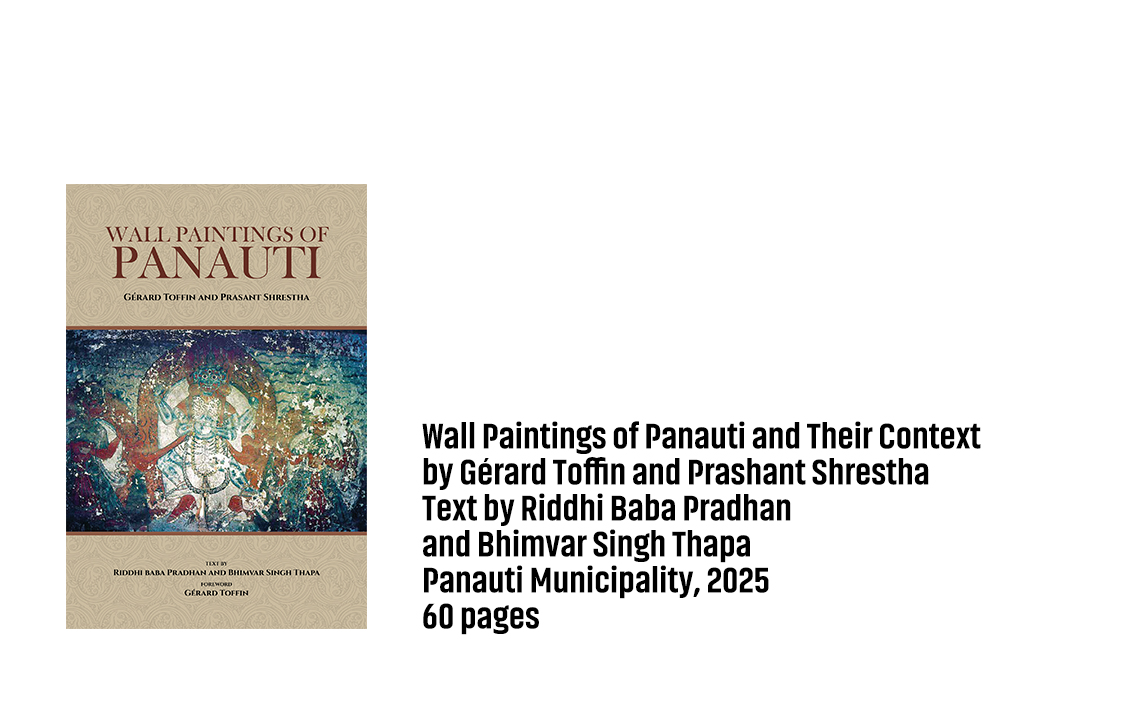
However, the priceless murals on the temple walls are fading and need urgent restitution. Now, these crumbling wall paintings are meticulously documented in the Wall Paintings of Panauti and Their Context.
In his foreword, French researcher Gérard Toffin writes about some of the earliest wall paintings from the Malla period in Kathmandu, including a 17th century mural depicting the procession of Rato Machhindranath which has since been restored.
Several other pieces still exist but in a pitiful state, defaced by scratches. ‘They were painted on a plaster coating made of soil, husks, or limestone, which were applied to the bricks making up the walls,’ Toffin notes.
The book delves into the cult of Asta Matrika among Newa of all castes and classes, the first of which is Bramhayani. These all-pervading deities are linked to Shaktism which focuses on the importance of the female principle and together, combine the forces of life, sex and fertility with that of death and eros. The deities are painted on the wall, carved on the stone or moulded into metallic statues.
Riddhi Baba Pradhan, former director general of the Department of Archaeology who oversaw the restoration of Panauti 30 years ago, writes that a colourful wall painting depicting Buddha's past life at the Chabahil Chaitya built or restored during the reign of Lichhavi king Vrisdev in the 3rd century might be the earliest mural in Nepal.
As for Panauti, a fragment from a 400-year-old scroll which illustrates a scene of Triveni Ghat with Dalinchok Hill in the background is likely the oldest. But that relic is currently at the Virginia Museum of Fine Arts in the United States.
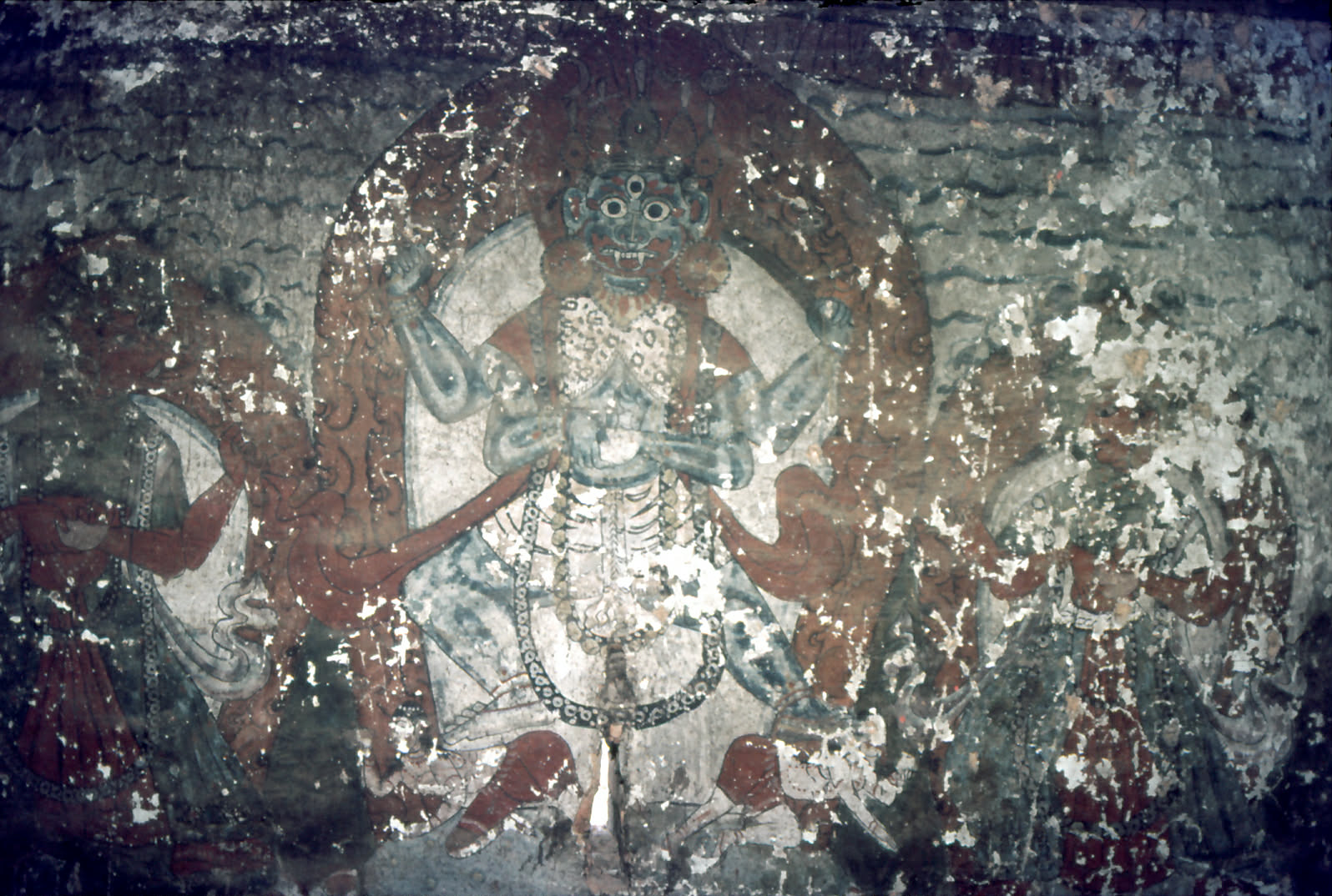
Pradhan recalls first encountering wall paintings inside Bramhayani temple which were deteriorated by smoke, leaky roof, dust, vermilion, sprinkles of animal blood and lack of maintenance. The team led by chemist Bhimvar Singh Thapa treated the wall paintings and some of the details were recovered including the paintings of Astamatrika and Asta Bhairav on the east, west and southern walls.
PAINTINGS ARE NOT VISIBLE
The murals were painted during the reign of the last Malla King of Bhaktapur Ranjit Malla and Queen Viswalaxmi Devi 300 years ago. But 40 years after the restoration, Pradhan notes that the murals are again in poor condition: ‘The paintings are not visible, the plaster is severely damaged and the surface has peeled off … electrical wires hang haphazardly inside the temple.’
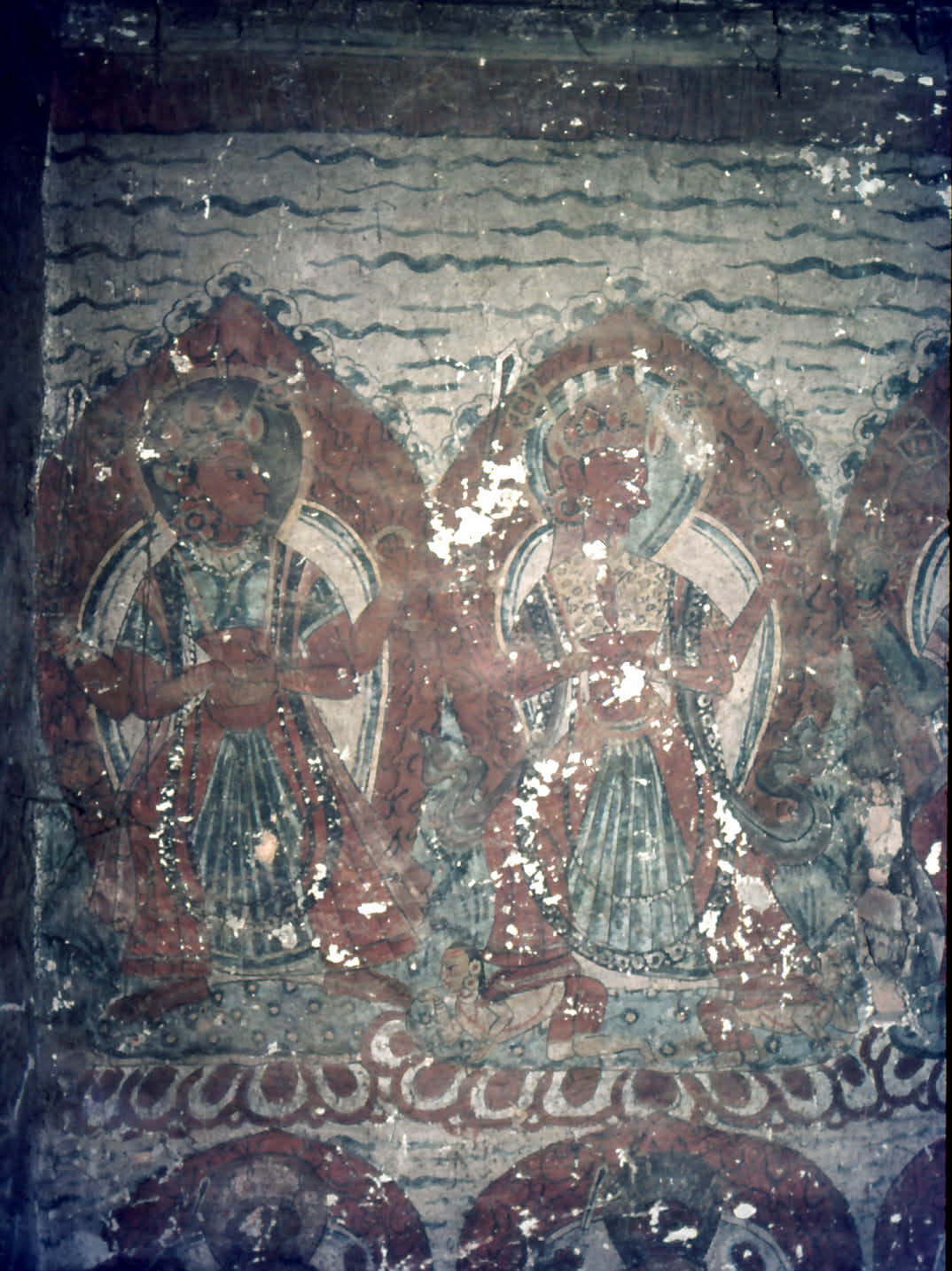
The second lot of murals at Ghat Sattal are thought to have been commissioned during the late Malla period or the beginning of the Shah dynasty. Exterior walls depict incarnations of Lord Vishnu as well as Sesh Narayan, Ganesh, a scene of Samundra Manthan, of angels Maya, Moha, Ganga. Their attributes, dresses, ornaments, facial expressions, body postures are all skilfully represented but in a deteriorated condition.
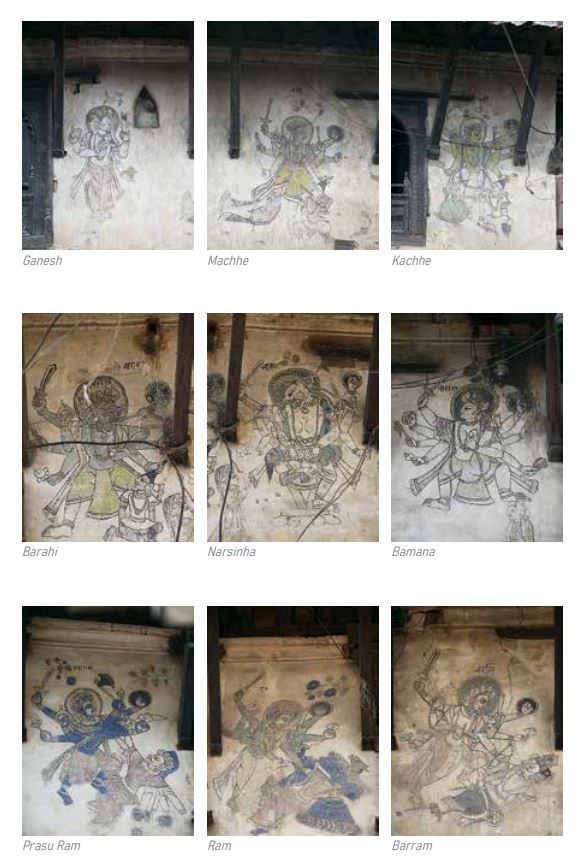
The wall paintings of Bramhayani Dyochhen are 90% degraded even though they were restored and repaired 40 years ago by the Panauti Integrated Project. Compared to other artefacts, wall paintings are more delicate to external factors, and if not preserved an important part of Nepal’s heritage will be lost.
Furthermore, most of the wall paintings in Nepal are temperas, and not frescos. Tempera is painted with water-soluble mineral or vegetable pigments fixed with glue on the cow dung clay plaster on the brick walls.
While Nepal’s focus has been on the repatriation of stolen artefacts from abroad, religious and cultural objects within the country like the Panauti murals need urgent attention.
This slim publication by Panauti Municipality is an important call to begin the work before it is too late.