Four Nepali and four Dutch artists will feature in a project to draw attention to what has been lost as Kathmandu Valley is transformed from an integrated rural-urban society to a metropolis of 4 million people.
The transition has happened just in the last 30 years with the growth accelerating after the start of the 10-year conflict in 1996. What was once an emerald valley has turned into a concrete jungle.
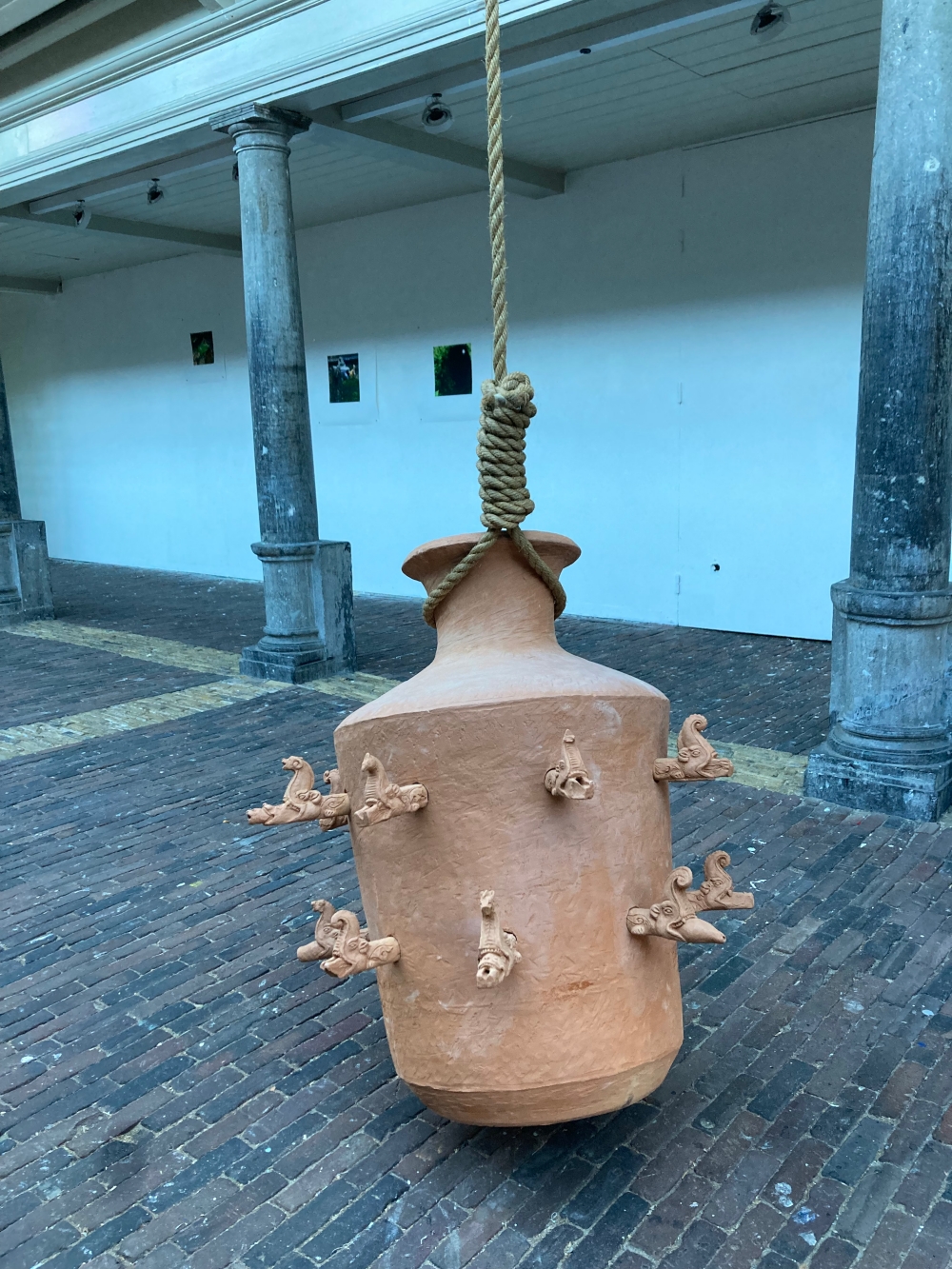
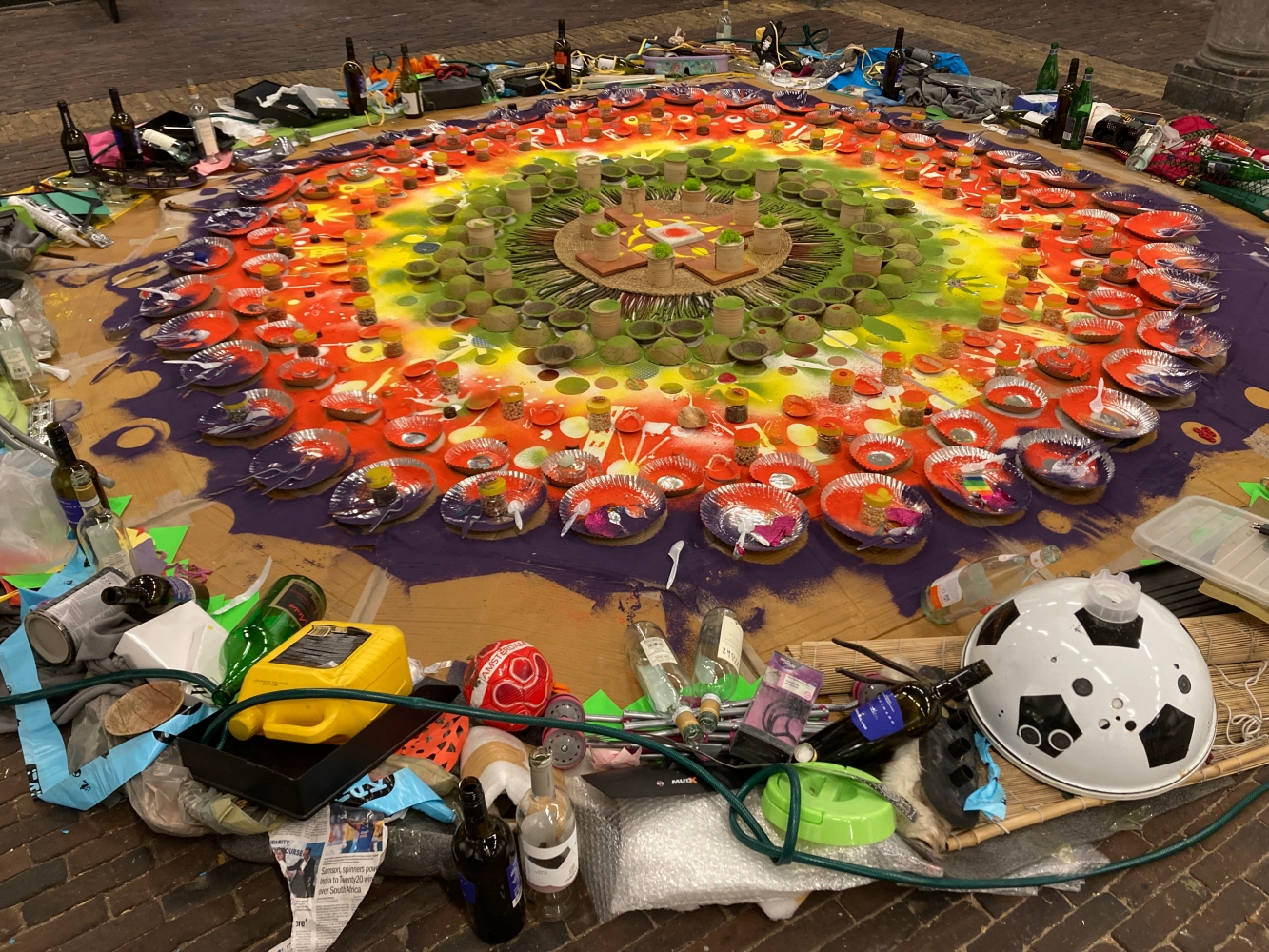
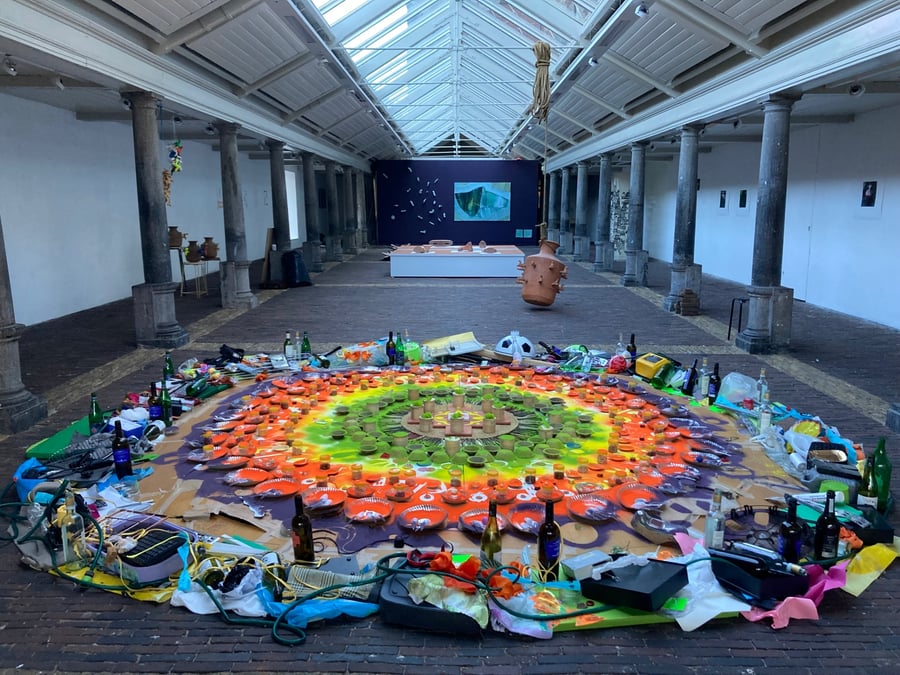
The NEDNEP3 2024/2026 art project of the eight artists will unfold in two phases with a current show till 5 January in the Netherlands, and during the Kathmandu Triennale in February 2026. The ongoing exhibition is in the northern Dutch city of Haarlem at De Vishal, a popular hub of contemporary art.
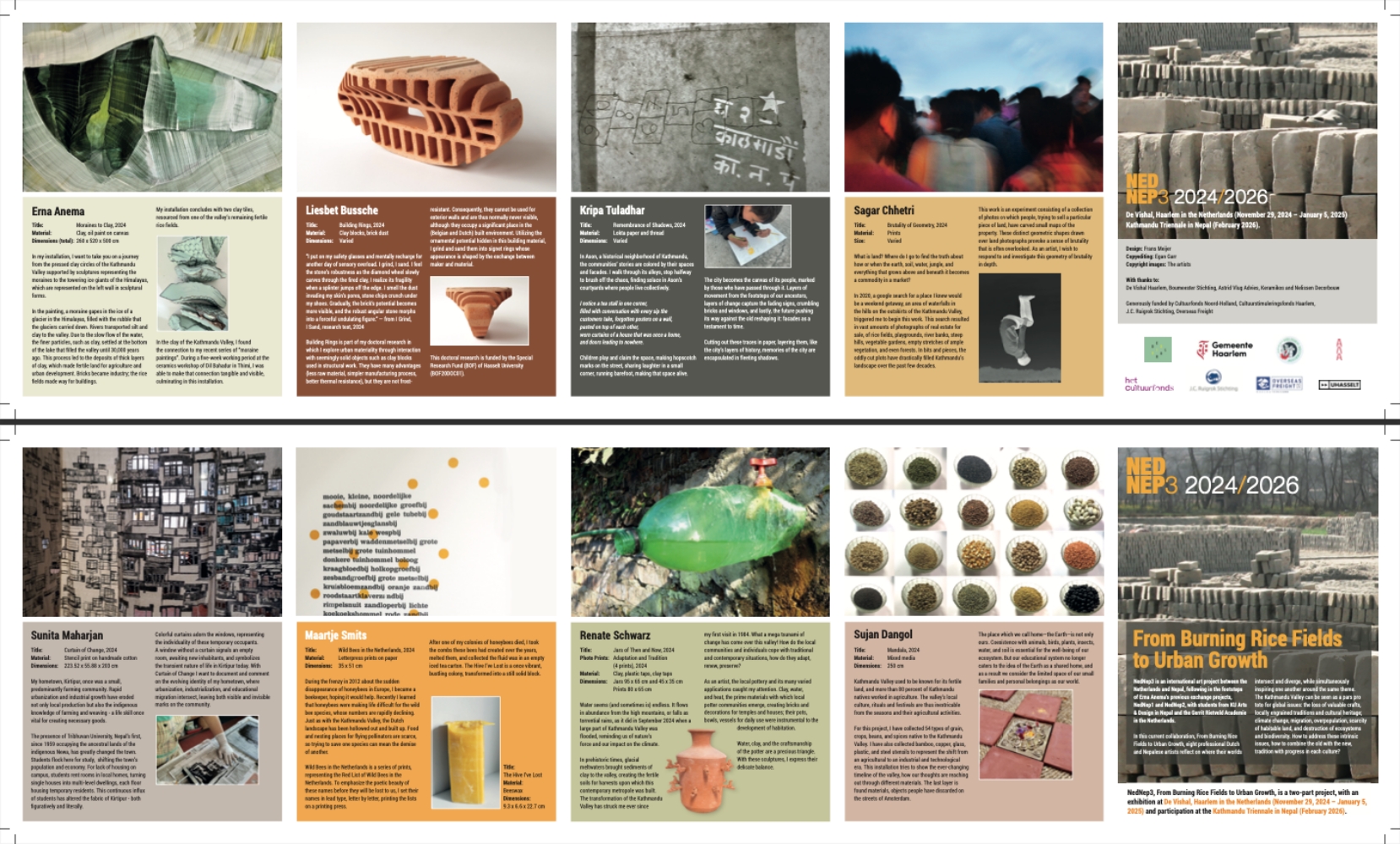
The exhibition is curated by Dutch artists Erna Anema and Renate Schwarz, who have been frequent visitors to Nepal and they have selected the works of four Nepali artists (Sujan Dangol, Kripa Tuladhar, Sunita Maharjan and Sagar Chhetri) along with artists Maartje Smits and Liesbet Bussche and themselves from The Netherlands.
Anema and Schwarz spent five weeks at the ceramics workshop of Dil Bahadur Prajapati in Thimi, making their ceramic sculptures for this project and meeting Nepali artists and planning their collaboration.
Sujan Dangol was in The Netherlands during the preparations and the grand opening of the exhibition at De Vishal in Haarlem. He also conducted workshops there and at the renowned Rietveld Academy in Amsterdam.
Erna Anema’s work is titled Moraines to Clay and uses clay, oil on canvas in a large installation. She says, “I want to take you on a journey from the pressed clay circles of the Kathmandu Valley supported by sculptures representing the moraines to the towering ice giants of the Himalayas, which are represented on the left wall in sculptural forms.”
Anema’s installation includes two clay tiles sourced from one of the valley’s remaining fertile rice fields.
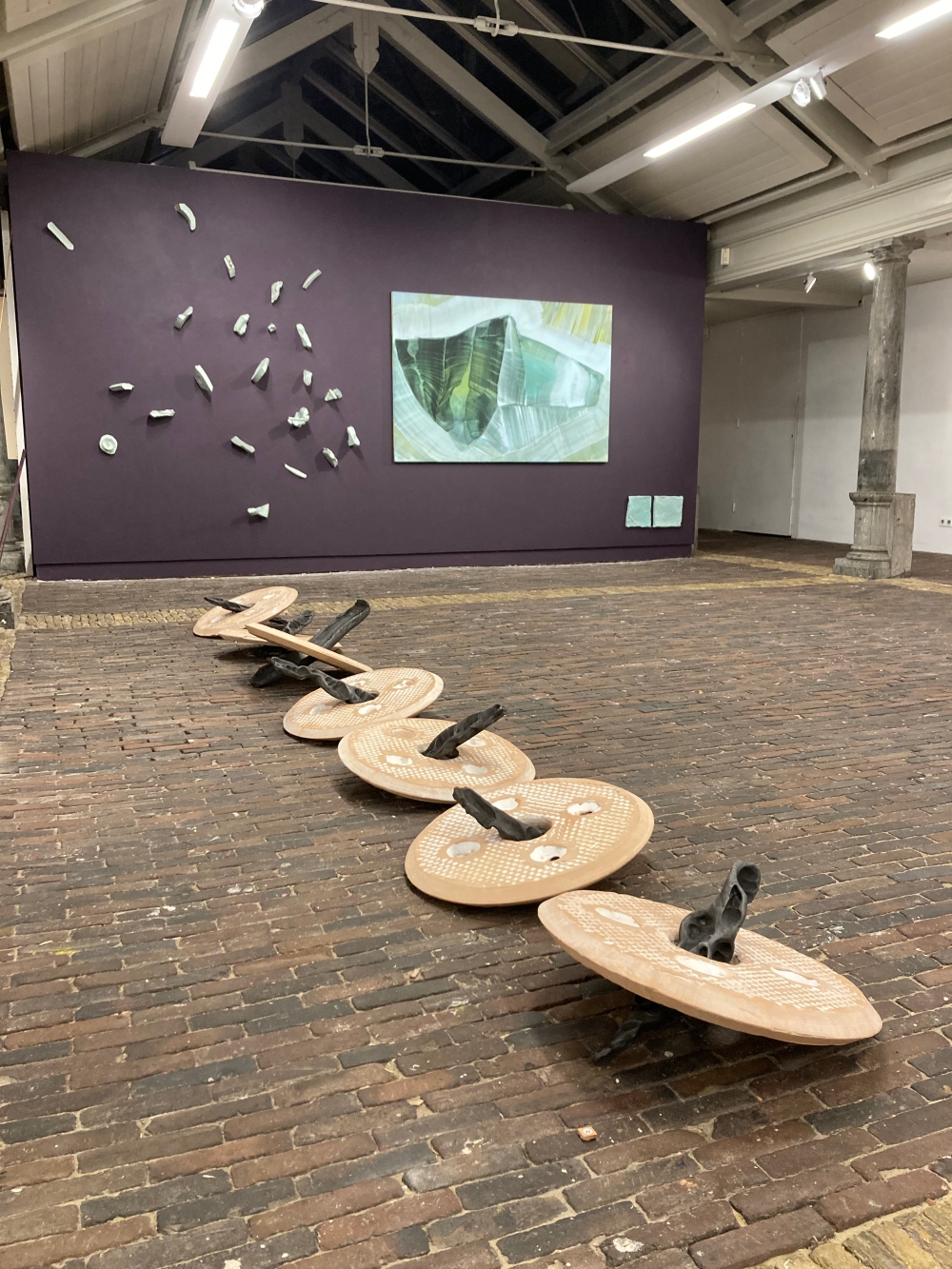
Liesbet Bussche’s Building Rings are grinded and sanded out of clay blocks, a light building material often used in quick expanding areas of the city. The installation of the carved rings is combined with brick dust and explores urban materiality from a makers perspective. Liesbet’s first project with clay was realised with Pukar Risal in 2008 in the streets of Kathmandu during NEDNEP 1.
Kripa Tuladhar’s Remembrance of Shadows is made of traditional lokta paper and thread and evokes the Asan neighbourhood, which she says becomes a canvas of its people, marked by those who have passed through it. “Layers of movement from the footsteps of our ancestors, crumbling bricks and windows, and the future pushing its way against the old reshaping it,” she adds, “cutting out these traces in paper, layering them, like the city’s layers of history, memories of the city are encapsulated in fleeting shadows.”