
Rise and fall of the Hetauda-Kathmandu ropeway
The cargo transportation system was decades ahead of its time, but was a victim of mismanagement
Dan EdwardsMultimedia, Longread
1955
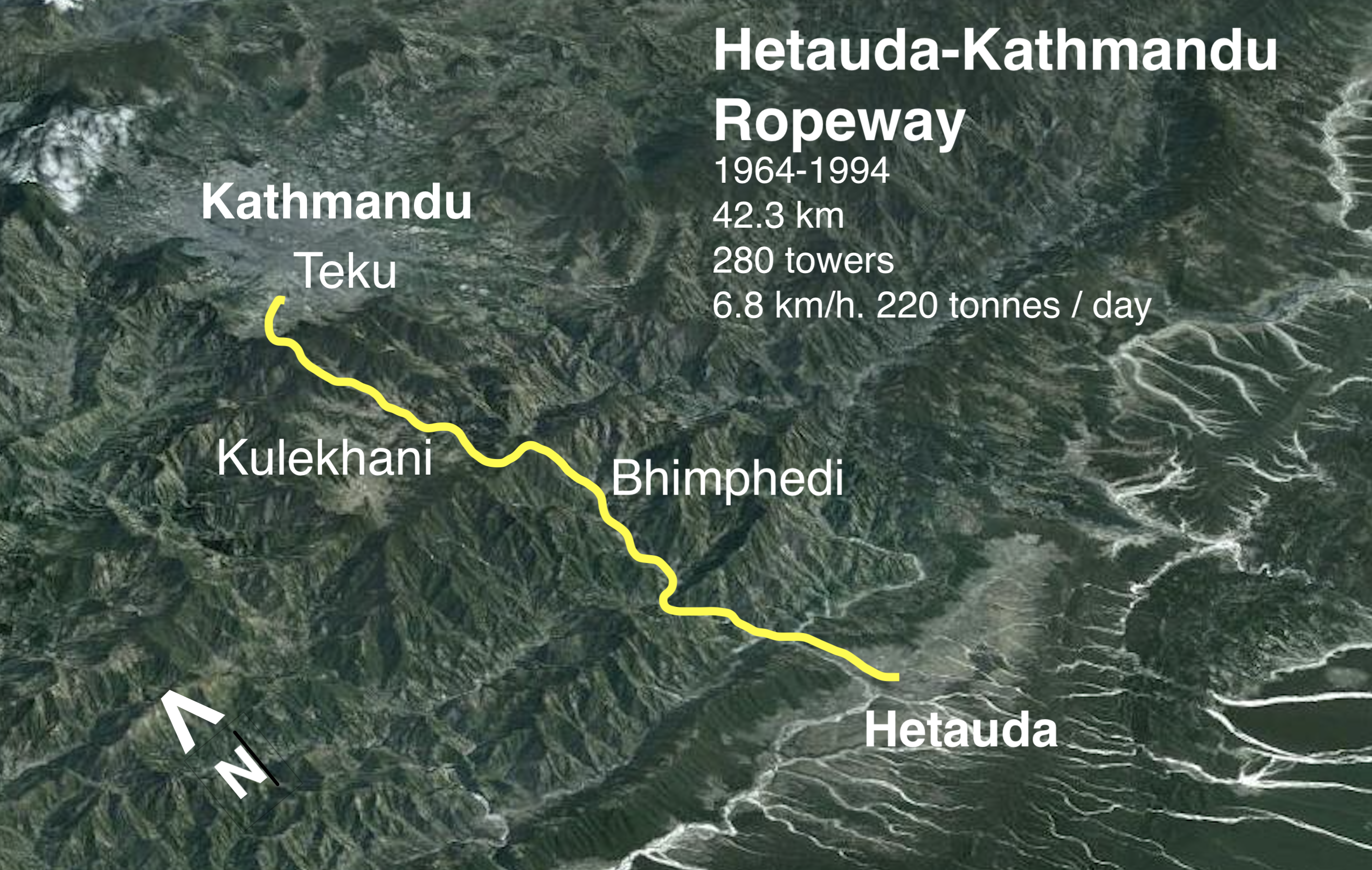
Nepal’s Draft Five-Year Plan contemplated the construction of a new ropeway with a carrying capacity of 20 tons per hour between Kathmandu to Hetauda or to Amlekhganj to replace the one commissioned in 1922 by Chandra Shumsher Rana between Dhursing and Matatirtha and built by British engineers.
May 1957
The US Government agreed to grant $2 million for constructing a ropeway from Kathmandu to Hetauda with Nepal to chip in Rs1.2 million.
1959
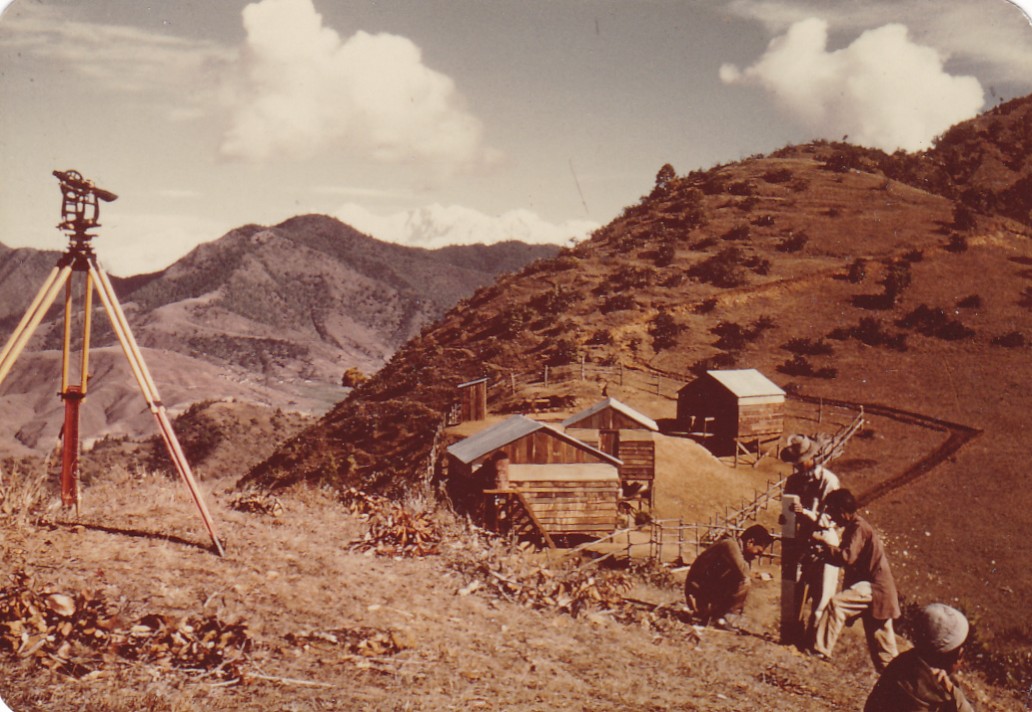
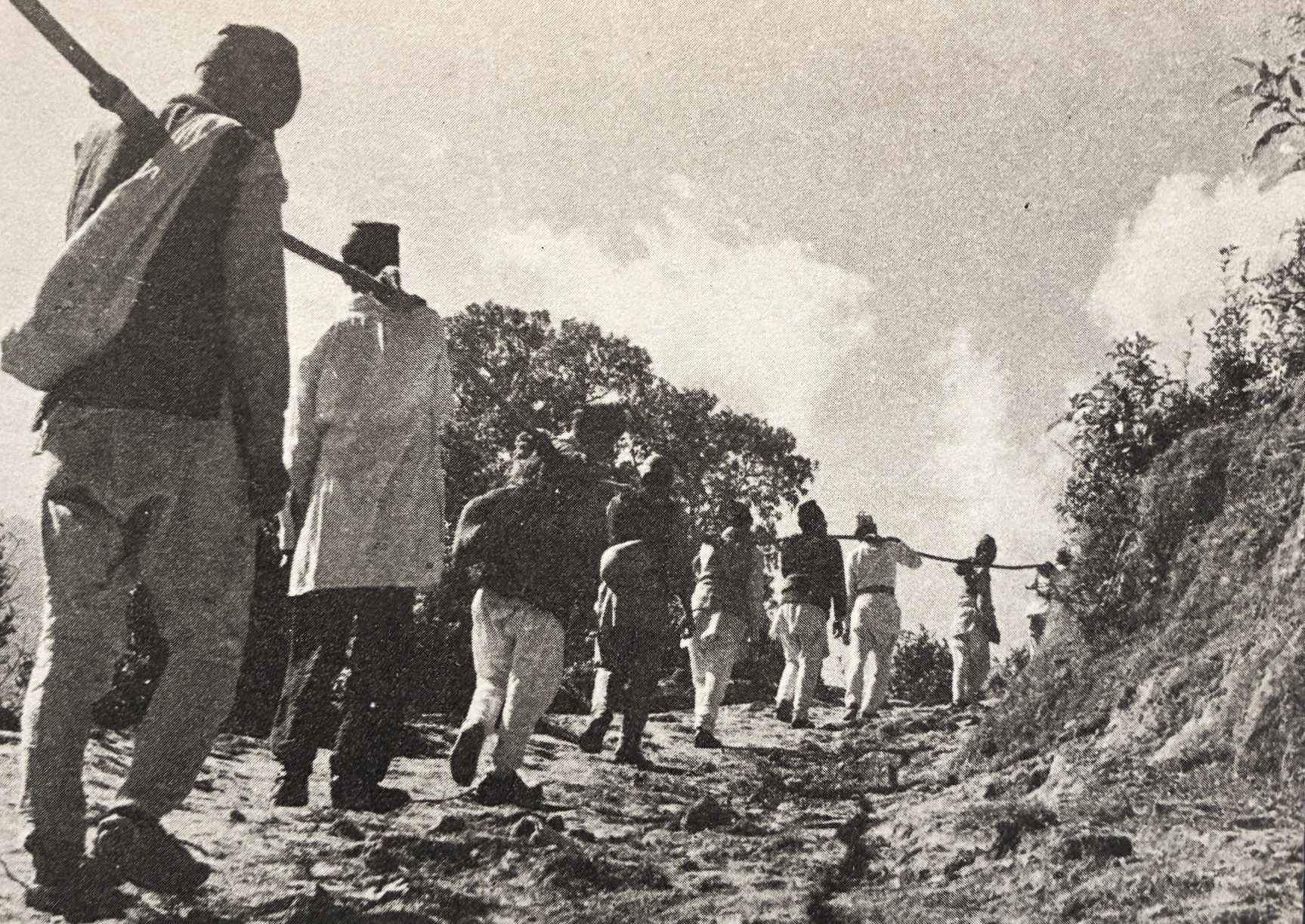
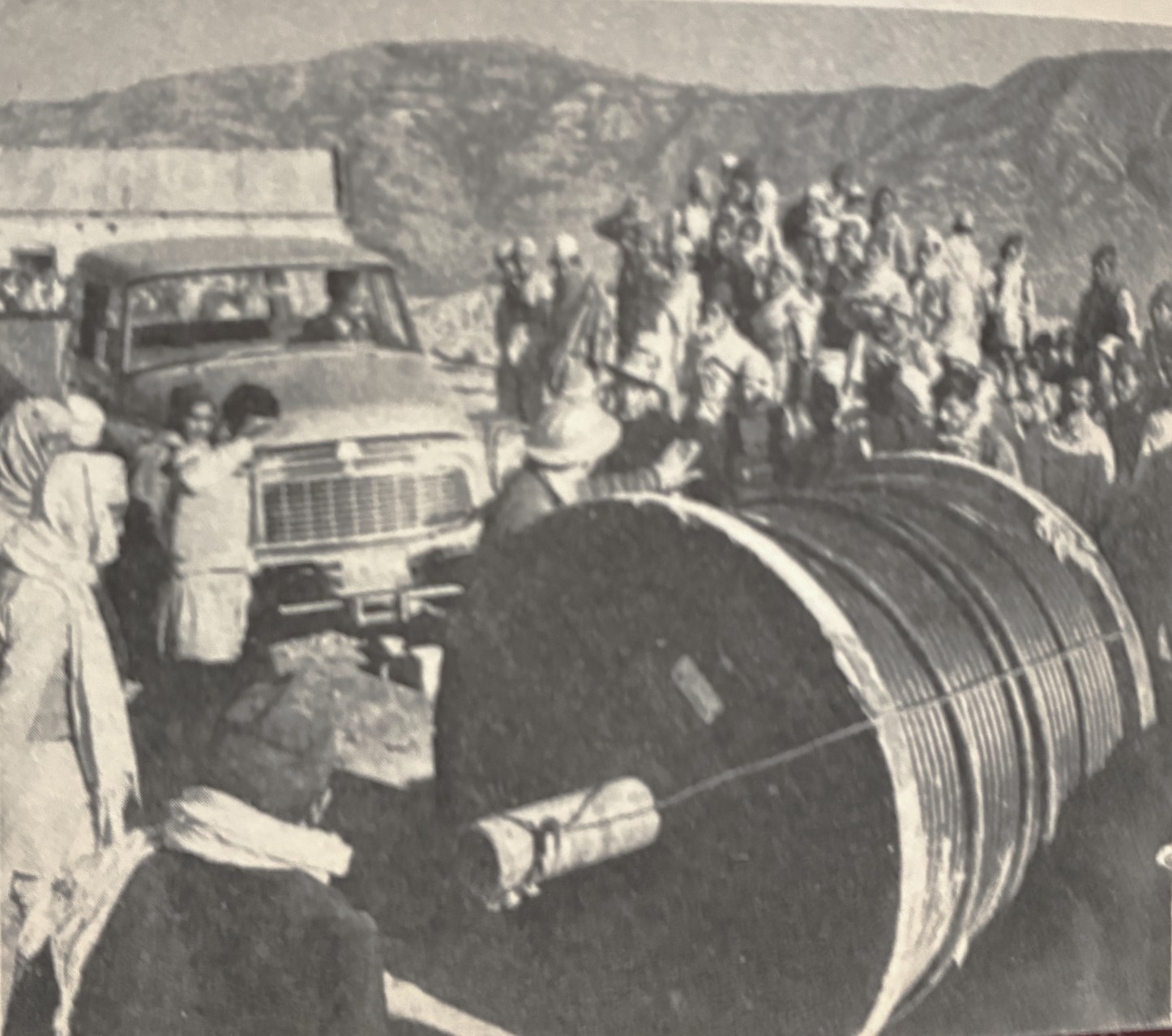
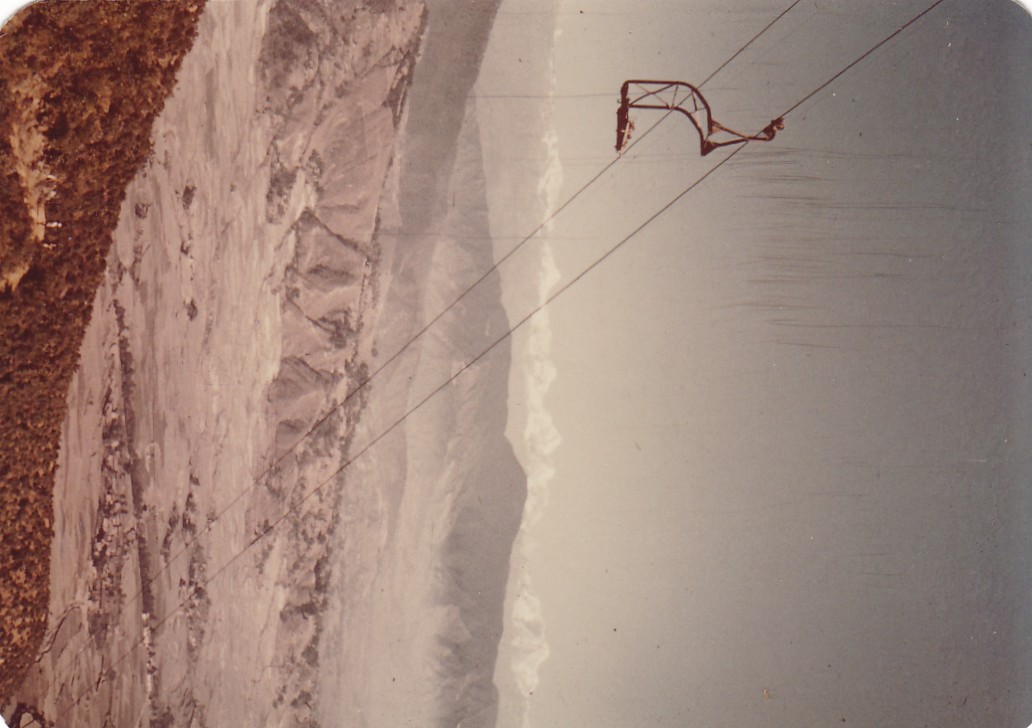
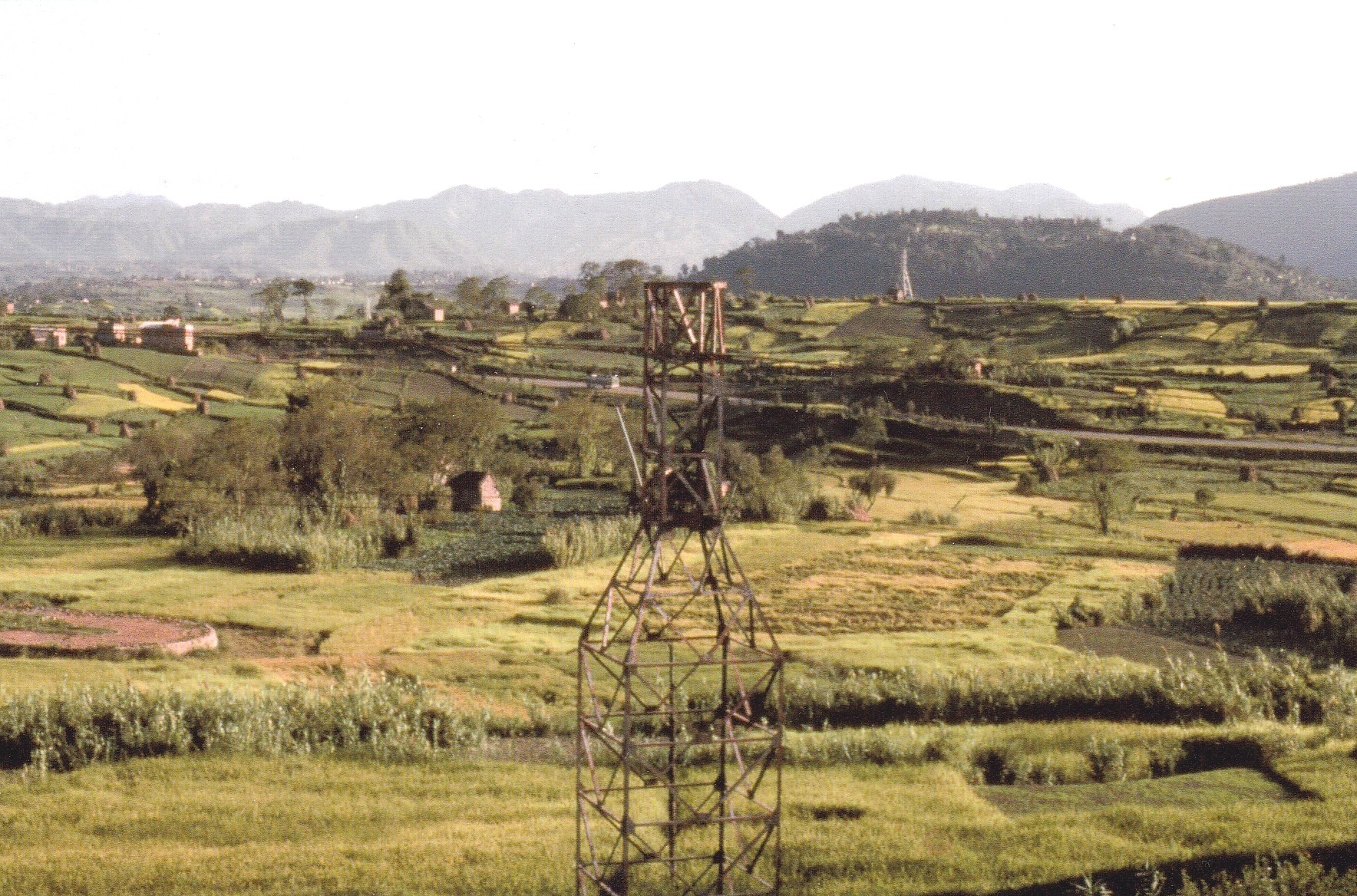
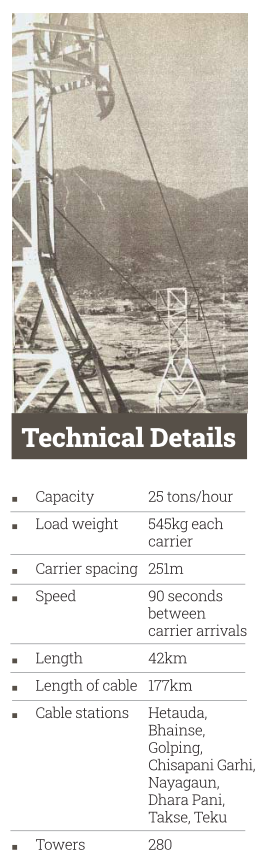
A contract between Riblet Tramways of Spokane, Washington and Nepal was signed in Washington on 19 April. Steel towers were fabricated in the US and carried to the sites in pieces for assembly. Long lengths of steel cable were hauled up mountains by porters. It was the most technologically advanced project ever attempted in Nepal. Although supplies came by air, rail and trucks, the ropeway was constructed entirely by hand.
February 1960
Newly-elected Prime Minister B P Koirala laid the foundation stone at Teku.
1962
The ropeway needed so much electricity that a test run dimmed the lights in Kathmandu, demonstrating that the capital’s power supply was insufficient. Other technical and administrative difficulties delayed completion.
8 April 1964
Kathmandu-Hetauda Ropeway was handed over to the government and service began the following day. The agreement was signed by Secretary for Economic Planning Bhekh Bahadur Thapa and Acting USAID Director Albert Farwell.
The ropeway could transport 37½ tons of freight per hour. Riblet was to maintain the ropeway for one year and train necessary personnel to manage it. Chief Engineer Tirtha Bahadur Pradhan was trained in America.
27 April 1964
Ropeway inaugurated by King Mahendra and Queen Ratna. Also present was Minister for Transport & Communication Nageswar Prasad Singh.
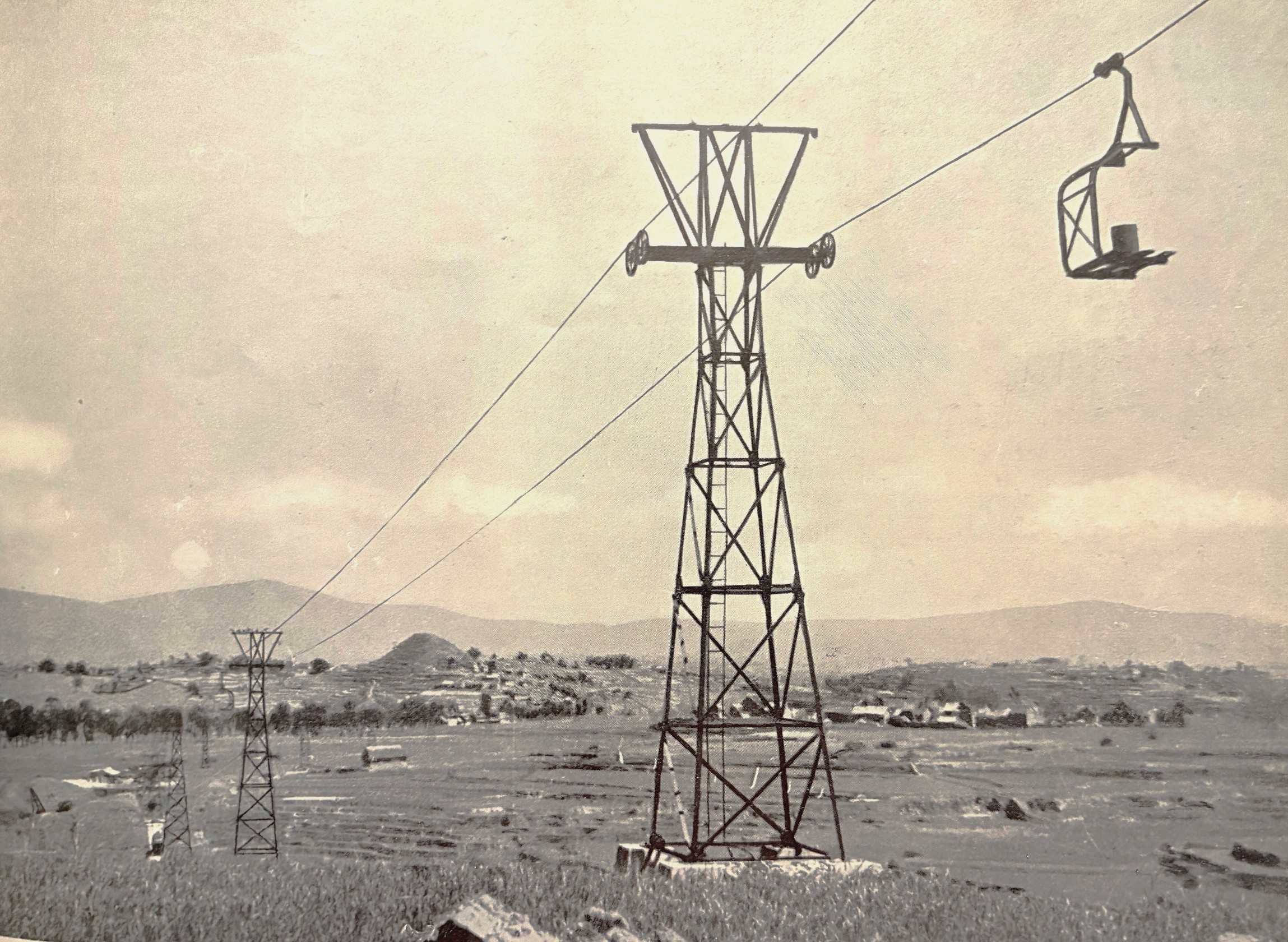
The project ended up costing $5,983,087 and its 42km distance was two-thirds shorter than the Tribhuvan Rajpath which was also being built at the time to link Kathmandu to Hetauda. Two thousand Nepalis worked on the project along with 11 American technicians. It was designed to run at 10km/h with a total 428.4 horsepower. Goods took 4 hours 15 minutes to reach Kathmandu from Hetauda. The terminals were provided with electric lights, so they could operate at night. Ropeway staff totaled 125: 40 were guards, the rest warehouse workers, telephone technicians, cable stringers, electricians, storekeepers and truck drivers.
1964
The ropeway immediately proved its usefulness within a few months when the monsoon caused landslides and closed the only road leading into the Valley. The ropeway ran 12 hours a day hauling vital supplies into Kathmandu to avert food and fuel shortages. Exports from Nepal got a 50% remission of charges.
February 1965
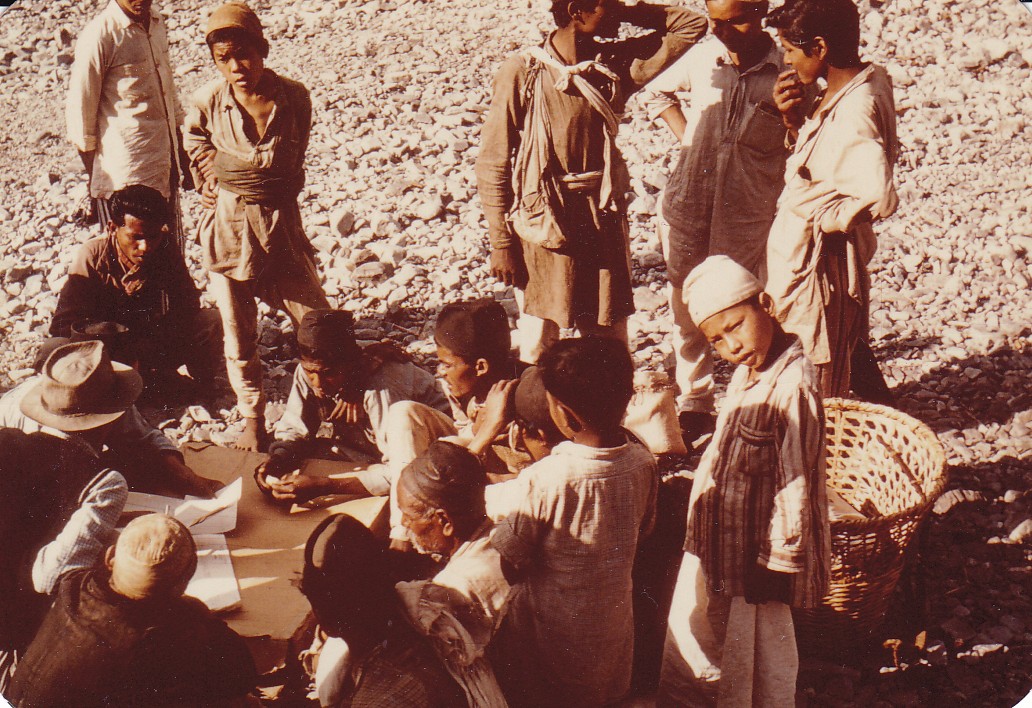
Management of the ropeway was handed over to the Nepal Transport Corp (NTC), which began managing the ropeway. Its seven Russian trucks were also transporting goods between Hetauda, Amlekhganj and Narayanghat.
May 1965
During its first 11 months in operation, the ropeway had transported 25,900,000kg of cargo to Kathmandu and 75,000kg from Kathmandu to Hetauda. It operated 9 hours a day carrying 250 tons of goods. The ropeway earned Rs2 million in its first year with expenses totaling Rs800,000.
August 1965
The NTC increased operation to 16-20 hours daily so it could transport up to 600 tons of cargo.
June 1966
Price for cargo transport was fixed at Rs2.50 for a maund (37kg) for foodgrains, and Rs2.85 for development materials, and Rs3.50 for other goods.
1968
The ropeway hauled 33,333 tons of goods that year, although it never transported its full handling capacity of 50,000 tons.
May 1969
NTC set rates from Raxaul on the Indian border to Kathmandu 36% lower than the corresponding rates per kg offered by trucking companies. It also provided covered carriers to protect salt, sugar, cement and other goods from rain and losses were reimbursed to customers. NTC opened an office in Calcutta to generate more business. But at the same time it also added additional trucks to its fleet to provide better service from Raxaul to Hetauda.
In September 1973 NTC planned to replace the ropeway’s track cables at a cost of Rs6.7 million and increase the cargo capacity from 16 tons to 24 tons per hour. The new cables could support 425 carriers, nearly 100 more than the previous cable. It charged Rs55 per ton for food grains while trucks from Hetauda to Kathmandu charged Rs95 per ton.
January 1974
The global oil crisis due to the OPEC oil embargo meant that 3,000 tons of goods destined for Kathmandu were stranded at Raxaul. The ropeway transported 150 tons of goods daily to Kathmandu but could not operate at full capacity due to poor condition of its traction cables.
October 1976
The ropeway idled for more than two months because there were no customers despite cheaper rates. Truck companies undercut the ropeway’s tariffs. Nearly 200 private trucks were purchased with bank loans by Hetauda businessmen, and government corporations bought their own trucks.
March 1977
On some days, the ropeway operated only four hours and was idle because of inadequate and erratic power supply.
1979
Monsoon rains damaged highways leading to Kathmandu, and the ropeway had to come to the rescue once more.
1980/81
The ropeway was closed for two years because of the shortage of electricity.
1982
The opening of the Narayanghat-Mugling-Kathmandu Highway further reduced cargo traffic.
1985
Twenty years after it was launched, the ropeway was operating only once or twice a week due to lack of business.
1986
A feasibility study was undertaken to increase ropeway’s capacity to 100 tons an hour and analyse ways to hand it over to the private sector. The study found:
The total cargo imported to Kathmandu by truck was about 2,585 tons a day.
Ropeway had annual losses of Rs25,645,000 in 1982/83, Rs3,041,000 in 1983/84, Rs3,439,000 in 1984/85, and Rs3,025,000 in 1985/86.
Rs9.8 million rupees would be needed to rehabilitate the ropeway system.
Tariff rate per ton could be reduced from Rs225 to Rs180 if working capacity was increased from 60% to 80%.
Four modes to privatise Ropeway were proposed: making it a semi-public enterprise, turning over management control, leasing it, or selling it to a private party.
March 1991
NTC losses rose to Rs3.36 million during 1989/90. Cargo capacity was reduced from 22 tons/day to less than 18 tons/day, 400 carriers were needed to operate at full capacity, but only 300 carriers were in service. Working hours had decreased from 18 to 7 per day.
December 1991
Nepal signed agreement with Poma Co of France to repair the Ropeway within 15 months.
August 1992
NTC announced French assistance of Rs70 million to improve the system. But only a 12km sector was repaired.
1993/1994
The ropeway proved its value once again when severe monsoon floods and landslides caused major damage to highway and cut off Kathmandu Valley from the rest of the country.
August 1995
The ropeway remained underused as trucks did most of the cargo transport. Why? “We are not able to provide reliable service,” admitted NTC Deputy General Manager Prakash Kumar Paudyal. “The ropeway service is necessary whenever something goes wrong with highways. But after the trouble was over, government turned a deaf ear. Overstaffing, lack of proper rules and regulations, and lack of professionalism have led most public enterprises to the brink of virtual collapse.”
Out of 360 carriers, only 125 were in daily use, and 29 of them were under repair. Due to damaged wires and carriers and sometimes power outages, service was delayed.
9 August 1995
The Rising Nepal wrote in an editorial: ‘It will surprise many that the ropeway service, started almost 32 years ago, has been “hanging by a thread.” Instead of depending on ropeway, more goods are being transported through the highways, which of course costs more. It was realized in the past that the ropeway was cheaper, and it used non-polluting electrical power, which was not imported, unlike fossil fuels like petrol and diesel. Over the years, the import bill for petroleum products has risen dramatically. The cost of ropeway service is Rs. 330 per ton which is cheaper by Rs. 140 than truck transport. It delivers goods from Hetauda to Kathmandu 4 or 5 hours faster than trucks do.
Despite these benefits, ropeway service is barely able to sustain itself. NTC official admits that lack of proper maintenance and overstaffing are among the reasons for the deplorable condition of the service. Only a complete overhauling of the basic infrastructures, including the towers, cables, and a steady supply of electricity can save the ropeway from becoming defunct.
The use of electricity for transportation is reliable and cheap. The trolley bus service is also a good example of this, but that too may go the way of ropeway service. There is a loud call for non-polluting fuels, and both trolley bus and ropeway services deserve adequate patronage.’
May 1997
Ropeway service came to a standstill because of minimal cargo, its poor condition due to need for repairs and maintenance, and inefficient operation by management.
December 1997
Engineers reported that ropeway cables needed replacement and recommended 137 new carriers be installed to increase capacity. But due to lack of demand, the ropeway stopped daily services. Cement from Hetauda Cement Factory was unavailable due to decreased production, and traders switched to trucks. Only 229 of the 366 carriers were in operation.
January 1998
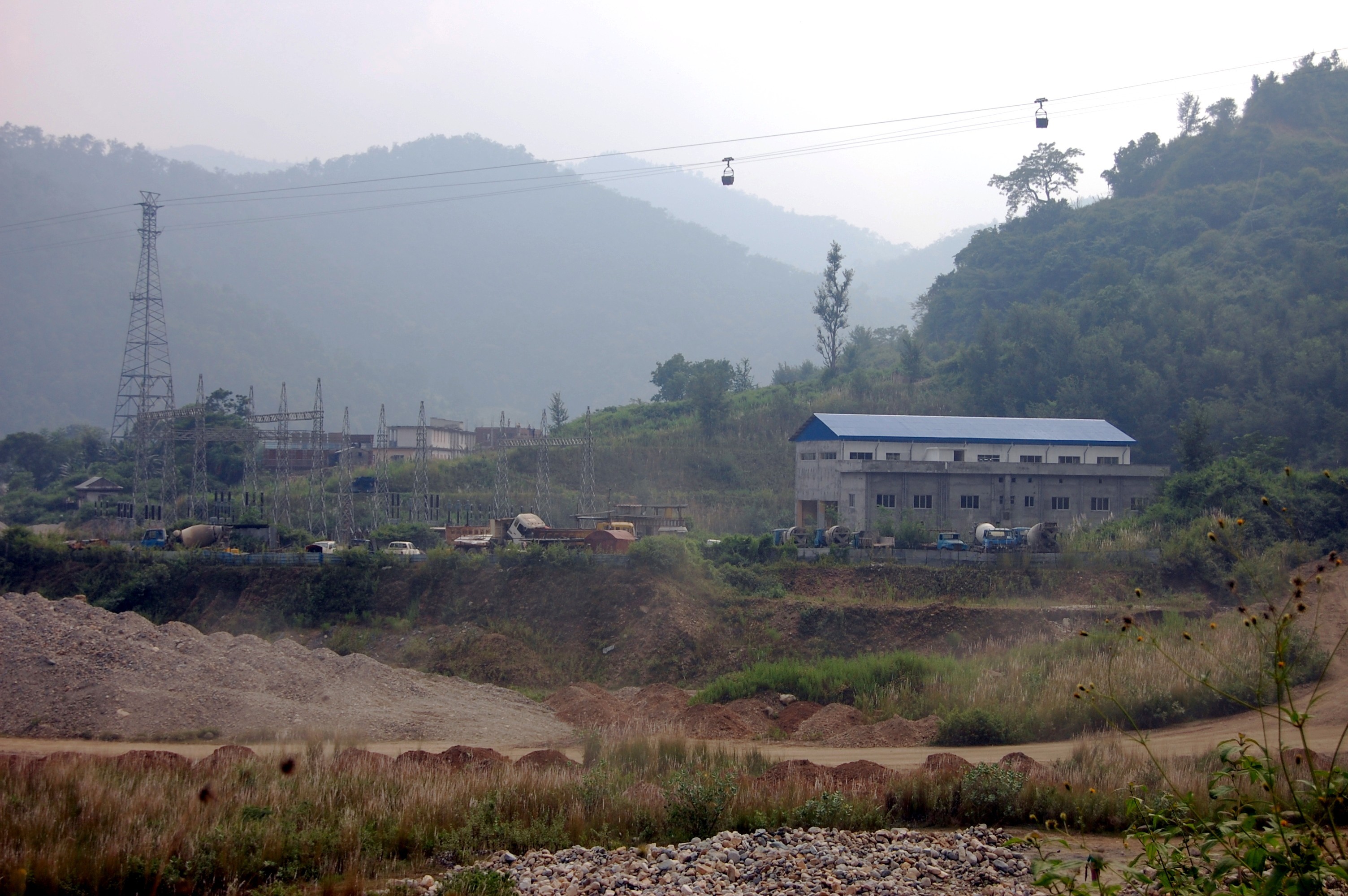
Security of goods and potential safety of residents living under ropeway cables transporting tons of materials were serious issues. People could steal goods from carriers from their house verandahs in Kuleswor. Ropeway charged Rs386 rupees per ton as against Rs500 but it still could not run a business.
April 1998
The failure of two transformers at Bhainse and Takse permanently shut down service. Repairs would cost Rs800,000 rupees. NTC never made repairs and incurred losses of 900,000 rupees a month as ropeway remained idle and staff continued to receive salaries.
August 1999
A government committee recommended scrapping the money-losing venture as Rs20 million would be needed for repairs and Rs100 million to towers away from heavily populated areas between Thankot and Teku.
December 2001
The NTC shut down the ropeway for good, its 200 employees were dismissed.