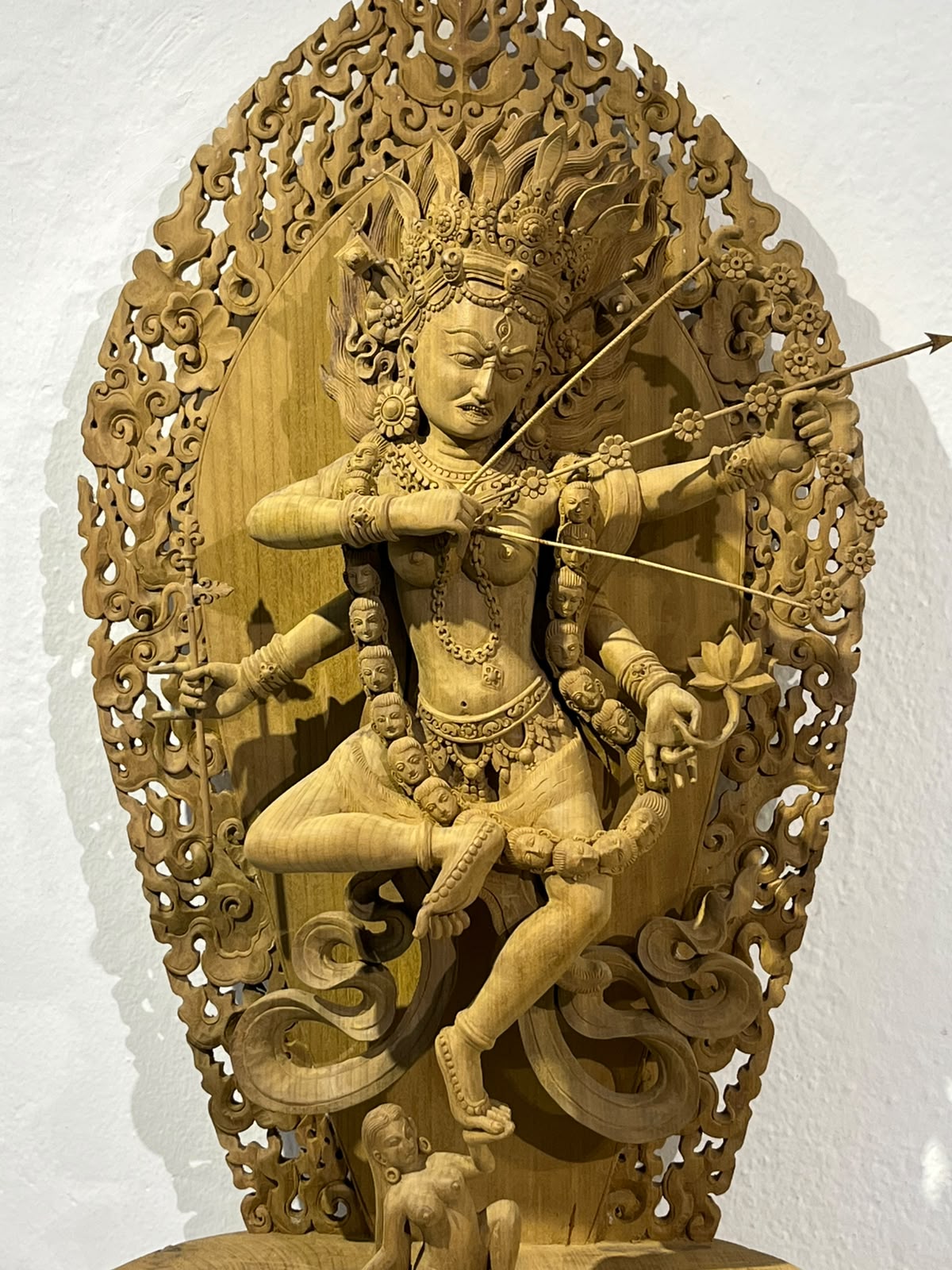
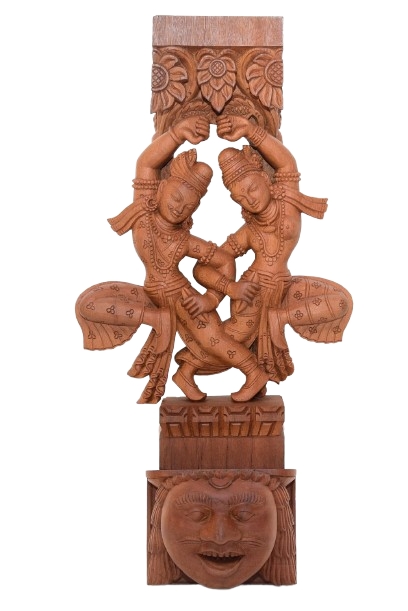
Worshippers gazing reverently at the face of a deity in a temple rarely wonder whose hands gave it shape. Unknown master artists of Kathmandu Valley passed on their skills within the family: a father, an uncle, a grandmother's brother, someone who learned the work at a family bench and inherited with it the duty of keeping it alive.
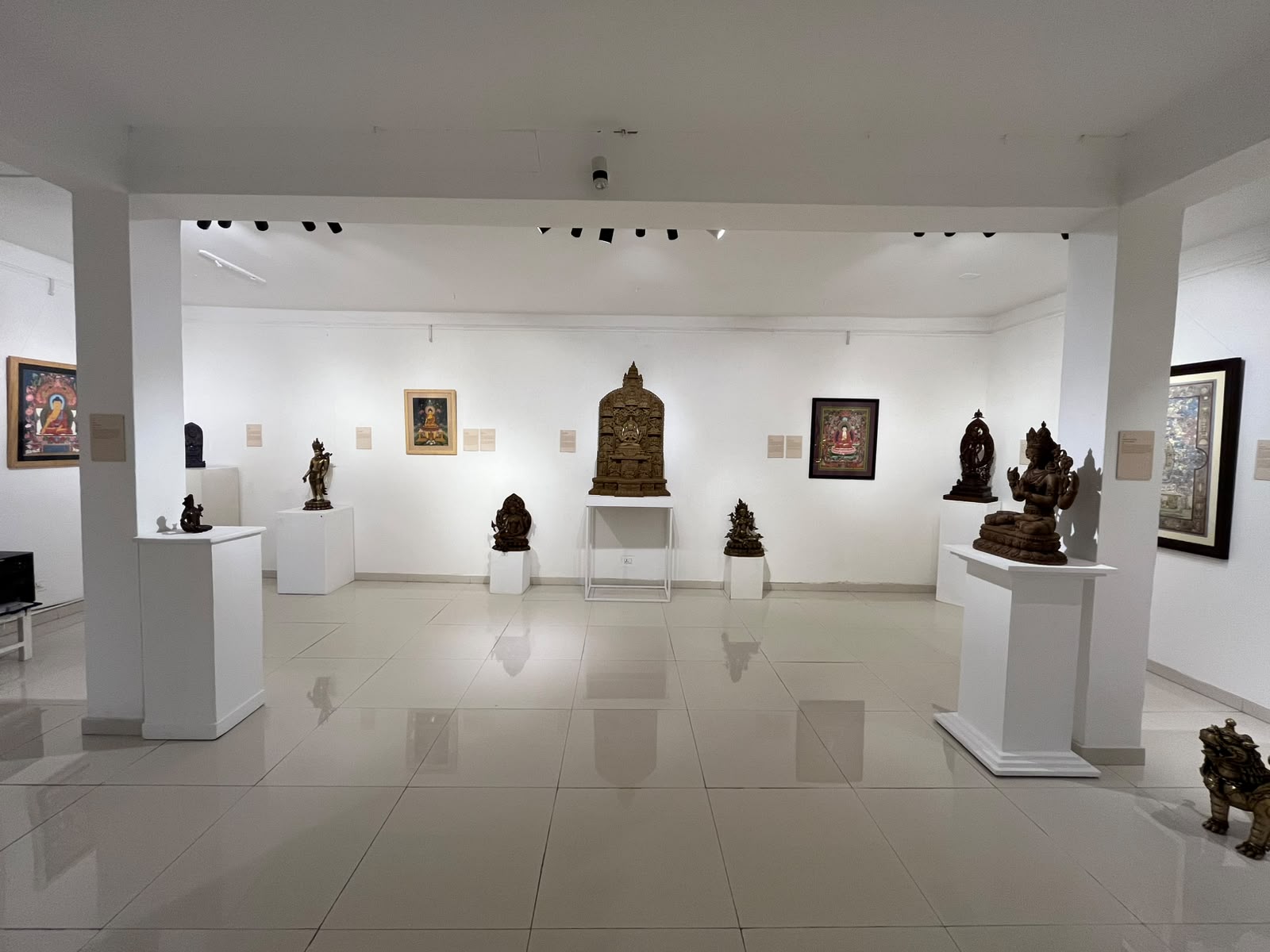
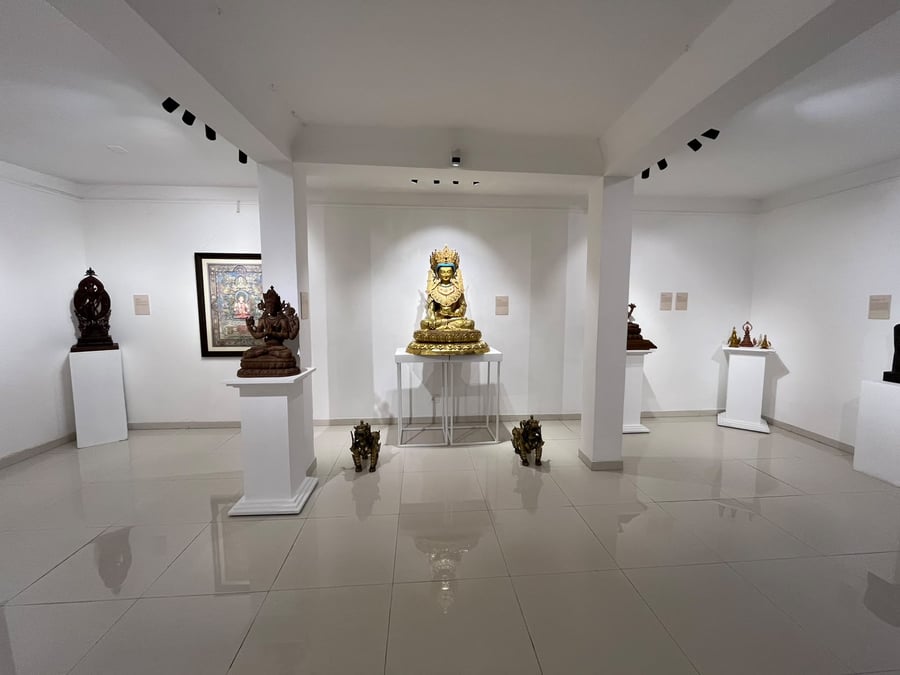
That chain of hands is the subject of the Siddhartha Art Gallery 39th anniversary exhibition brings together 36 traditional artists and artisans working in wood, stone, metal and paint.
Curated by museologist and artist Pradip Shakya, Sacred Splendor begins with a question rather than an answer: ‘What could be more profound than a life without suffering?’
He describes the Valley as a crucible where trade routes, pilgrimage paths and intellectual movements met, and where one of the world's most sophisticated artistic traditions took shape.
Deities throng the gallery space. The fierce protector Bhairav stands near the benevolent Ganesh. The serene Prajnaparamita, Avalokiteshvara and Vasundhara keep them company — they come from two faiths, yet they speak in one visual language of mudra and postures.
Shakya explains that tthe gestures of hand and body allows the viewer to understand the cause of suffering and the path to enlightenment. It is a language that has allowed Hinduism and Buddhism to flourish together in the Valley for over a thousand years.
The curator wanted to bring both traditions under one roof to show the tolerance of Nepali society. Sangita Shrestha of Dwarika's Hotel inaugurated the exhibition with Gautam Rana, founder of Baber Mahal Revisited.
"Our art is not in museums. It lives in the hands of the potter of Thimi, whose wheel has turned for a thousand years. It lives in the chisel of Patan, where stone still becomes god. It lives in the thangka and the mandala, where every line carries meaning. It lives in the lost-wax metal casting that travelled from Nepal to Tibet and beyond, and in the wood carving that gave Newar architecture its soul,” said Shrestha, whose own hotel is a haven for rescued artefacts.
"If we lose a building, we can rebuild it, but losing the artisans who know how to carve and continue the tradition would mean losing a thousand years of memory,” Shrestha added.
The life force of art, spirituality and tradition come together in this exhibition with the works by Pradip Shakya, Rabindra Shakya, Sundar Sinkhwal, Rajani Sinkhwal, Chandra Shyam Dangol, Palsangmo Lama, Jigme Tamang, Siddhi Ratna Shakya, Ujaya Bajracharya, Indra Prasad Silpakar and Ram Bhakta Maharjan, and the late Kalu Kumale.