The failure to prevent early marriages threatens the 1000-day mothers campaign
In the last 10 years, Nepal’s infant and maternal mortality rates dropped dramatically, and with it the proportion of children physicially stunted due to lack of food also decreased from 58 per cent to 40 percent. And one of the reasons undernutrition still remains high is because of teenage pregnancy.
Public health experts have found that even in places where children have enough food, malnutrition remains unacceptably high. In India and Nepal, for instance, there is a strong correlation between stunting and open defecation.
And here in Sindhupalchok district, northeast of Kathmandu, the lack of progress in stopping child marriages appears to be affecting the nutrition of both mothers and their babies.
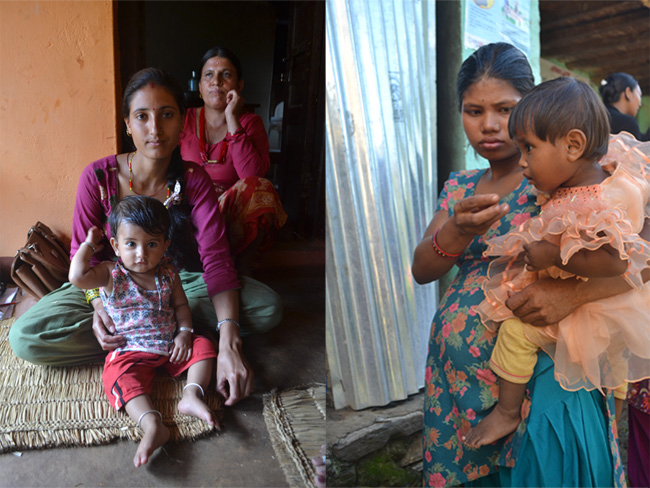
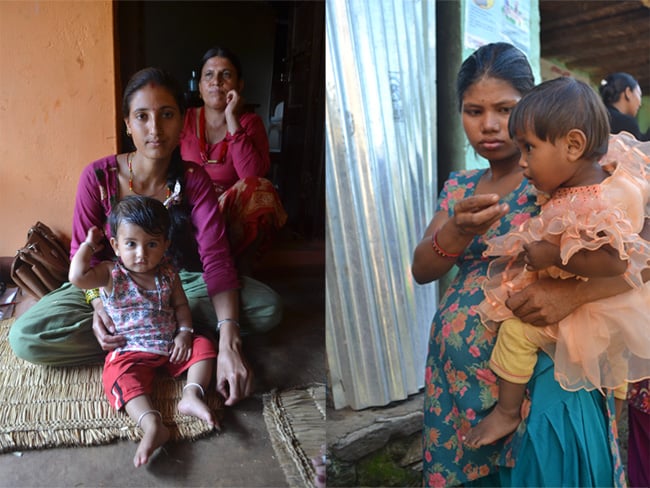
It takes all day for Female Community Health Volunteers (FCHV) to walk from one village to another, so health workers are training new mothers at the sub-health post at Ichok, 10 km from Melamchi bajar, to take care of themselves and their babies.“We keep talking about 1000-day mothers, but how does one arrive at the number?” Gyanendra Ghorasaini, a trainer, asks 21 young mothers who are attending with their babies. A hand goes up in the corner: “It’s 270 days of pregnancy plus the 730 days until our babies turn two.”
Ghorasaini is pleased with the correct answer, and other mothers nod with understanding. Studies have shown malnutrition in the mother during pregnancy and in the baby after birth hampers brain development, making children slow learners. If breastfeeding mothers and pregnant women don’t have access to the right nutrients, they are more likely to have children with inadequately developed brains.
To prevent this, new mothers in Ichok are taught to practice “Harek bar, khana char” (four meals a day). These meals must comprise of vegetables, greens, grain, milk, meat, or eggs. But not everyone can afford to feed themselves and their livestock and poultry, and it is particularly more difficult for younger mothers without support at home.
Anu Lama worked as a nanny in Kuwait for two years, and at 19 is already a mother of a four-month-old daughter. The family farm hardly produces enough to feed her and her baby four meals a day and she can’t afford to buy feed for the chicken to make them grow faster. Her husband works in India, and his mother is an alcoholic. Her sister-in-law is pregnant, too, so Anu has to do all the house and farm work carrying her baby around.