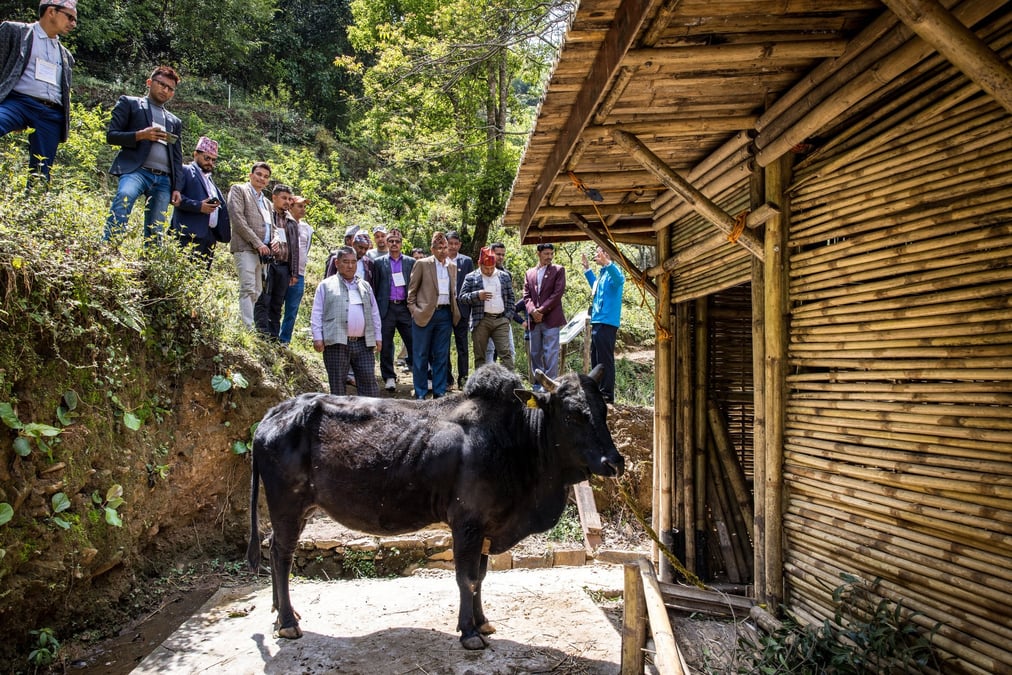
The cows look like the kind of local cattle found in Nepal. But these are no ordinary cows, they are the Siri variety from Bhutan specially adapted to local conditions. They are hardy, experts at grazing on steep slopes, and crossbreeding them with native livestock makes their offspring prolific milk producers resistant to disease.
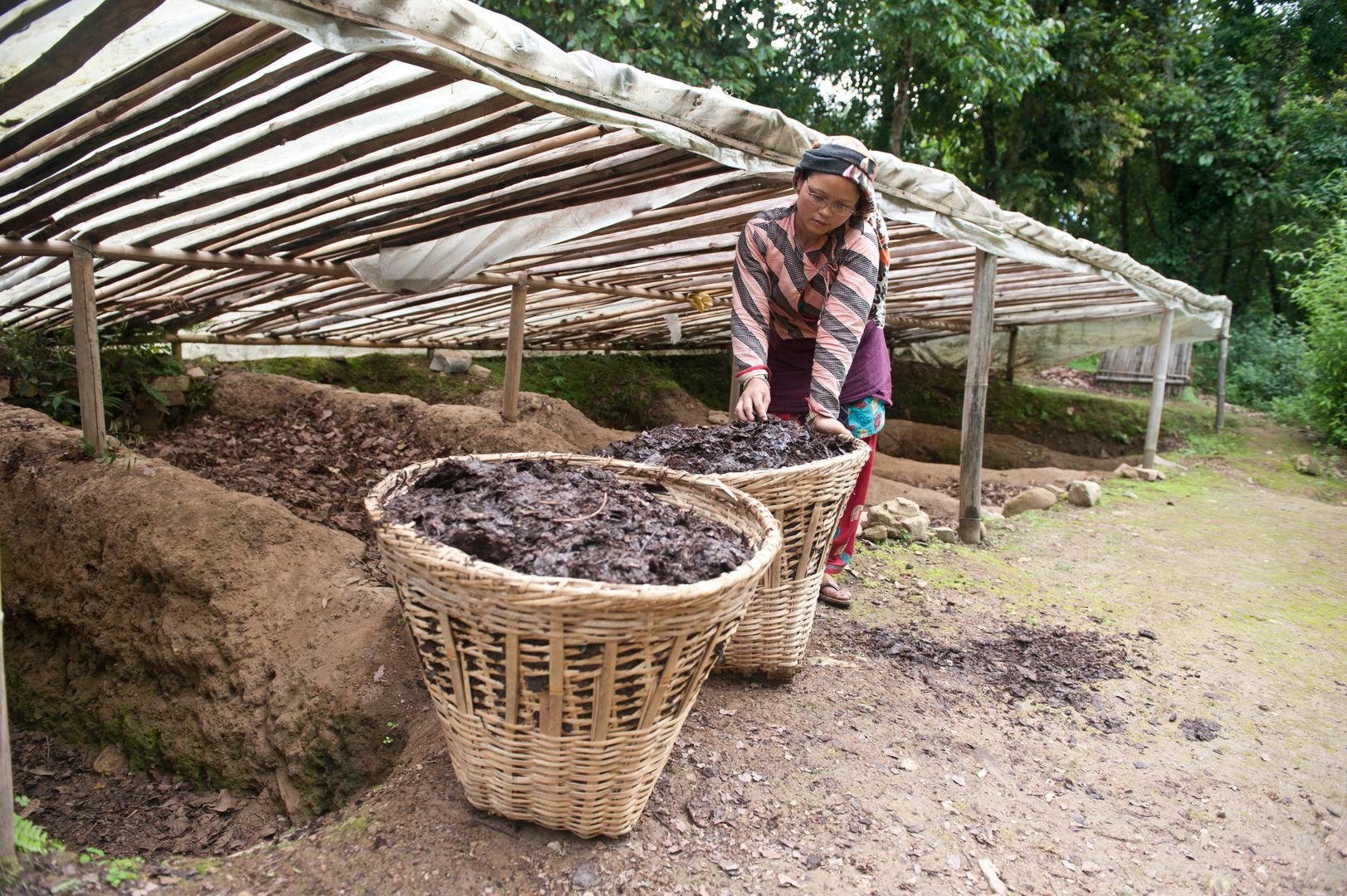
The cows live in specially designed sheds made of woven bamboo, their slurry feed digesters to produce biogas, the urine going into a jholmal organic pesticide pit.
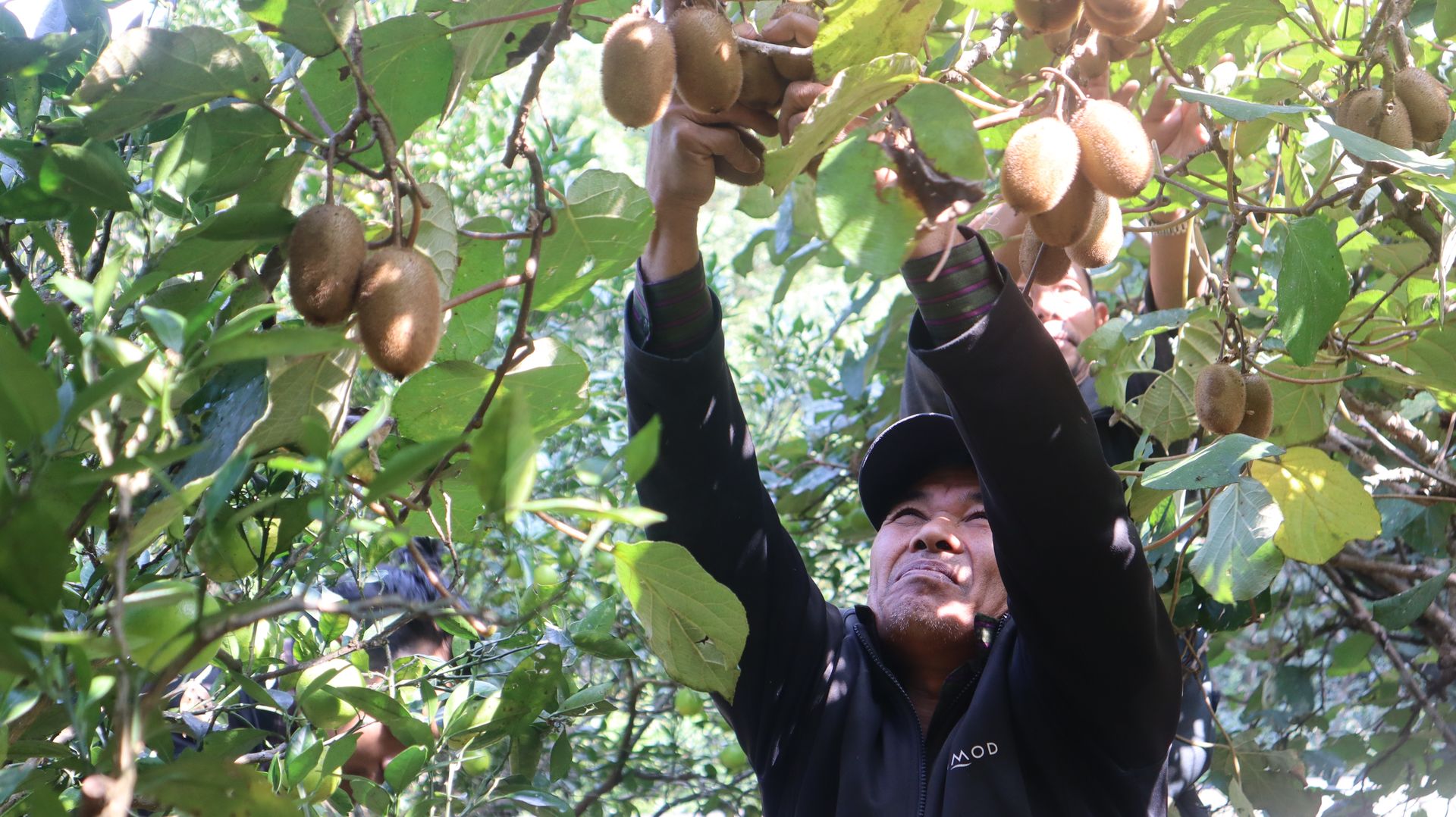
Everything is recycled, nothing goes waste here at the Living Mountain Lab in Godavari, a living breathing biodiversity-rich ecosystem of its own.
Read Also: It’s perfectly (eco)logical
The Siri cows are part of a demonstration park for appropriate technology for mountain farms run by the International Centre for Integrated Mountain Development (ICIMOD). The lab is visited every year by thousands of farmers, students and government officials from across Nepal, but also from other Himalayan countries who replicate the technologies on display back in their regions.
Located at 1,500-1,800m amidst 30 hectares of steep forested mountains below Pulchoki, the area was degraded and devoid of trees when the government gave it to ICIMOD in 1994. The Living Lab is itself proof of how quickly indigenous flora and fauna in Nepal can bounce back in just 30 years if protected.
Read also: Norway supports Himalayan climate research, Anne Beathe Tvinnereim and Pema Gyamtsho
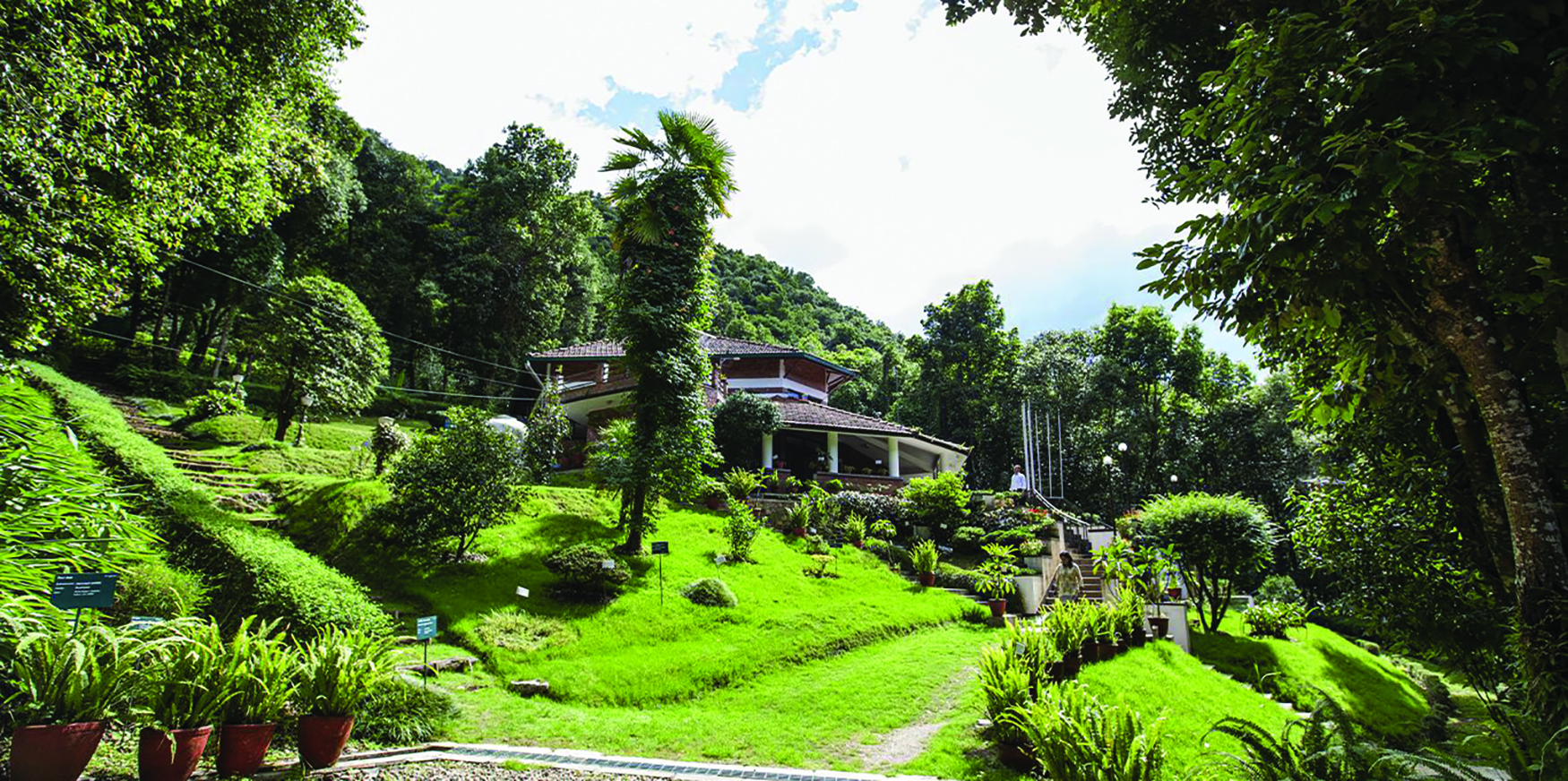
There is no need to plant trees in these mountains, just protecting the slopes from overgrazing allows indigenous species to grow back within a few monsoons. There are now 100 species of birds, 280 types of butterflies, 14 mammals in the area.
“Our motto is seeing is believing for nature-based sustainable solutions and adaptation methods to climate change,” says Yona Khaling Rai of the Mountain Living Lab. “We showcase working examples of green and resilient solutions to agricultural problems while keeping in mind the affordability and accessibility of the techniques.”
Read Also: Building back cheaper and stronger, Sapana Shakya and Aman Raj Khatakho
Many springs are going dry across Nepal’s mid-mountain districts due to the climate crisis and over-extraction of ground water, so the Lab shows how vegetation protection, rain water harvesting, and ground water recharging can make them flow again.