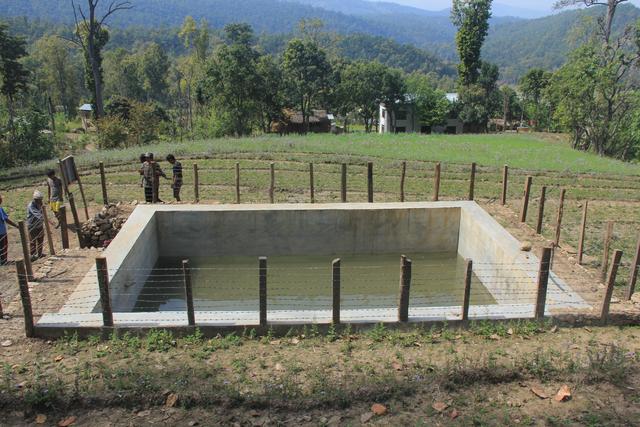
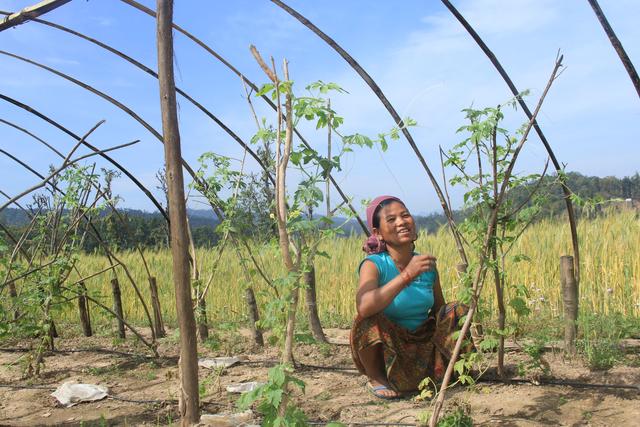
It is spring, but the snow in the mountains has not started melting and it hasn’t rained for a while, so the Bheri River is almost dry. But looking down at the banks of the river from the highway, the vegetable fields are lush and green.
This semi-arid district in western Nepal gets half the average annual rainfall of Kathmandu, and water is a precious commodity. But farmers have realised that irrigation can reduce their dependence on rain-fed agriculture, and cushion them against erratic weather.
“When I was a boy, the rains came on time, and there was enough in the dry season,” says Lal Bahadur Saru, 41, of Kunathari. “But as I grew up, water became more and more scarce and we could only grow one crop a year.”
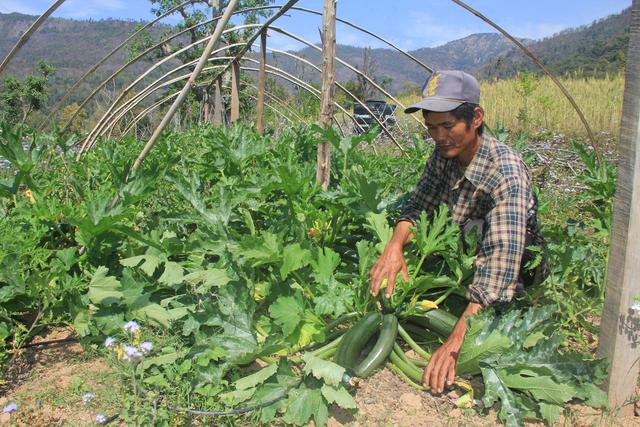
Photos: Devaki Bista
Lal Bahadur’s neighbour, Bhabi Lal, also faces the same predicament. He has seen a dramatic change in weather in the past 15 years. “Sometimes, a whole year’s rain falls in one day, and our crops are washed away in floods, and sometimes it doesn’t rain for months,” he says.
A deadly flashflood in August last year was the worst in living memory, killed hundreds and displaced tens of thousands of farmers in Surkhet and adjoining districts. In addition, the use of chemical fertilisers and pesticides has destroyed the soil.
Desperate, farmers like Lal Bahadur and Bhabi Lal of Badichaur of Surkhet turned to the Surkhet-based Beautiful Nepal Association (BNA), which is involved with improving the resilience and livelihoods of farmers in western Nepal. With support from the Dutch group, SNV, the group has been helping apple farmers in Jumla and farmers in western Nepal to practice ‘smart agriculture’.