
 There are many criticisms to be made of Washington's response to the heinous attacks of 11 September 2001. Much depends on the political and cultural proclivities of the critic, whether he or she is an Islamist or a neo-conservative, a leftist or a liberal.
But there's little disagreement with one point made by the high-level commission tasked with finding out why the attacks on America succeeded. In its report released in 2005, the 9/11 commission singles out "groupthink". This, in the words of commission co-chair Lee Hamilton, was to blame for intelligence agencies and policy makers failing to anticipate the plot to crash civilian airliners into high profile targets.
Similarly, a US Senate probe into why Weapons of Mass Destruction weren't found in Iraq after the invasion of 2003 blamed groupthink among those who were analyzing the intelligence data. So intent were the White House and its proxies on attacking Iraq, the report says, that even sober analysts pushed the notion that Saddam Hussein was armed to the teeth with nukes, biological bombs, and nerve gas. That these were lies and fallacies we now know all too well.
The idea of groupthink isn't new. The term was coined by the American writer and individual thinker, William H Whyte, in 1952. His definition is still the best.
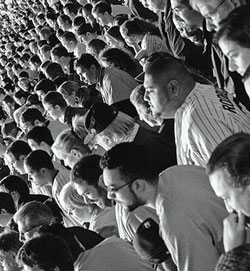
Groupthink, he writes, is "a rationalised conformity-an open, articulate philosophy which holds that group values are not only expedient, but right and good as well." This, he concludes witheringly, is "a perennial failing of mankind."
In other words, we are part of a group that is working on a series of tasks or challenges and we already agree on many things. So that informs what we do, how we try to achieve our outcome, how we view the world. It matters more than the solution to the problem. Groupthink is in our nature as social beings who crave acceptance into something larger than just ourselves and our immediate family.