
 |
Last month, I had the chance to visit the Karnali region for the first time. I was thrilled to be leaving Kathmandu's light pollution for the clear skies of Jumla. But although I had a confirmed air ticket, I had to wait at Nepalganj airport for seven hours, which killed some of my initial enthusiasm. At last, just after sunset, we landed at Jumla and I found myself in the land of my dreams. I looked towards the cloudless sky to find a magnificent crescent moon hanging above the horizon.
Next day I was in Lamra village, some 10km south of Jumla Bajar. We stayed at a hotel belonging to Balram Sah, a science teacher from Saptari who had settled in Lamra after marrying a local woman.
In the evening I asked him how he teaches astronomy to his rural students. He teaches pupils in Grades 7 to 10, but cannot identify the stars and planets in the sky. I pointed out a star-like object on the western horizon and told him it was the giant planet Jupiter. His eyes widened in astonishment.
Early the following morning, I woke at 4AM and looked up at the sky. The great celestial dome was above me with the stars and constellations clearly visible. Venus was dazzling in the eastern sky. Mars, the red planet, was overhead and the great Saptarshi (Big Dipper) was to the north.
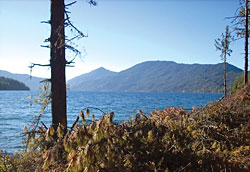
Sah told me the weather generally remains clear in Jumla all year round, come rain or snow. I imagine the Karnali region has great potential for stargazing. Later, in Mugu, we were guests of a local army unit at Rara Lake, where the major told us that observing the full moon rising above the lake offered the experience of a lifetime.