With China, and now India, seeing setbacks in civil liberties, the Asia-Pacific was already not in good shape. Now, a new global survey shows that democracy in the region declined even further in the past year.
The Global State of Democracy 2023: The New Checks and Balances by the Stockholm-based thinktank International IDEA says the most worrying trend in the world is of democratic backsliding and the erosion of constitutional freedoms.
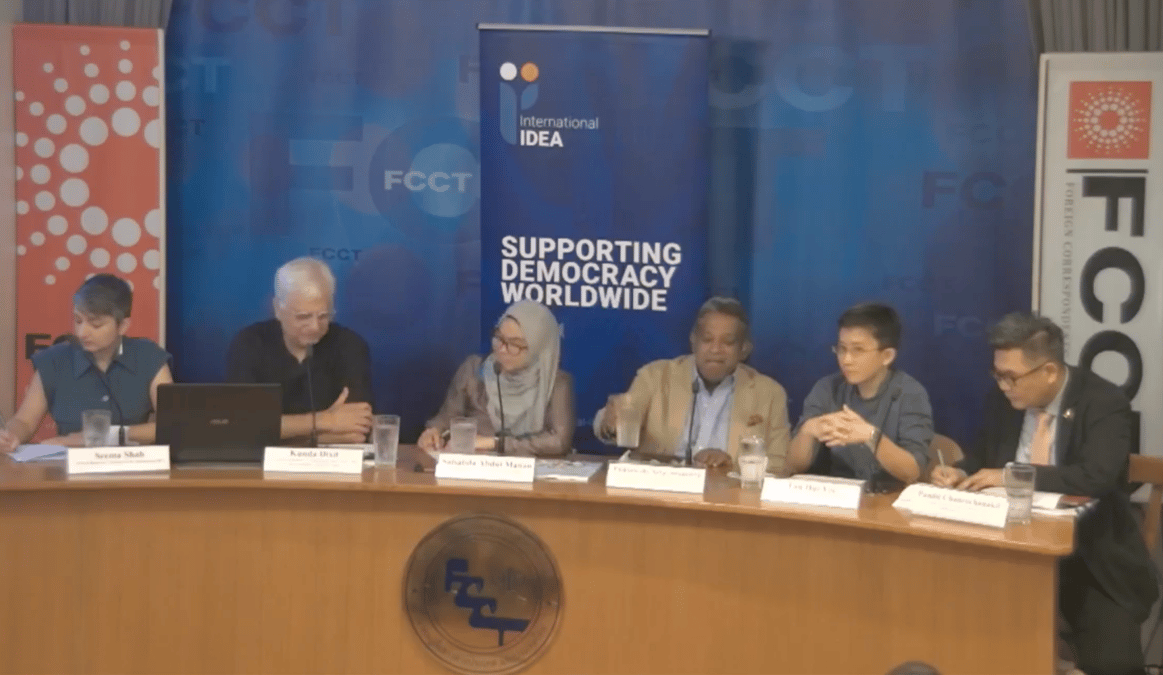
“Asia democracies, and aspiring democratisers in the more authoritarian states, still face challenges in revitalising institutions and in preventing further democratic decline,” said Seema Shah, Head of International IDEA's Democracy Assessment Unit during the Asia-Pacific launch of the 2023 report in Bangkok on 23 November.
Although across the board democratic decline witnessed by countries in the Asia-Pacific region in the past decade appears to have tapered off, the report says that the freedom of press score for the region is now at 2001 levels. Most countries in the region remain below the global average for representation, rule of law and human rights.
Aside from entrenched authoritarian regimes like Laos, China and Vietnam, there have been steep declines in democracy indices in Burma and Afghanistan due to conflict and state collapse. However, even countries with higher democracy rankings like like Australia, Philippines, South Korea, Sri Lanka, India and Taiwan saw significant declines in press freedom.
The report singles out Malaysia, Maldives, Nepal and Thailand as making progress in democratic participation with high turnout in recent elections, which were mostly free and fair.
The report does not rank countries by just regime type or one value for quality of democracy, but relies on IDEA’s Democracy Tracker to monitor four core categories of democratic performance: public participation, representative government, respect for human rights and rule of law.
Indeed, while democracy is notoriously difficult to quantify and rank, the categories do a better job in monitoring change. For example, representation is an aggregate measure of the credibility of the electoral process, and how free, fair, inclusive they are, give us a good idea of the quality of democracy in that country.
A high participation score tells us how involved citizens are in exercising democracy during and between elections. Rule of law rankings are indicators of judicial independence and fairness, and human rights indices measure respect for civil liberties and social equality.
The report gives Nepal higher marks in political participation in 2022, with the country ranked 69th out of 173 states — up four points compared to the previous year, and among the better performers among Asian countries. For comparison, India ranks 83rd, and it has fallen 17 points from its 2017 score.