
I had just returned to Nepal from Germany after experiencing my first psychotic episode, and like most patients with mental disorders in those days my parents took me to a shaman.
Behind the curtain, the female faith healer shook violently showing that she was under the spell of spirits that would tame my demons. She emerged from her trance to give us a small pouch of rice. I was to bathe before dawn and chew on one grain of rice every day.
My mother would dutifully wake me up at four every morning, force me to bathe and then hand me the single grain of rice. Things have moved on a bit in the diagnosis and treatment of mentally ill people in Nepal, but visits to the shaman are still common. Most people, it seems, have more faith in faith healers than in modern psychiatry.
Indeed, society had conditioned me to regard psychiatrists as people who dealt with ‘crazy’ people, those who were ill because of their own fault. Psychiatric disorders brought shame to the family, and I had seen patients stigmatised and ostracised. Persistent ignorance of mental disorder has meant that society labels people afflicted with everything from epilepsy to schizophrenia as being ‘mad’.
Then I was diagnosed with schizophrenia myself, a disease that had greater stigma than any other mental illness. For decades I kept it hidden because of the indignity attached to the condition in Nepali society. I could not talk about it openly with friends and relatives, and although I acted normal the disease was killing me and my family. I was lucky that my affliction was not severe enough to induce hallucinations and delusions, and I did not succumb to substance abuse.
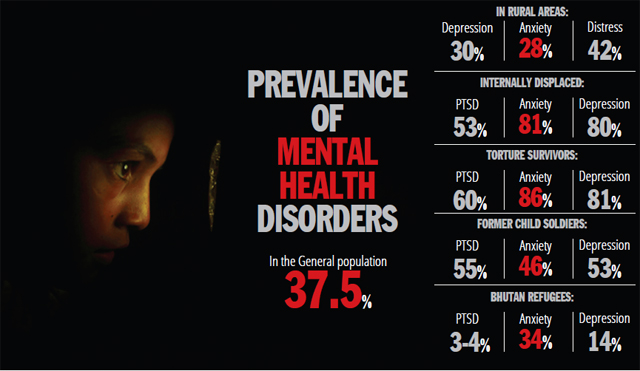
But what my mother and grandmother did to me was also a form of abuse, the kind of treatment that people with mental illness endure from their families across Nepal every day. A recent study conducted by the World Health Organization (WHO) shows that the situation of the mental health system in Nepal remains dismal.