
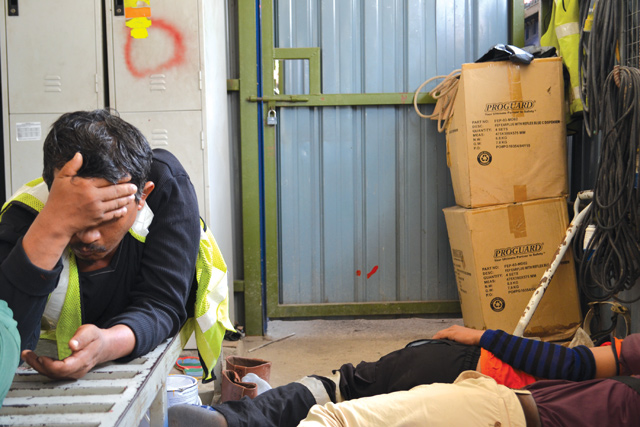
Like thousands of Nepali migrant workers, Ganesh Singh Dhami wanted to provide for his family when he left to work as a carpenter in Saudi Arabia last year.
However, within three months, he was back in Nepal. His company sent him to see a psychiatrist after he developed a memory disorder, and he was given a ticket home. Eight months later, Dhami has only a faint recollection of what happened to him.
“I just couldn’t focus on my work. My mind wouldn’t function and it was as if I was in a daze,” recalls the 30-year-old father of three, “I missed my family a lot, and although I recovered a bit after taking medicines they sent me home.”
Ganesh is now back home in Darchula, and on medication. But unlike other migrant workers who return with physical disabilities, he is not eligible for government compensation.
“My medical examination showed I was fit before I left, and I developed mental illness only once I got to Saudi Arabia. I have spent a lot on medicines since I returned, and I am waiting for the government to help,” Dhami told us over the phone.
He had spent Rs 80,000 to pay his recruiter for the job, but came back empty- handed. He filed an application at the Foreign Employment Promotion Board (FEPB) under the Ministry of Labour and Employment, and became the first returnee worker to seek compensation for mental illness.
Nepal’s Foreign Employment Act and other laws do not list mental illness as a disease. The FEPB only accepts compensation applications from returnees who are physically ill or injured: they can get up to Rs 300,000 for 79 categories of physical afflictions. Family members of those who die abroad can receive Rs 500,000.