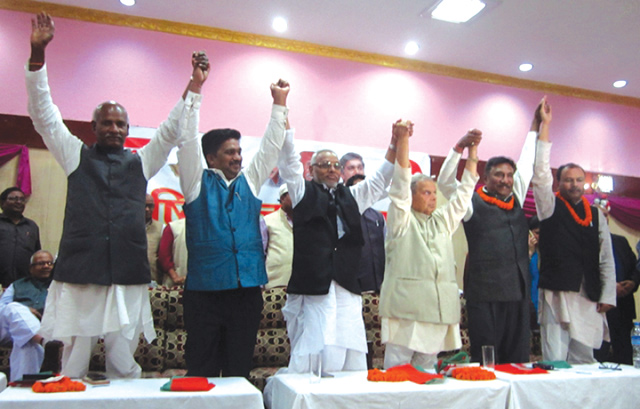
The Constitution promulgated by the elected constituent assembly in 2015 with an overwhelming majority of more than 90 per cent after a decade of troubled politics was boycotted by the Madhesi parties. The issue has already been internationalised enough because of the Madhes Andolans, protests against the Constitution and the blockade thereafter. Despite last week’s developments, a solution seems far from in sight.
A Labour Party MP in the British Parliament recently filed a proposal urging the Nepal Government to be responsive to the demands of the Madhesi people, citing the Saptari protest in which five civilians were killed in a clash with police during a UML rally in March.
‘Humanitarian concern’ provides the legal basis for such international pressure tactics, which are often used as tools in the political game. Nepal has seen this throughout recent history, with the Indian blockade of 2015 just the most recent example. The British proposal, however, only helped reinforce the widespread notion among the hardliners that identity politics is a foreign tool to keep Nepal instable.
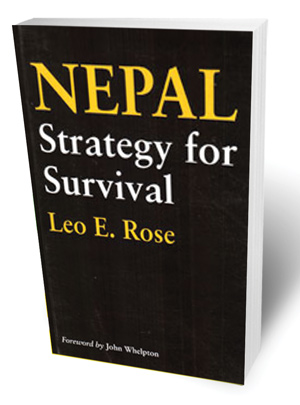
The story of Nepal is the story of an extraordinary survival. The book ‘Strategy for Survival’ (Leo E Rose, 1971) relates how Nepal has been ‘beset by a seemingly irresistible array of “interested” outside parties, eager to assist, advise and manipulate’. Attempts to restrict ‘Nepal’s capacity for independent action’ are not new for Nepal, but ‘its rulers have themselves displayed a deft hand in defining and, at times, even circumventing these restrictions’.
Rose says the reason Nepal was successful in surviving was because of its external policies and internal inclinations. There has been a broad consensus on the broader objectives and tactics suggesting that Nepal has mastered the survival skills of a buffer state. This is made possible by internal cohesion brought by a ‘cultural dynamic that seems to permeate all the articulate political, social, ethnic and regional entities in the state’.
Leaders like BP Koirala had struggled against the British in India and brought a fresh breath of democratic air into the political arena. BP himself was jailed for four years by the British. Educated in India, and of a Tarai family, he mostly spoke Hindi. The lines between India and Nepal, culturally and politically, were blurred in many ways for these politicians, and that was exploited first by the Ranas and later by the king to question their loyalty.
Rose’s book was written in the 1960s, when King Mahendra had already sabotaged the democratic experiment and started re-engineering the idea of Nepal. This re-imagination, which is now referred to as Mahendrabadi Rastriyata in an almost derogatory tone, was based on common language, religion and dress. Although it was a continuation of the natural predisposition of the Nepali state since the time of integration, it evolved building on the need to be seen as different from the Indians.