2015

Of all the 25 years Nepali Times has been in print, 2015 is the year that stands out as being most eventful.

It started off with the paper’s coverage of National Earthquake Safety Day on 15 January with an Editorial titled ‘Preparing To Be Prepared’  which in a way prophesied the disaster that was to strike three months later. 

In mid-March at the height of the tourist season, an Airbus 330 suffered a runway excursion while landing in Kathmandu with its tail sticking out into the runway. The plane could not be moved for four days and 80,000 passengers were stranded in Kathmandu and in airports abroad. 

In Kathmandu itself, the Constituent Assembly was stalemated over the draft Constitution and the disagreement over how many provinces the country should be carved into and on what basis. 

The Maoists were still insisting on ethnic demarcation, and the Madhes Movement wanted autonomy for a province spanning the entire Tarai from east to west. 

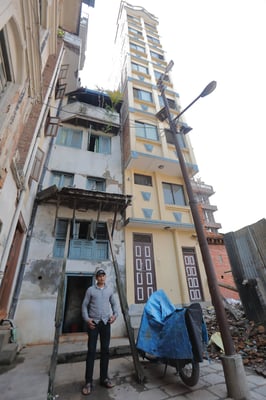
Just then, on 25 April at 11:56AM an earthquake of 7.8 magnitude epicentred in Gorkha district shook Kathmandu and the surroundings. Nearly 9,000 people were killed, the entire village of Langtang was buried by an avalanche killing 300 people, and another 16 people were killed in an avalanche that struck Mt Everest Base Camp. 

A fold-out page 1 of Nepali Times carried the photo of six-month-old Sonish Awal who was rescued after 24 hours buried under the rubble of a collapsed home in Bhaktapur (pictured, above). 

Along with the death and destruction were stories of rebirth, hope and communities coming together to help those in need. 

In 2015 Nepal was rocked not just by geotectonics, but also geopolitics. The Constitution was promulgated by an elected assembly on 20 September which did not meet the demands of the Madhesi parties, and this displeased New Delhi. 

The ensuing Indian blockade of the border devastated the economy. Earthquake relief material was stuck, Nepal ran out of fuel and food. 

People went back to cooking by firewood and riding bicycles. China gave token help, but it did not amount to much. 

The blockade lasted five months and was finally lifted in January 2016.

 Excerpt of a report 'Earthquake from Above' in the 1-8 May 2015 issue:

‘It had been an unseasonably cold and rainy Saturday morning. Twelve of us from the staff of Nepali Times were on a hiking retreat on a hill overlooking the city. 

The sky was overcast, and we were disappointed not to have a view of the Himalayas to the north. Some of us looked down at the capital spreading out in the bowl-shaped valley below and talked about its rapid, haphazard growth. 

Suddenly there was a big jolt and we could barely stand. Puffs, then billows, of dust rose from various parts of the city, within minutes shrouding the whole valley in a brown blanket. Bhaktapur looked like it was being swallowed by a sand storm. Kathmandu disappeared. 

Our sense of shock turned to fear as we thought of our families down below. We hugged each other, some of us crying. We reached for our phones. The lines were down. 

We ran down to the car park at the foot of the hill, and headed into town. On the road we skirted fallen masonry and tilted buildings. People were clustered in open spaces or in the middle of the streets, as far as possible from anything that might collapse. In front of a hospital, we saw patients lying on mattresses set out on the sidewalk. 

Hundreds of thousands of people in Kathmandu and surrounding areas spent Saturday night on the streets as Kathmandu was rocked constantly by 50 aftershocks. 

Yet, there is no sign of overt panic, people gathered water bottles and sleeping bags and helped each other.’   

  • Most read