
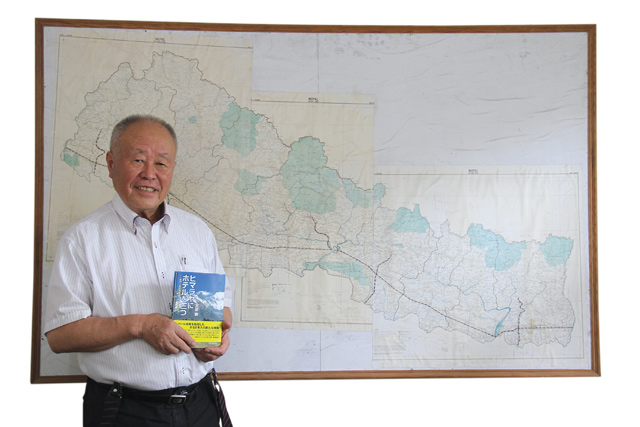
“There is a Japanese saying that to make new things, you have to be young and foolish,” says Takashi Miyahara, the 81-year-old social entrepreneur who came to Nepal first in 1962 and never left.
A mountaineer, he quickly fell in love with the beauty of Nepal’s pristine mountains, a stark contrast to a rapidly-industrialising Japan that was rebuilding after the war. As it turned out, he also married a Nepali and started a tourism business. Frustrated at the slow pace of change and Nepal’s inability to use its huge resources to uplift the lives of citizens, he opened a political party and even stood for elections in 2008.
Miyahara does everything differently. When everyone was only just talking about the unique attraction of the Khumbu, he overcame huge hurdles to establish Hotel Everest View at 3,880m in 1975, got the government to make an airfield at Syangboche to service it and introduced Nepal to up-market international tourists. The iconic hotel became a model for foreign investment in Nepal’s nascent tourism industry.
He started Trans Himalayan Tours and introduced organised trekking to Japanese tourists, bringing in 1,000 visitors annually. Miyahara always dreamt big, and tried to get Nepali officialdom excited about the potential that Nepal had in tourism, infrastructure, energy and nature conservation. Despite setbacks and official apathy, Miyahara persevered with his trademark Japanese tenacity.
At a time when Nepalis were leaving the country in droves to settle in the West, Miyahara gave up his Japanese citizenship, donned a Nepali cap and started the Nepal National Development Party in 2006 to try to change the political culture so that government would be more responsive to the needs of the people. The laid back “ke garne” mentality of Nepalis was not for him.
Having travelled throughout Nepal on foot across most of Nepal’s 75 districts, Miyahara knows Nepal inside out, better than most people born here. His vision for Nepal’s future is based on intimate knowledge of the land and its peoples.
Pointing at a map in his office, Miyahara shows a plan for an east-west railway artery linked to north-south feeder roads, he talks about shifting the capital to Narayangadh to ease the pressure on Kathmandu, a masterplan for hydropower, tourism and water supply. All these are included in his party’s manifesto. His party didn’t win a single seat in 2008, and in 2013 did not field any candidates, but Miyahara says he admires Baburam Bhattarai the only Nepali politician who shares his vision for Nepal’s economic growth.