
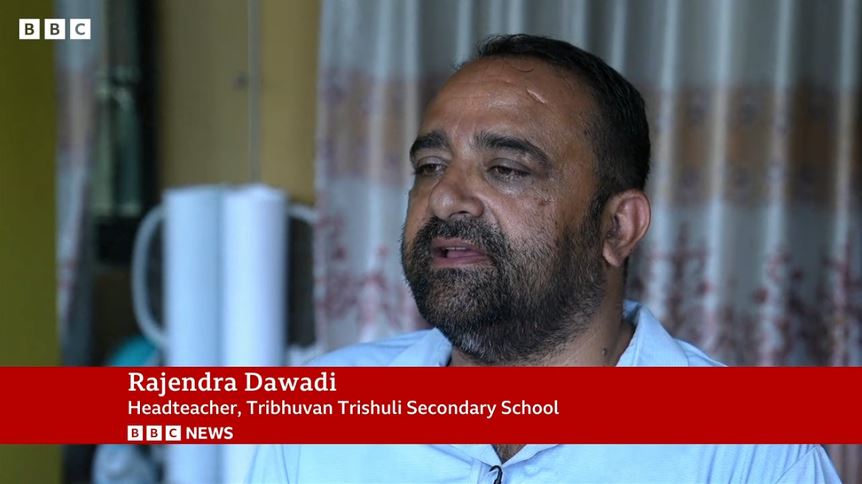
It was 9:10AM on Wednesday 26 August when Rajendra Dawadi, the principal of a school in Trisuli got a phone warning about an approaching flood from upstream residents.
He and other teachers ordered 900 children and staff to climb up the hillside minutes before the wall of mud engulfed the village and swept away their school. Video of the blue uniformed students clambering up the slope as the brown water rushed past has been shared worldwide.
In another miraculous save, five-year-old Manisha Uchaimagar was rescued alive after 60 hours buried under her family’s collapsed building that the flood had moved 100m downstream. Parents had given her up as dead and asked the APF to find her body, but the rescuers heard feeble cries from below and found her trapped in an air pocket. She was medevaced to a hospital in Kathmandu and is recovering.
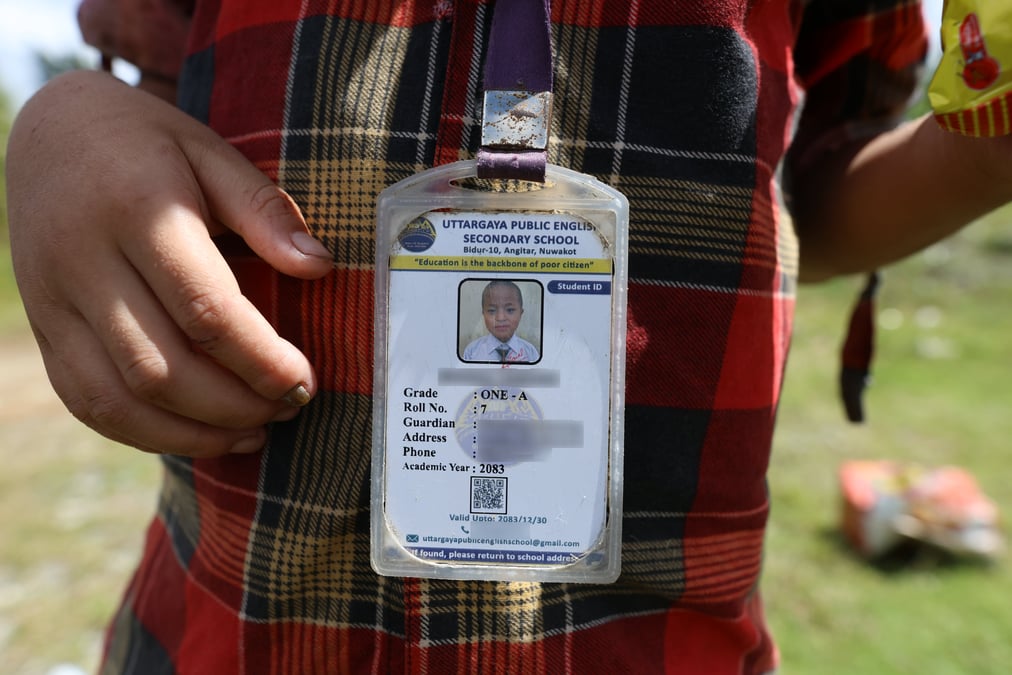
But such stories are few and far between as hope fades of thousands of those still missing. As many as 18 schools were swept away in an instant by the raging flood that morning, 20 more are heavily damaged and nearly 19,000 students in Rasuwa, Nuwakot and Dhading districts have been affected.
There is still no official breakdown of the number of students who perished or are missing. But there are dozens of photographs of children among those posted outside hospitals for family members to identify them. Many parents have lost children, children have been orphaned.
For the moment, all resources are now concentrated on finding the missing and caring for the displaced. But in the longer term, the psychological and mental trauma of the survivors, especially children, needs to be addressed.
Aayush Joshi of Save the Children told us after a visit to Nuwakot: “We urgently need strong family tracing and reunification systems, with information from different holding centres and communities systematically coordinated and verified.”
Nearly a week after the disaster struck, movement between various shelters and incomplete information about the whereabouts of the families of children has caused them much distress. The urgent focus on emergency rescue has put on hold other child welfare issues.
With hope fading for those missing being found alive, the priority is shifting to evacuation plans, temporary shelters, and setting up temporary learning centres so that the most vulnerable children are not further marginalised.
“The priority should be ensuring that children can recover in a safe and supportive environment – with access to education, healthcare, and nutrition,” says Abiodun Banire of UNICEF Nepal, which has teams on the ground to facilitate relief and support for children.
Thousands of families who saved themselves are sheltering in makeshift arrangements, and have to worry about finding still missing relatives, arranging funerals if the bodies have been found, finding food for the next meal, salvaging what is left from homes if they still exist. Many of the children are traumatised, suffer nightmares and cannot rest, study, or feel secure without a stable home.
After a disaster of such scale, children also face an added risk of exploitation, especially if they are displaced and separated from their families. Previous disasters in Nepal, like the 2015 earthquake also showed that some fall victim to harmful coping mechanisms such as child marriage and child labour.
However, children need more than relocation and continuation of education to feel fully safe. They need legal protection, an accessible environment, and sustained emotional and psychological support. Child welfare experts say the priority for now should be TLCs (temporary learing centres) like the ones that were set up in 2015 so children can swiftly return to a sense of normalcy.
“When we talk about the impact on education, we are not simply referring to damaged buildings. We have children losing secure and familiar places where they used to learn, play, feel safe and connect with friends and teachers,” says Joshi.
PATH TO RECOVERY
TLCs have to be more effective than the last time, experts warn. The three districts most badly affected by last week’s flood were heavily damaged in the 2015 earthquake during which thousands of schools and classrooms were destroyed. That was a lesson to rebuild and retrofit schools so they were seismically resistant. But many such schools may have been rebuilt to withstand earthquakes, but no one expected them to be vulnerable to such high flood waters.
TLCs made after the earthquake used bamboo and tarpaulin and were hot, loud, and ill-equipped. This did not keep children in school, nor did it continue their education where it left off. New TLCs after this emergency must ensure adequate ventilation and appropriate Water, Sanitation and Hygiene (WASH) facilities that are also accessible to girls and children with special needs.
Learning kits, books, stationery, teachers' materials and recreational materials are urgently required to promptly restore learning. The government and organisations working on education and the welfare of children must plan strategically and budget resources smartly.
“Recovery should also strengthen the services children rely on so communities are better prepared for future emergencies,” says Banire. This means disaster drills in schools, child-sensitive early warning systems, prepared relief supplies, and psychological and physical first aid.
Many of the children who survived are still in shock from their own ordeal or from the death of family members, and the danger is far from over: their homes are gone, their meals are uncertain, and their schools have been swept away.
For the children of Rasuwa, Nuwakot, and Dhading, recovery will not be measured in days. It will have to be measured in whether they return to home and school so they can heal from what they have been through.
Says Aayush Joshi from Save the Children: “We should not expect the children to simply ‘move on’ because the immediate danger has passed. Their emotional recovery will take time.”
If you are looking to support communities affected by the flood in Nepal, donate to the Prime Minister’s Disaster Relief Fund here. Additional information here.