

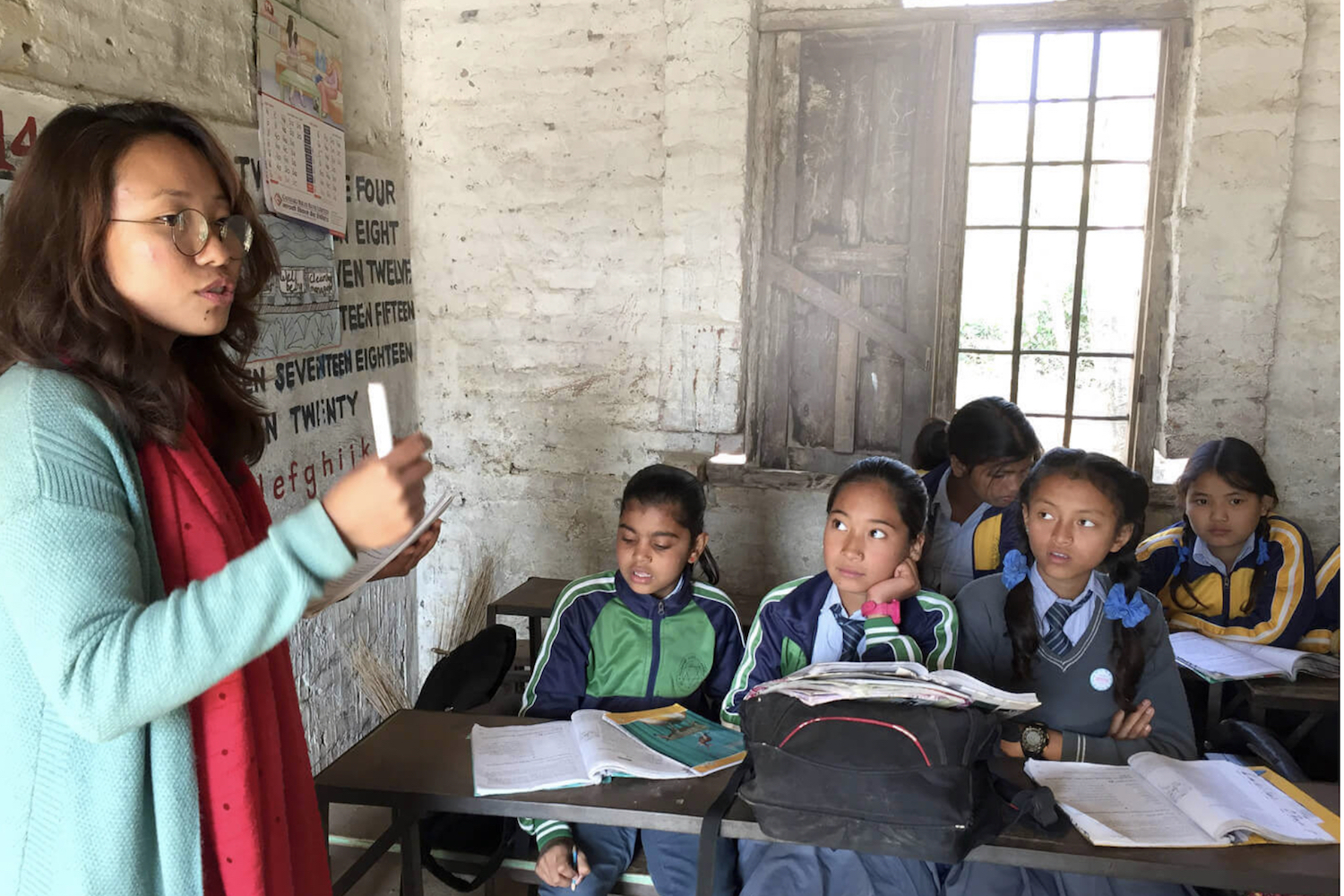
In recent years, many scholars, policy makers, and educators have pointed to the abysmal results of Nepal’s education system, particularly its government schools. Some have noted the persistence of this low performance year after year.
According to a 2017 Asian Development Bank (ADB) study of education in South Asia, student learning achievement in Nepal ‘has remained poor over the years’.
Because of Nepal’s ineffective educational system, the country as a whole suffers but especially those from rural and marginalised communities -- Dalit, ethnic minorities, and poorer Nepalis of all caste groups. As wealthier students move to private schools, students from marginalised groups increasingly make up most of the students attending public schools.
In particular, the ADB places the blame on Nepal’s ineffective and outdated teaching methods: ‘The main issue in Nepal is how to address the weak performance of classroom teachers.’ It emphasised the need for ‘fresh perspectives’ for understanding teaching and teachers.
By and large, ever since modern schools arrived in Nepal in the 1950s and 1960s, Nepali teachers have taught the same way: using rote methods with teachers lecturing or reading material straight from the textbook and students listening and later regurgitating.
This holds true, with only a few exceptions, from pre-K through college, in both government and private schools. Very few teachers encourage critical thinking, meaningful learning, or practical application.
Why is rote so entrenched? Many factors seem to combine including cultural, political, policy, and personal factors. In an influential study, Nepal’s leading anthropologist Dor Bahadur Bista argued that a status-based anti-utilitarian philosophy of education embedded within Nepali religious traditions has long pervaded and undermined Nepal’s ‘modern’ schools.
Historically, Bista says, education in Nepal has meant recreating hierarchy, not bringing about meaningful change in the world. The ADB addresses these foundational ideas when it calls for a new role for teachers: ‘It is important to develop teachers as facilitators and not as the sole source of knowledge and influence.’
Other scholars have noted how Nepal’s autocratic rule before 1990 promoted narrow education traditions creating a mindset that still drives Nepal’s schools, including the emphasis on rote.
In addition, Nepal’s culture of teacher education is broken. Years of pre-service and professional development efforts have made little dent on how Nepali teachers teach.
‘Most of the teacher education and training initiatives have failed to transform the classroom teaching and learning process,” the ABD report notes. It adds that this includes not just Nepal’s preservice training but also its in-service teacher education: ‘The opinion of most stakeholders is that in-service programs have been reduced to training halls and leave no impact on the teachers.’
That’s worth emphasising: ‘no impact’. What has been the result of years of trainings costing millions of dollars? No impact.
The problems with Nepal’s teacher training culture are many. The ABD stresses one key problem: what it calls the ‘approach to delivery of curriculum’. Nepali teacher education programs, it notes, are 'structurally loaded with adequate content … (but) the overall approach and delivery most often remains traditional and fairly weak’.
In other words, in Nepal, even ‘expert’ teacher trainers primarily use rote teaching methods. Exactly those trainers charged with showing teachers how to use non-rote methods often themselves rely upon rote methods.