
Sarthak Mani Sharma
At a meeting this week organised by the Asian Development Bank (ADB) to review the effectiveness of its loans and grants to Nepal, the Manila-based institution’s Director General Hun Kim couldn’t hide his frustration about delays in project implementation. That concern is now also spreading to the speed and effectiveness of proposed assistance for earthquake reconstruction.
“We will suspend, even cancel loans now,” Hun bluntly told the gathering. For proof of just how slow things are to get off the ground in Nepal, one needn’t look beyond the Melamchi Water Supply Project. The project was first conceived three decades ago and has been under construction for 15 years. But only half of the 26 km tunnel to augment Kathmandu Valley’s water supply has been completed. Progress in other ADB projects in hydropower, airports and highways is also slow with much of the allotted money still undisbursed.
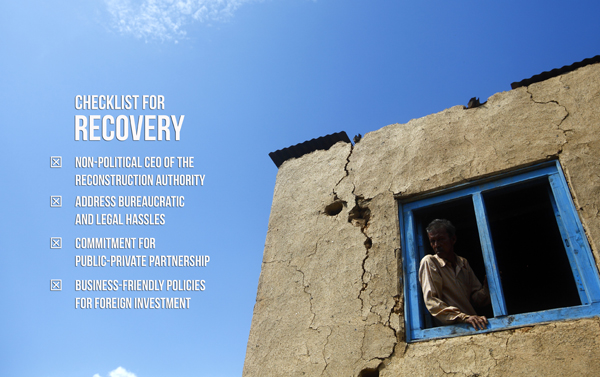
The fear is that the same problems will plague reconstruction activities. After the Conference on Nepal’s Reconstruction on 25 June, many expected the pledged $4.4 billion to speed up earthquake rehabilitation and jump-start Nepal’s stagnant economy.
But more than three months after the earthquake and a month after the conference, the Reconstruction Authority has not even been set up yet because of a dispute between the NC and the UML about who should get to head the reconstruction agency and who should replace the chief secretary when he retires (See page 18). The government presented an ambitious budget earlier this month, but there are no concrete plans in it to expedite spending.
To be sure, most countries show accelerated economic growth after a disaster because the construction boom ends up injecting cash into the economy. But for that to happen, the right policies have to be in place for job creation, providing incentives to investors and curbing corruption. Which is why the ADB’s economic growth forecast has actually been lowered from 5.1 per cent to 4.5 per cent.
This year’s budget has a 140 per cent increase from last year in planned capital spending, which is crucial to growth. However, because of corruption and chronic mismanagement, up to three-quarters of the development budget year after year remains unspent, and it has become a tradition that 60 percent of the budget is spent hastily in the last quarter of the fiscal year.