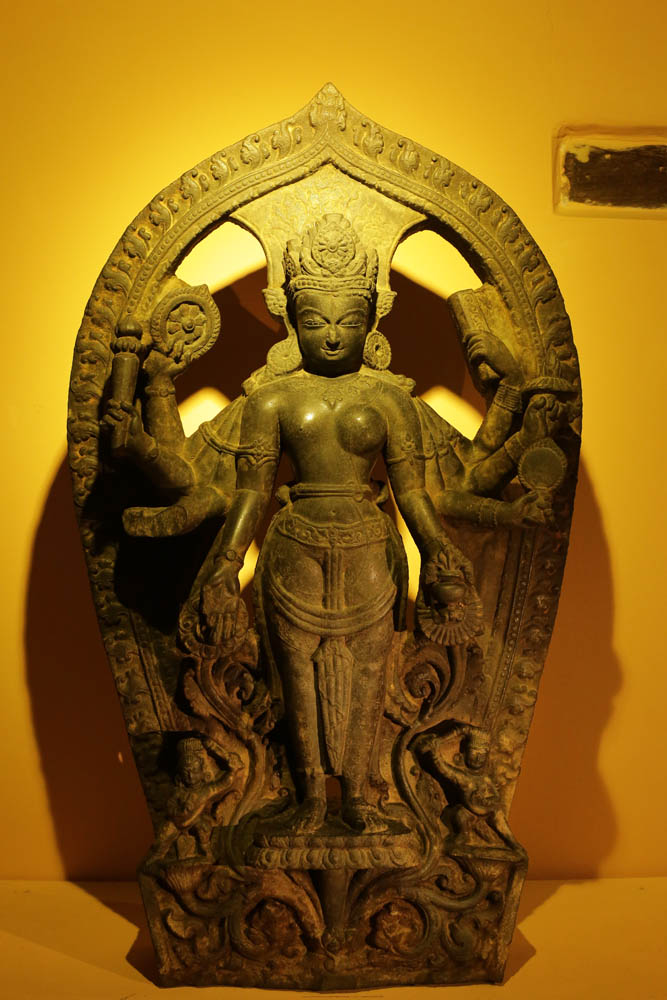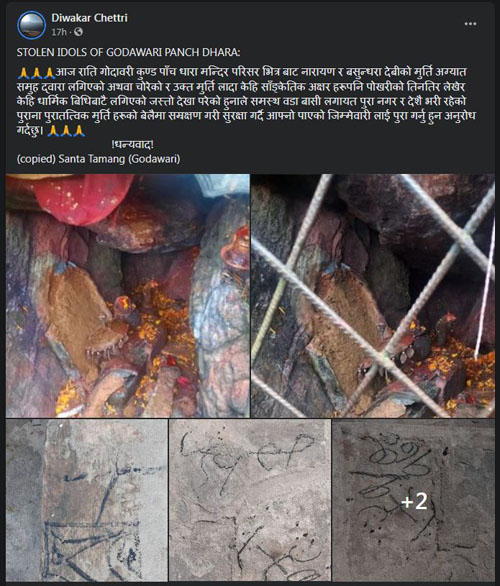
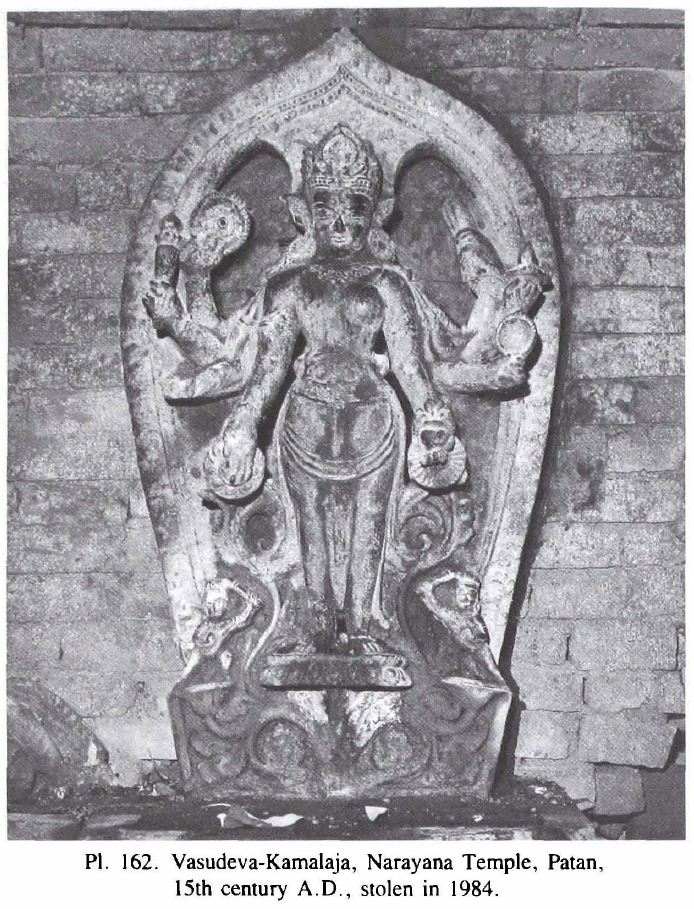
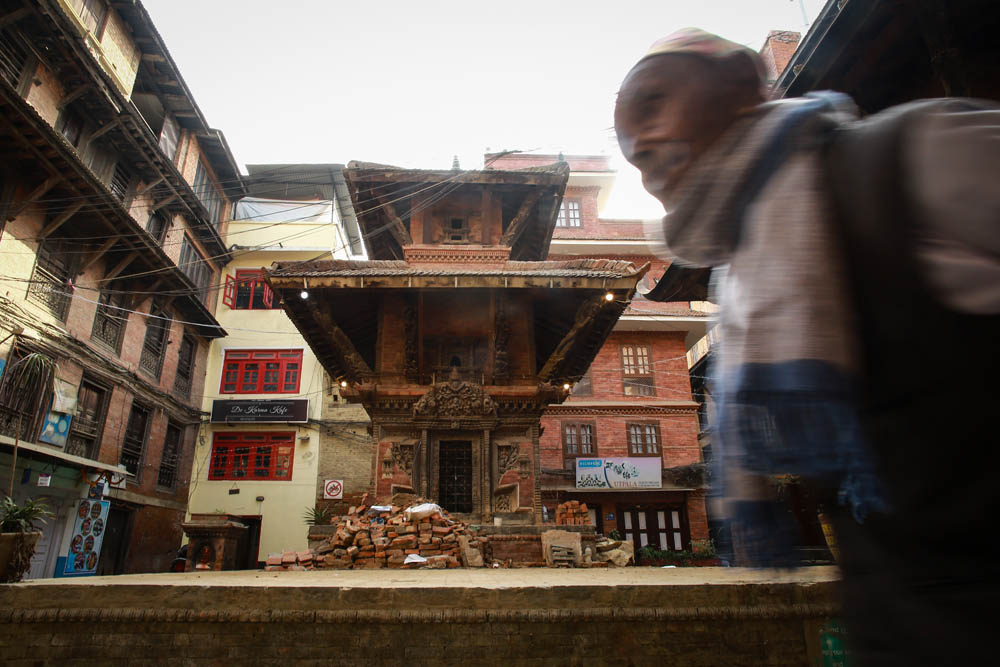
A narrow street behind Patan’s Krishna Mandir leads to Patko Tole with its two-tiered temple dedicated to Laxmi-Narayan. It was from here that a 800-year-old stone idol was stolen one night in 1984.
Devotees came in the morning for their daily prayer rituals to find an empty niche where the Laxmi-Narayan statue was, with bricks strewn around. Six years later, the stele finally surfaced in New York while being auctioned at the Sotheby’s.
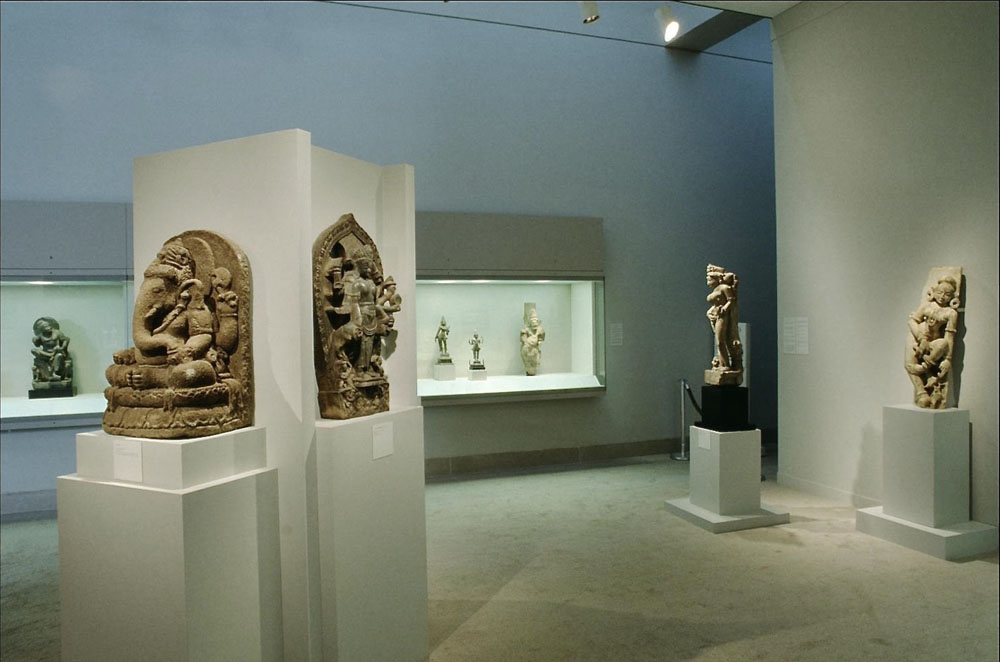
It was bought by David T Owsley, a prominent American collector of antiquities, who gave it to the Dallas Museum of Art on a 30 year long-term loan where it was displayed in 1993 for first time after its theft.
Back in Patan’s Patko Tole, Bhai Raja Shrestha remembers the commotion that morning 37 years ago when neighbours found their god missing. The androgynous idol was eventually replaced with a replica.
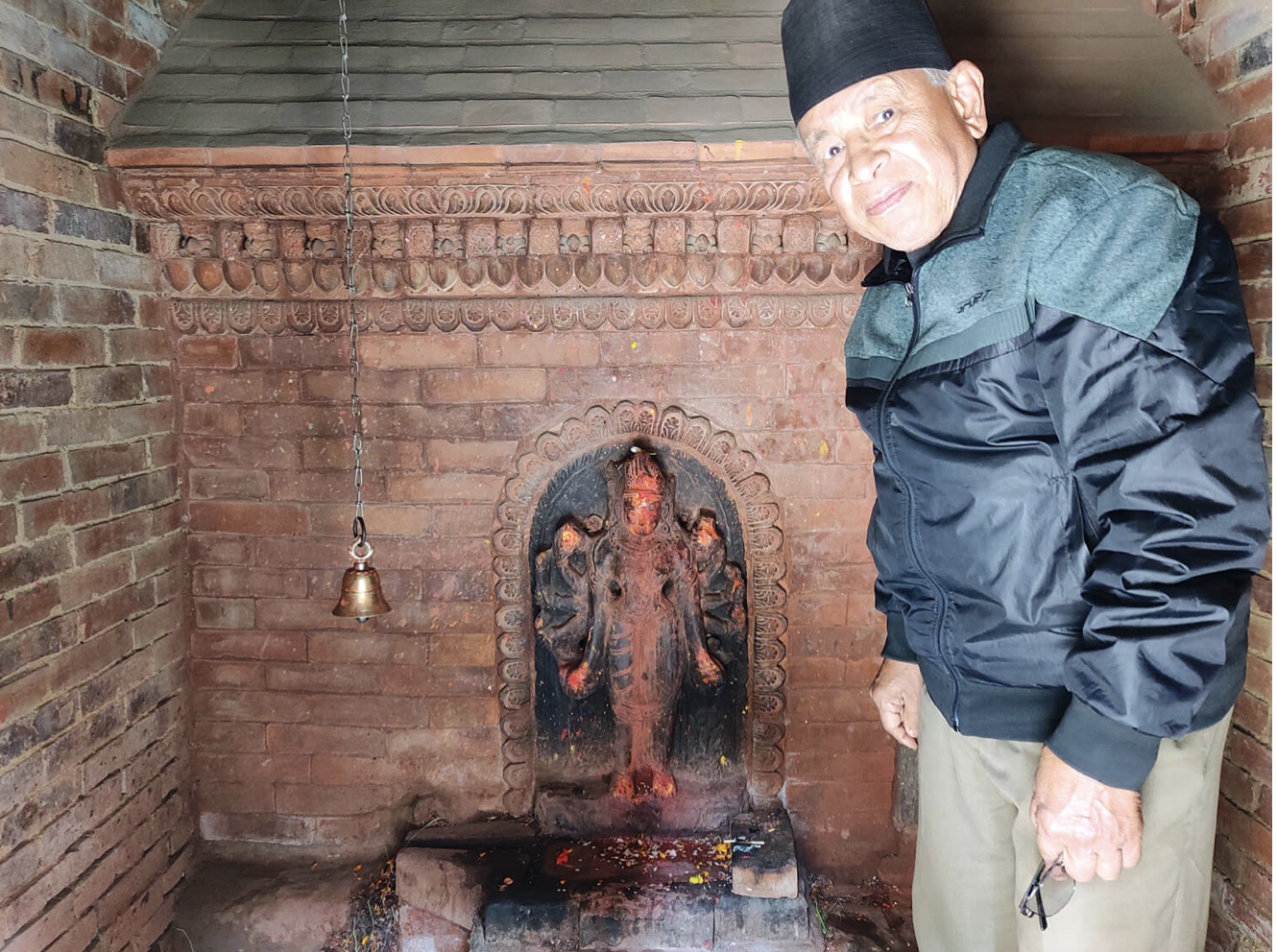
“People still came to do puja every day, but it was not the same thing,” recalls Shrestha, who is now 79. “We had no hope of finding the lost god and with the disappearance of our patron deity, the community also started falling apart.”
Information about the Laxmi-Narayan finally was first found in the museum catalogue in 2013, but the real breakthrough came six years ago when an anonymous blogger posted a picture of the exhibit at the Dallas Museum of Art and American artist Joy Lynn Davis located the idol on display through Google Image Search.
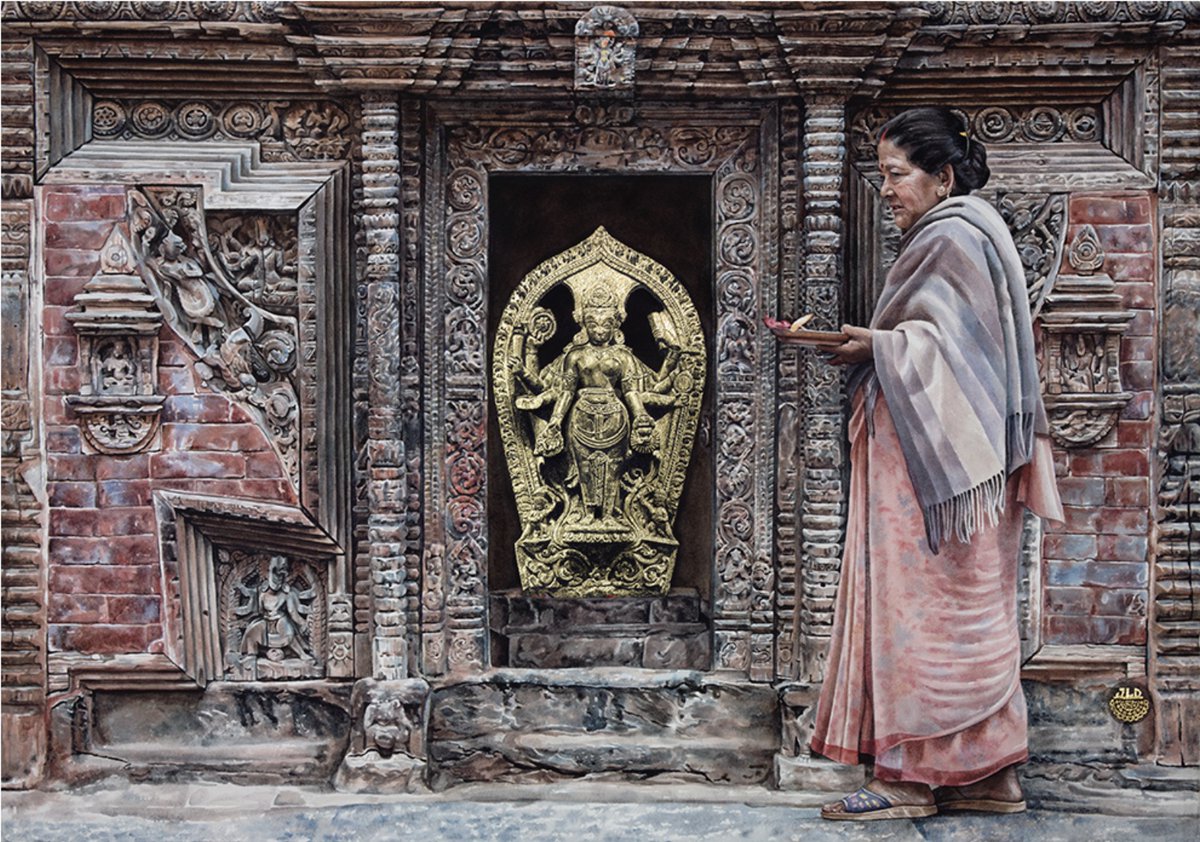
Davis was familiar with the statue because the Laxmi-Narayan was one of the paintings in her 2013 exhibition at the Patan Museum depicting shrines in which she replaced the stolen sacred objects with their images in gold.
It took another six years for the Dallas Museum of Art to remove the stele from its display. After relentless media coverage, an FBI investigation, and diplomatic pressure, the Laxmi-Narayan was flown back to Kathmandu in April and handed over to the Patan Museum for safekeeping.
"Diplomacy isn’t just about politicians, agreements, or high-level meetings. It’s about people and connection," says US Ambassador to Nepal, Randy W Berry. "One of the things that connects us most is respect for one another’s culture. The fact that so many of Nepali’s cultural and religious artifacts have been stolen is tragic - but it’s a tragedy that I hope is reversing."
"We hope to inspire other countries and museums to look into the issue and help reunite Nepali communities with their lost artifacts," he adds. "I know we will do whatever we can to ensure other pieces of Nepali cultural and religious heritage also come home."
The god will be enshrined once more in its original sanctum at the temple in Patko Tole amidst a procession and ceremony on 4 December — nearly 40 years after being in foreign custody.
“It is a truly joyous occasion,” says Bhai Raja Shrestha. “Even when one brick stolen from the temple is returned, it is special to us.”
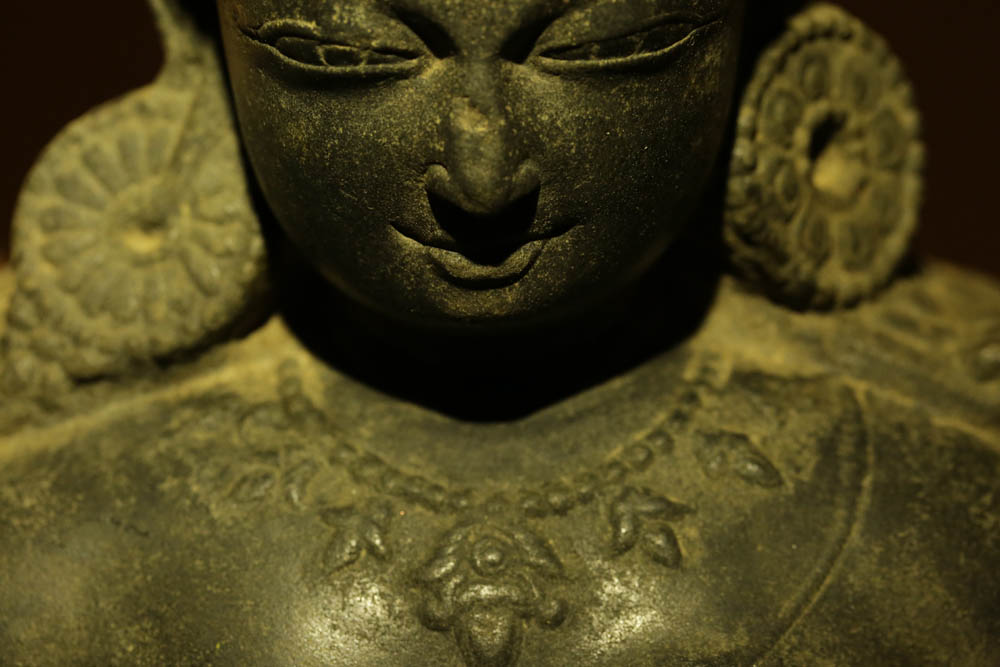
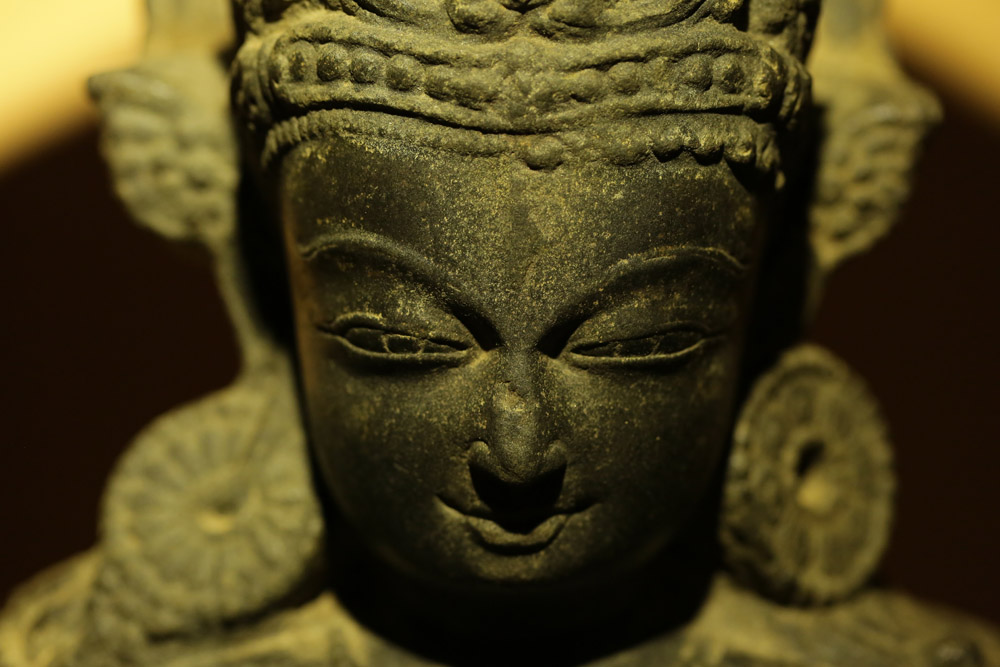
The Patko Tole community has deliberated long and hard about where to put the 10th - 15th century idol that depicts a composite figure of Laxmi and Vishnu. Only seven of the eight arms on the stone sculpture are still intact, and carry various objects attributed to the two gods: wheel, mace, lotus, manuscript, mirror and water pot.
The replica at the temple has its lost arm holding a conch shell restored, and it has already been moved to the left side of the shrine to make way for the original, which will be prominently displayed and anchored to the altar with concealed stainless steel bars.
“The fact that it is a little damaged is not a major concern,” says Bhai Raja Shrestha. “We will worship both the original and the replica at the temple.”
Shrestha dismisses concern that the statue might be stolen again. Besides the steel bars put up by the Kathmandu Valley Preservation Trust (KVPT), the Kathmandu University Department of Electrical and Electronic Engineering has installed infrared movement sensors, CCTV coverage, and door contact detection gadgets.
“There is no market value for the statue now. Because of the media coverage, no museum or collector will want to buy or hold a stolen item,” says KVPT’s Rohit Ranjitkar.
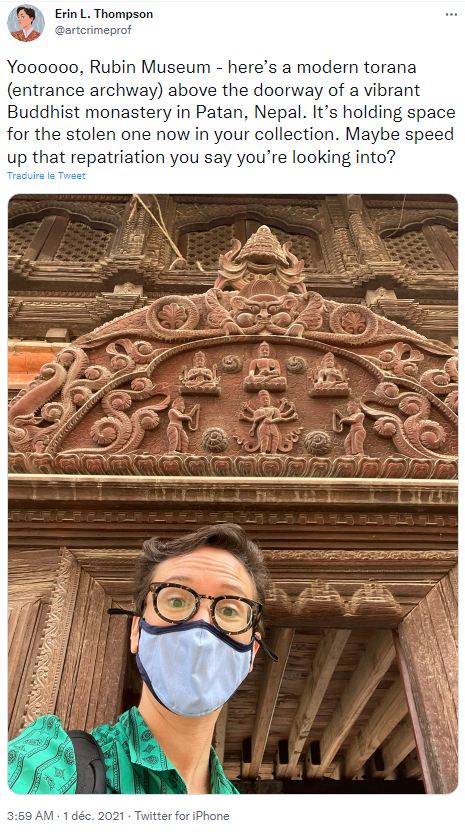
American arts crime professor Erin Thompson agrees. The US, UK and Nepal are among 141 countries which have ratified the 1970 UNESCO international treaty to prohibit and prevent the illicit import, export and transfer of ownership of cultural property.
“Plenty of museums, collectors and dealers will say that there is no problem as long as the objects left Nepal before 1970,” says Thompson. “But that’s not legally true since the objects are still essentially stolen no matter when.”
At least in the United States, the legal climate is changing and public prosecutors have been seizing antiquities, no matter when they were stolen.
Looking back at the paintings of Joy Lynn Davis, the return of Laxmi-Narayan to its original shrine is almost a manifestation of her art in real life, which has in turn helped to raise awareness about the stolen sacred objects.
“I wanted to ask through my art if it was possible to imagine a future in which the statues are returned to their shrines,” says Davis, who like Thompson have flown to Kathmandu to attend the consecration ritual at Patko Tole on Saturday.
Patan Museum has been holding several stolen objects that have been repatriated from abroad. At 11AM on Saturday, the Laxmi-Narayan will be adorned with a special copper garment and carried in a palanquin from the Museum to Patko Tole in a ceremonial procession for the kshyama puja – a ritual seeking forgiveness.
“This consecration ceremony is a historical event, the Laxmi-Narayan also restores our faith and belief,” says Roshan Mishra of Taragaon Museum, who is also involved with the Nepal Heritage Recovery Campaign.
The Campaign was launched in September 2021 as a collaborative international effort for the repatriation and restitution of Nepal’s sacred stolen objects, as far as possible to its original community in Kathmandu Valley.