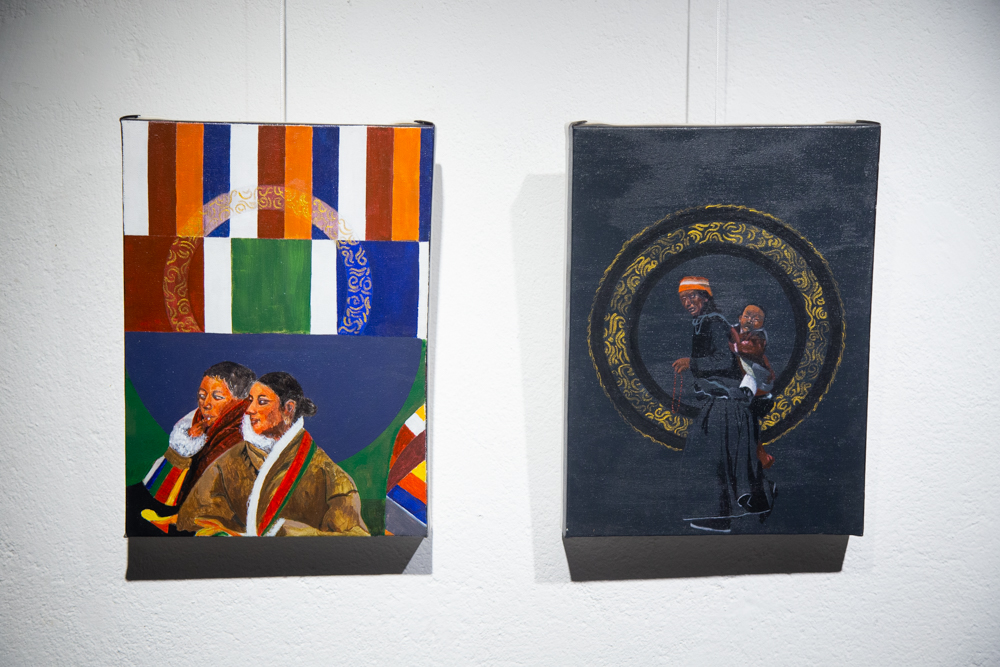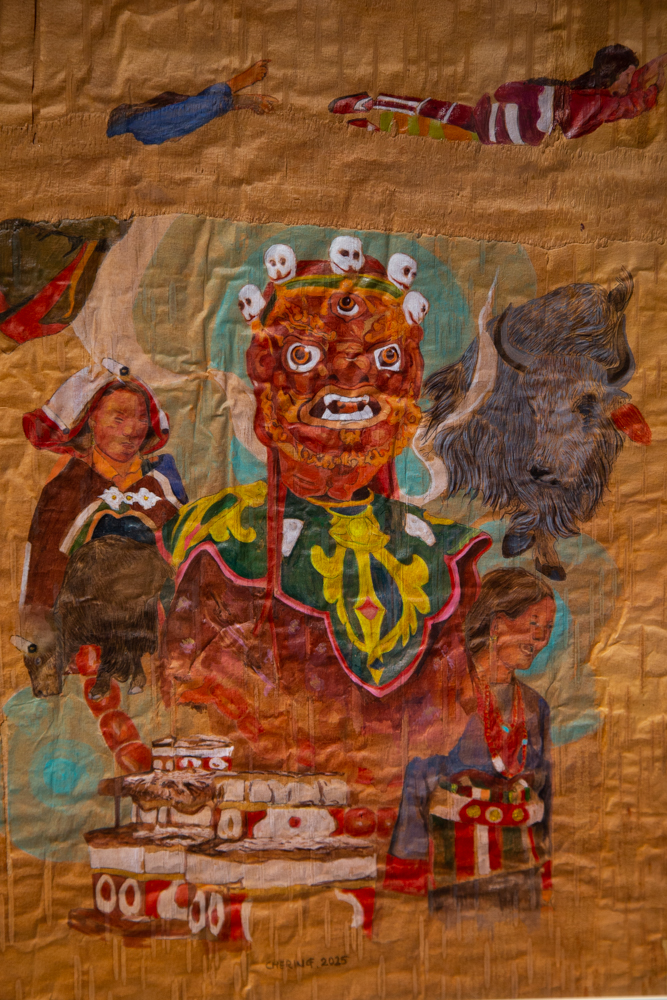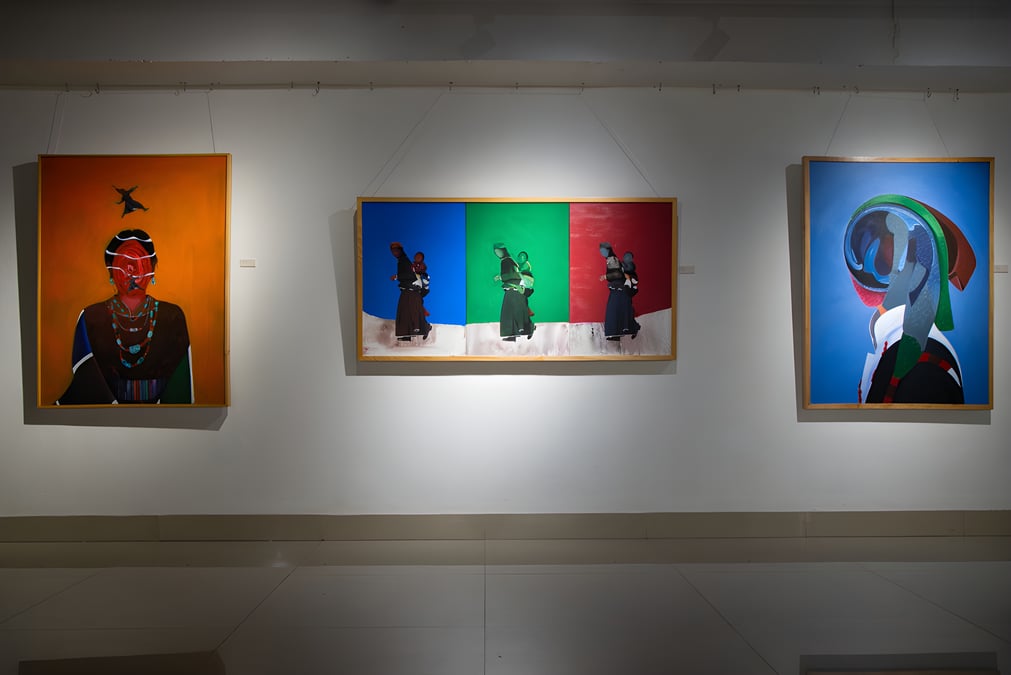
Duthik: Stories from Dolpo at The Kala Salon is Chering Gyaoo Gurung’s ode to his homeland of Dolpo using its native textiles and jewelry. It is also an urgent call to preserve the region’s culture, eroded by encroaching modernity, migration, and a changing climate.
‘I have always loved the textiles of my home, and these, along with the lapis, coral and other minerals used in our jewelry, have inspired my art,’ writes Gurung in his artist’s statement.
The famous Dolpo blankets, weighty, richly coloured with linear patterns, hang alongside his paintings in the Salon, on the top floor of the Chhaya Center in Thamel. One of the blankets is his grandmother’s. “It almost still smells smoky, since we only use firewood,” says the soft-spoken 25-year-old.
Dolpo in the trans-Himalaya is to the north of the Dhaulagiri range. Most people, incluyding the artist’s family are pastoralists, herding 100 yaks, goats and sheep. Many families also collect yarsagumba, and at one point that would make enough money to last the year, but not anymore.
“From Dolpo, it is pretty unheard of to pursue art,” says Gurung, who is not traditionally trained in thangka like other Himalayan artists like Tsherin Sherpa or Dorjee Karmarong. But his passion for art showed early, when he came to Kathmandu at five to study.
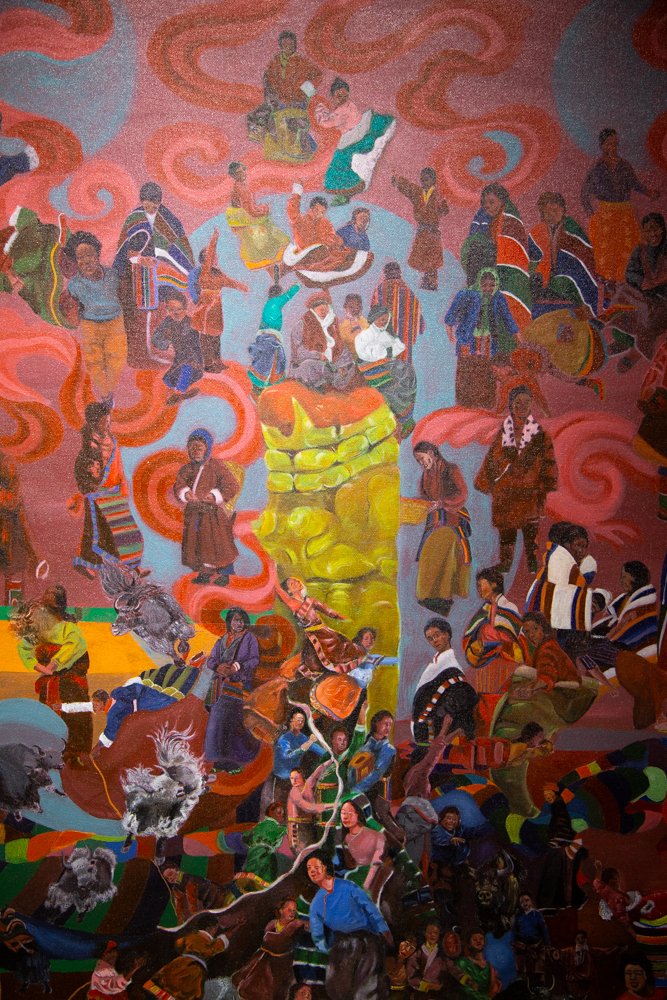
“In Dolpo, we used to go to school for six months and work with our parents for six months. An aunt suggested that I might as well get some tuition during this time off. Once I came to Kathmandu, we found French sponsors and I stayed here to study,” recounts Gurung.
Gurung lived in a hostel and studied under that sponsorship until grade ten. He got support from home for further studies until a bachelor’s in art, which he only finished two years ago. In the meantime, for him, art was a hobby he was good at, he would often win at competitions that this school took him to.
Following graduation, many of Gurung’s peers did a lot of commission work and got burned out, while he received residencies, allowing him to stick to his own process and ideas, subsequently developing a style and a voice of his own.
Gurung was the first of his family to move to Kathmandu like he did, and while that has led to a blossoming art career, he is wistful about the life he left behind. “The people I left behind lived sort of a perfect life in the village,” he says, even as it is clear herding yaks would not have been enough for his independent spirit.
And migration is a big theme in his work, six of the paintings at the exhibition are named as much. Two of them show a mother walking with a baby on her back, and one depicts a snow leopard on the move with its cub.