
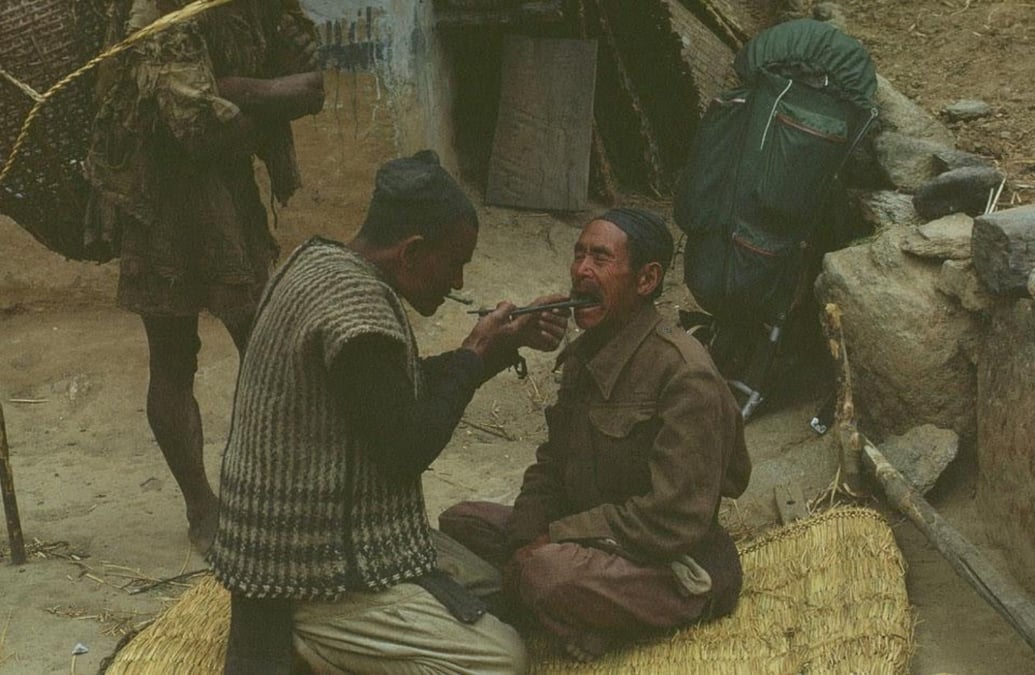
When Nepal’s national heritage is cited, famous monuments pop into our mind: Dharara, Pashupatinath, the ancient Darbar Squares. History glorifies monarchs and elites for building them.
However, we usually overlook the Kami, Nepal’s industrious blacksmiths, and their आरण forges and anvils. They produced the tools without which no monument was possible, built roads, bridges, and watermills. The Kami helped build Nepal.
Historically, Kamis smelted, slagged, pounded, hammered, forged and tempered metals using ingenious indigenous technologies. The आरण forge embodies a rich living knowledge system, which combines sensory skills of heating, bending, blending and tempering. Grounded in rich oral stories, myths and cultural memories, the aaran can also restore the community’s dignity and bolster Nepal’s economy.
Unfortunately, Nepal’s rich blacksmithing tradition is rapidly dying. The younger generation is shifting to other occupations due to shrinking earning opportunities and occupational stigma, leading to an irrecoverable loss of generational knowledge.
Nepal’s government is currently considering a bill to protect intangible cultural heritage. This is a great opportunity to officially correct historical mistakes and celebrate Dalit skills, including blacksmithing, which laid the foundations of Nepal’s development.
IGNORED HISTORY
Iron smithing in Nepal began as early as the Kirat Period (800 BCE-300 CE). The Licchavi Period (300 CE- 879 CE) is often called Nepal’s golden age, during which Kathmandu Valley flourished in arts and crafts, including ironwork. During the Malla era (1200 CE-1769 CE), Kathmandu’s artisans traded their finely crafted metalwork with India and Tibet.
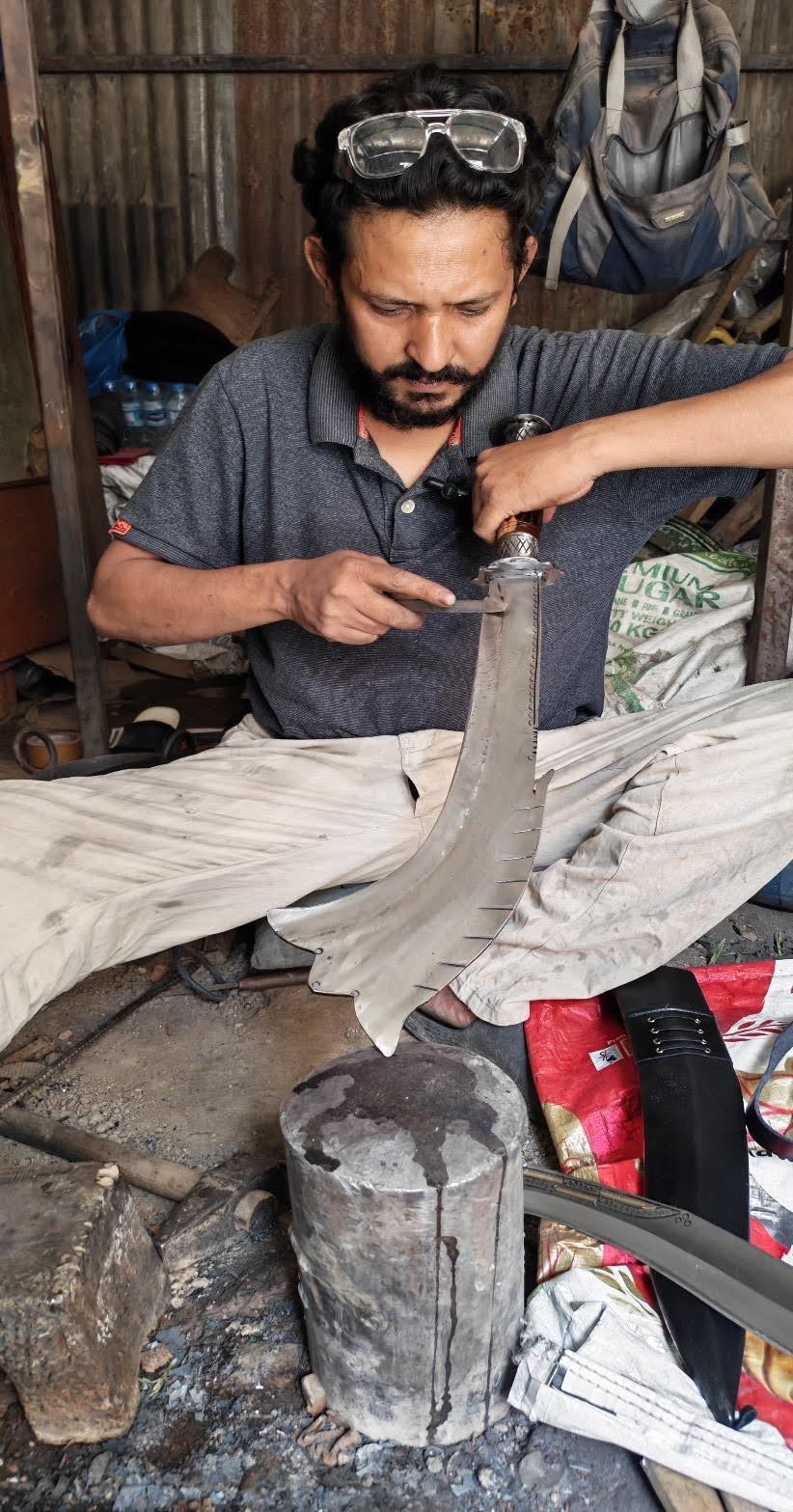
To supply craft materials, the Kami and Aagri, a western subgroup within this caste, extracted and smelted metal ores across Nepal. Their workshops forged essential tools for carpenters, shoemakers, masons, and farmers, and they forged firearms and armaments for soldiers and dies for the state mints. Blacksmiths sustained both the agrarian economy and Nepal’s rich culture.
To the Kami, the forge is not just a workplace; it is a shrine where Lord Vishwakarma and other deities reside. Kami begin each day with a prayer, and in Dasain they worship their deities with sacrifices. They keep their smelting process a strict secret. They believe that if other castes watch their work, it can ruin the process and the product.
Every year, Biswakarma Puja marks the day to pay respects to this deity, when all tools, machinery and even computers and escalators receive special reverence. This year, it fell last week on 17 September.
People often perceive smithing as a dirty occupation, they overlook its deep intellectual tradition, built upon indigenous material science. The Kami knew where to find iron and copper ore, and how to test their quality. They knew exactly how to make bellows, manage fuel resources, and reach exactly the right heat to purify, shape, and temper metal into strong tools.
They knew the skills of hardening and softening metals using just water on heated metal, and used the iron’s colour -- blue, yellow or white -- to assess its quality. This embodied knowledge indirectly challenged elite ways of knowing, based on memorised texts.
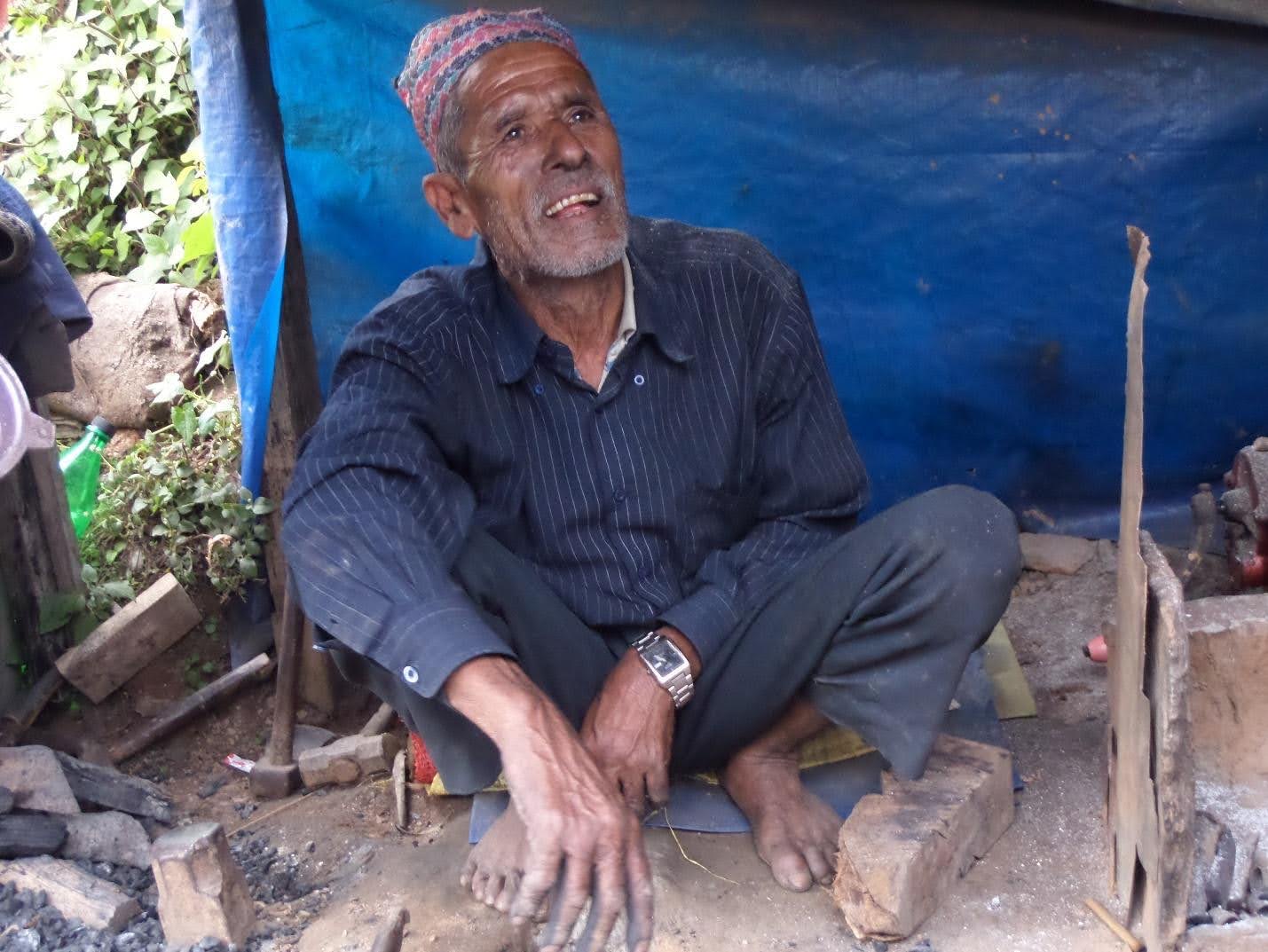
Even though caste society places them at the bottom, the Kami hold total authority inside their workshops. If anyone disrespects their forge, they push back.
A Tribhuvan University professor remembers a childhood anecdote in Ilam. While playing, his friend accidentally stepped over a neighbour’s forge. Furious, the Kami protested to the village council, and local leaders supported the Kami. They fined the boy and asked his family to offer rice, fruits, and some money to the Kami so he could perform a forgiveness ritual to purify his sacred workspace.
During my fieldwork in Kaski District, locals stressed that a true Bishwakarma must master at 20 skills. The community distinguishes between the Kami (the skilled, ethical master) and the Bekami (the unskilled or unproductive labourer).
A master Kami possessed multiple skills beyond his workshop. For example, my grandfather’s younger brother was an armourer and a sharpshooter. His exceptional shooting skills earned him a three-generation military pension.
He was also a traditional healer. When his son broke his arm, my great uncle treated him so perfectly using bamboo splints and herbal medicines that his son later cleared a strict Indian army medical exam.
The Kami are inventive and innovative, yet they have rarely earned recognition. In the 1970s, for instance, Dalibir Singh Kami from Dailekh built suspension bridges, surveyed highways, and repaired typewriters and helicopters. From 1957 to 1981, Doti’s Lal Bd Bishwakarma invented an automated fan, a six-round rifle, an electric-less water pump and a generator to produce electricity.
In Japan and the US, a blacksmith’s metal craft and its contribution to their economic growth and political freedom are valued. Japan sponsors annual festivals showcasing knives and sword-making demonstrations and designates metal-working masters as ‘Preservers of Important Intangible Cultural Properties’.
In the US there are museums with live workshops that honour blacksmiths for their contributions to the nation’s growth and to the American independence movement against the British in the 1770s. One expert applauds the Virginian blacksmith James Anderson for hammering out essential weapons and tools in the fight against the British into ‘a sort of revolutionary assembly line’.
In Nepal, many Kami youth are abandoning the craft of their forebears due to low earning opportunities, a declining agrarian economy, the availability of cheap goods, along with caste stigma. Yet, the older generation of metalsmiths with multiple skills is proud of their skills and heritage.
The Nepali blacksmith’s forge and its associated technologies can be a proud symbol of invention, innovation, and resilience. To preserve this valuable heritage, the government should provide direct financial support to help the Kami market their goods and incorporate their artisanal skills into Nepal’s school curriculum, technical education and recruit master artisans as instructors.
Ironsmithing was never just a mindless menial job, it was a skilled engineering lab and an industry. Unfortunately, a repressive socio-economic system has held it back, hindering equitable development.
If Nepal’s past rulers had understood the reverse-engineering skills of the Kami, perhaps so many ordinary people would not have had to struggle to carry heavy cars on their shoulders and backs across the steep hills of Bhimphedi just for elite comfort.
Arjun Bahadur BK is a PhD Scholar at the Department of Development Studies of Kathmandu University.son