
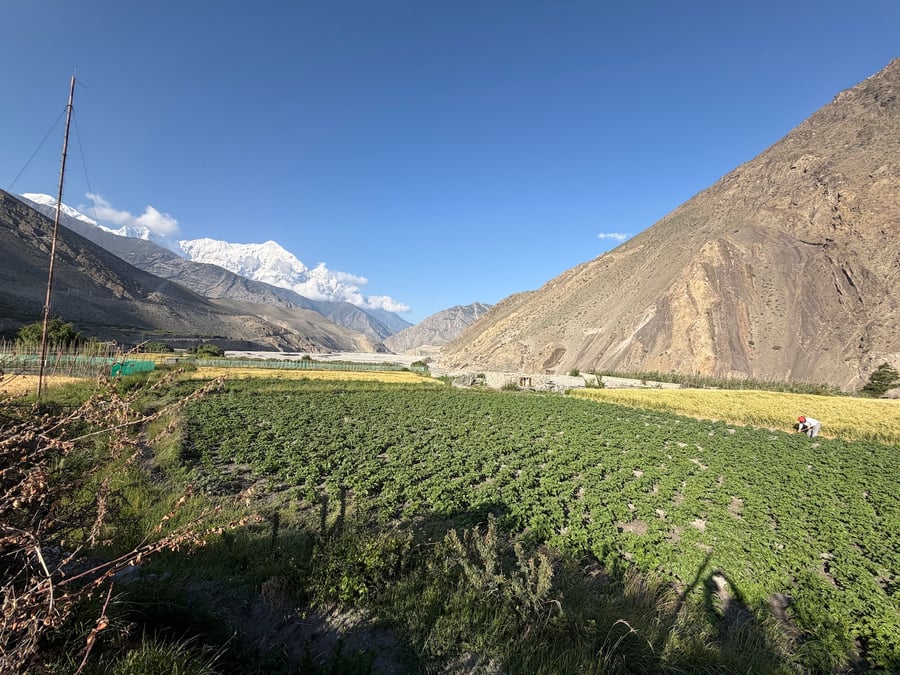
When Sangmu Gurung was a child in Nepal’s trans-Himalayan Mustang district, she accompanied her parents to plant millet in the fertile alluvial fan at Kagbeni. Before planting, there would be a special workship by the head lama for a bountiful harvest.
Along the Kali Gandaki river in kobang, Lete and Tukuche, the fields have burst into Nepal’s autumn colours of red, gold and green of ripening buckwheat (phaphar), millet (kodo), barley (uwa) and apple orchards. These have to be harvested before the first snows come. But outmigration, inroads of processed food and climate breakdown have meant that there fewer farms cultivating indigenous grains of the Himalaya.
“Before sowing uwa, the priest put a stone in the middle of the field on which we used to put offerings of seven different types flour,” Sangmu remembers. “Uwa was not just a food, it was our culture.”
But with these native grains going out of fashion, the unique culture of the people of Nepal’s trans-Himalayan districts of Mustang, Manang, Dolpo is also eroding.
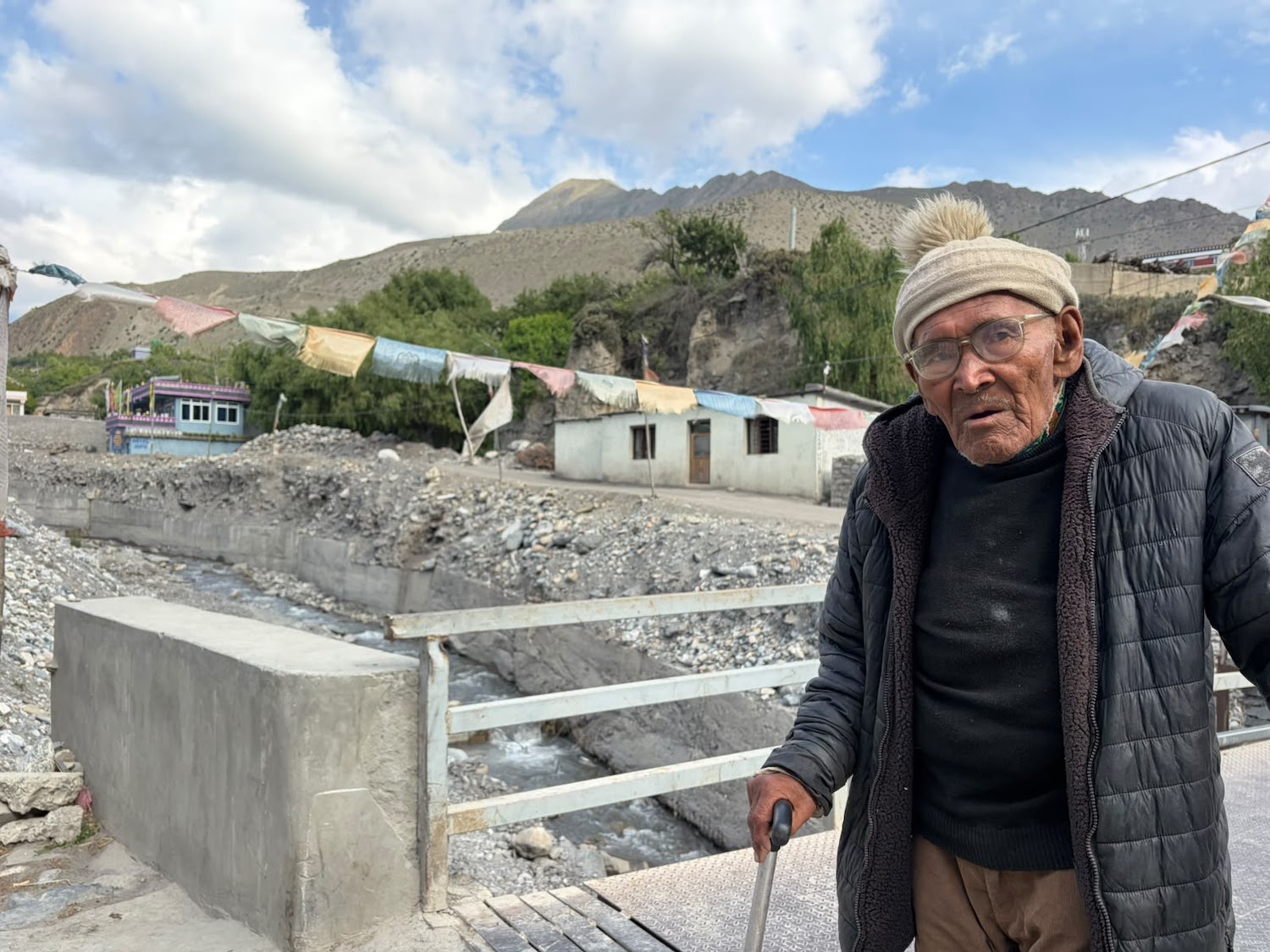
Tshiring Gurung has 2 hectares of land in Kagbeni, and until three years ago he used to plant barley and buckwheat. But now his farm has turned into a vast apple orchard. It used to be too cold for apples here, but with a warming climate fruit-farming is climbing to higher altitudes, and they are also a more lucrative cash crop.
“Apples did not grow well here before, but for the past years they have been growing well, there is a ready market in Pokhara and Kathmandu and the traders give us an advance for the crop,” says Tshiring, who adds that apples also need less manual labour at harvest time.
Mendo Gurung of Tiri village has also switched from barley to apples. She says, “I haven't planted Uwa and buckwheat for the last five years, apple farming is much more profitable.”
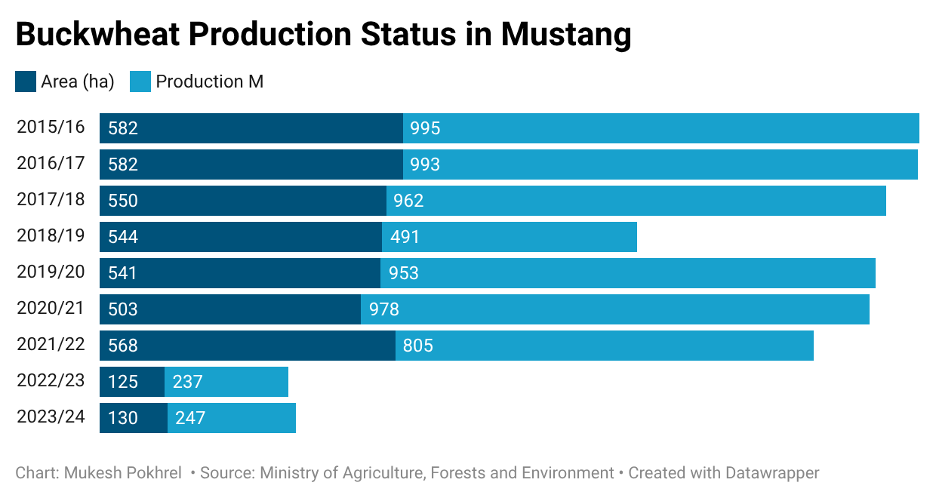
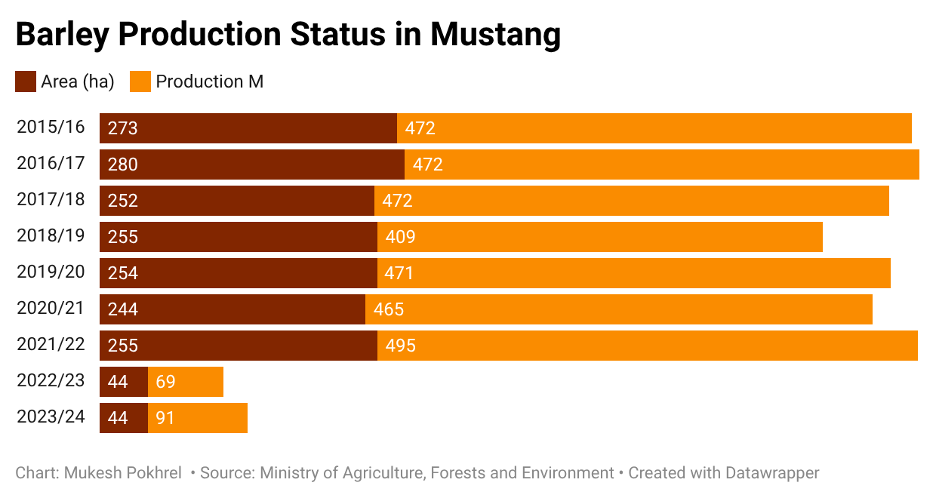
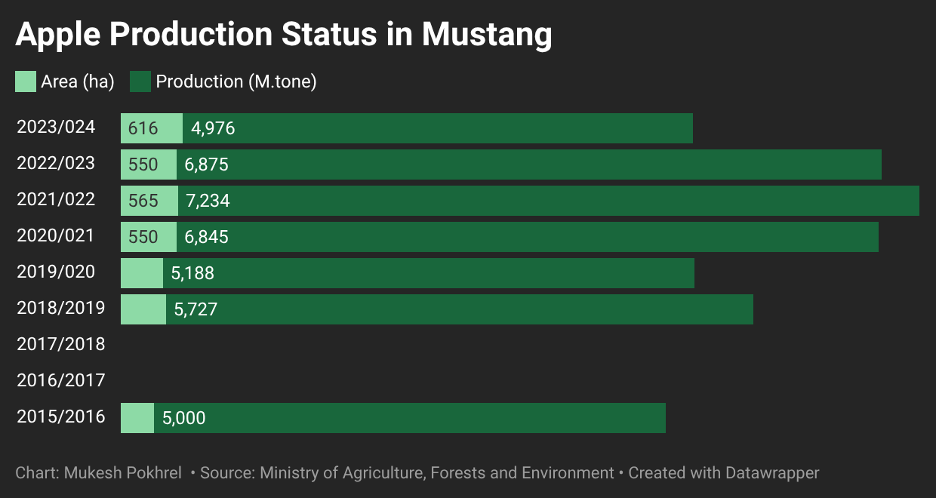
Back in Kathmandu, the Ministry of Agriculture’s statistics show a sharp decline in the cultivation of indigenous grains. In 2015, for example, 472 tonnes of barley was harvested from about 3 sq km of farms in Lower Mustang. Today the harvest is barely 91 tonnes. Annual buckwheat production used to be 995 tonnes, but has fallen dramatically.
Yaggin Gurung is nostalgic when she remembers the uwa planting season when everyone donned ceremonial bakkhu and white shawls for the prayers in the field before planting. “It used to be like a festival in our village, growing food was nourishment not just to the body but our culture too. But this tradition is slowly dying out. The coming generation will not have a tase for it.”
Indeed, Mustang has one of the highest outmigration rates among Nepal’s districts. It had lost nearly 30% of its original population between the census in 2011 and the next one in 2021. Young people have migrated to the cities, or to Japan, Korea and the United States and it mostly the elderly who are left in the Mustang’s villages.
Tiri village at an altitude of 2,800m has 17 houses, including one belonging to Mendo Gurung. But only two planted barley and millet this year. There were some apple in the garden for household consumption. Now the farm has been turned into an apple orchard, and the fruit is in high demand from tourist lodges since the village is along the trekking trail to Upper Mustang and Dolpo.
APPLE COUNTRY
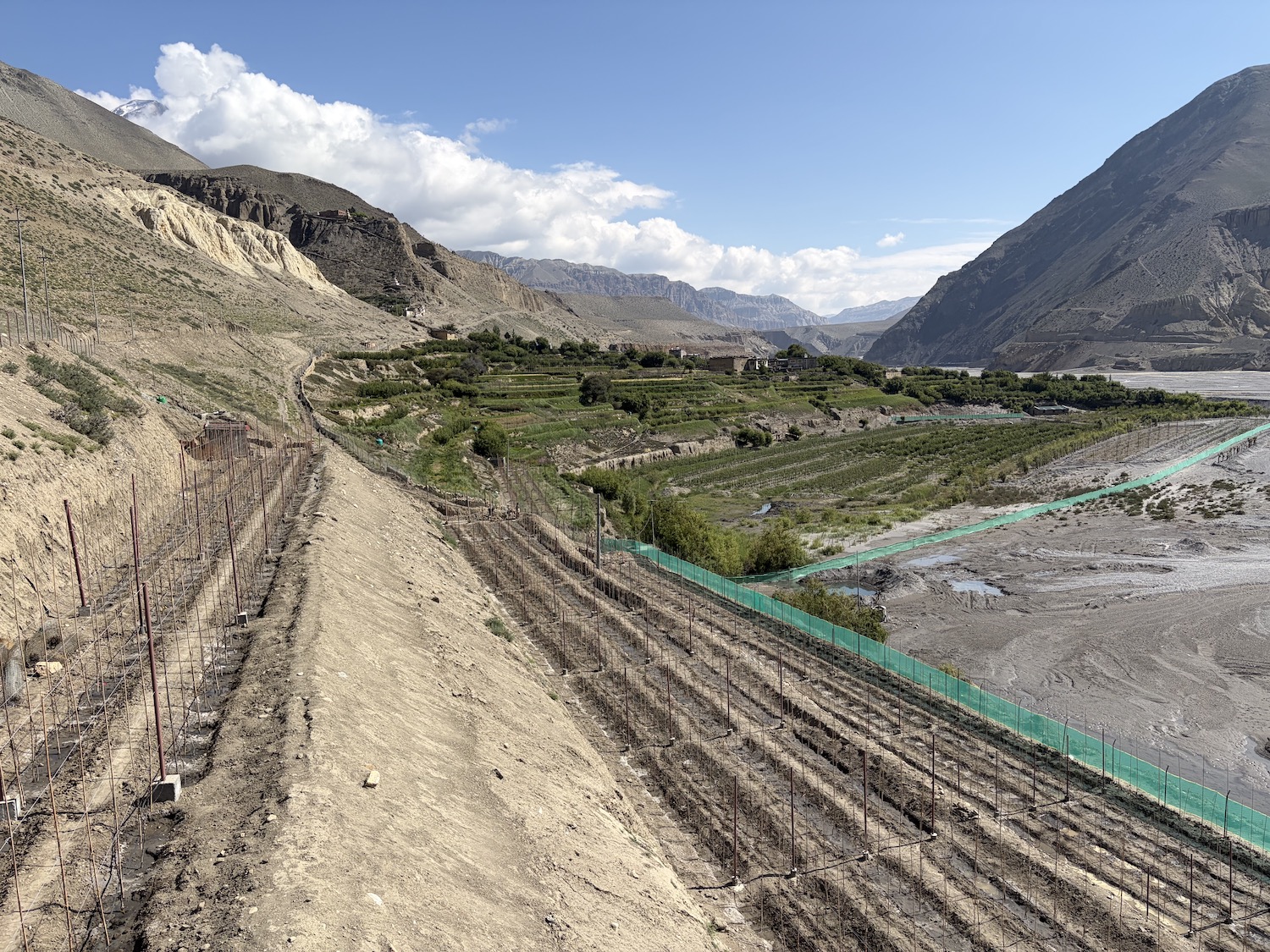
Down the valley, Thasang and Marhpa used to be famous for their apples, and before the Kali Gandaki corridor road was built the fruits wold rot because of lack of access to market. The area became famous for the Marpha apple brandy. Today, apple does not grow as well there anymore.
“It is getting warmer here, so the apples are moving up the mountains,” says Krishna Bhattachan, who like many others have turned to growing vegetables in greenhouses. Data from the Department of Hydrology and Meteorology in Kathmandu shows that the maximum temperature in Mustang increased by more than 2°C between 1981-2014.
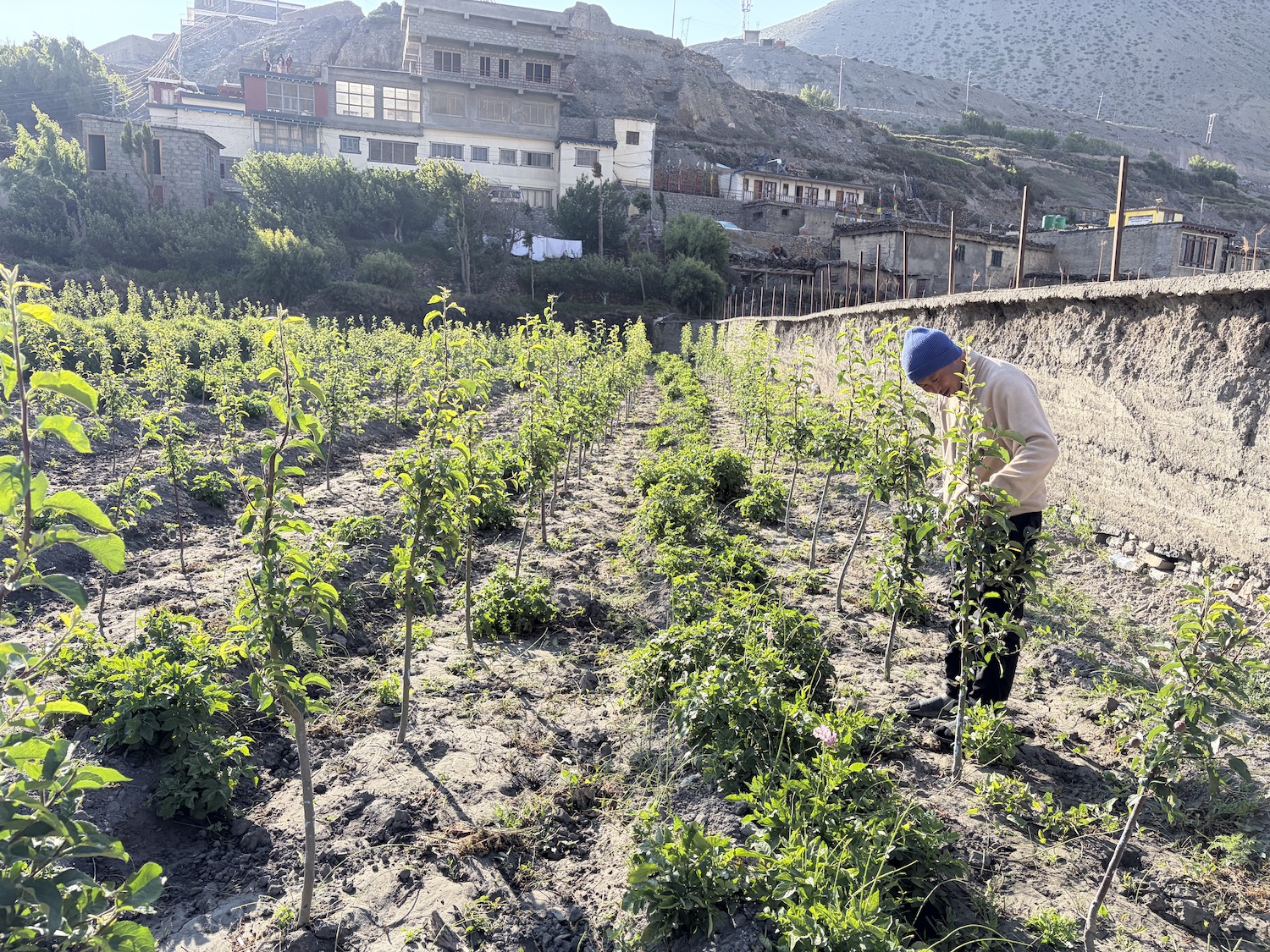
Prakash Pantha is a scientist with the Temperate Horticulture Development Center in Marpha and says climate change has turned farming upside down in Mustang. Apple trees require an average temperature of 7°C for 1,000 hours of during the growing period to do well. However, in Lower Mustang, it is becoming increasingly difficult to get sufficient cold hours that apples prefer.
Rain and snow has also become erratic. It rains when it should not during the monsoon month, and there have been snow droughts for eight of the last 10 winters.
“Below Jomsom, the climate is no longer suitable for apple farming. That is why apple cultivation is moving to higher elevations,” said Pantha. “New pests and diseases like codling moth and San Jose scale are also damaging apples. These pests reduce productivity, damage the fruit and, in some cases, cause the fruit to rot from the inside.”
Even the Temperate Horticulture Development Centre in Marpha is planning to shift some of its apple research to Upper Mustang, and has acquired 40 hectares of land in Ghemi at 4,000m, a place where apples never used to grow previously.
The expansion of apple farming in Mustang has opened up new possibilities for the local economy and the lives of farmers. However, Laxmi Gurung from Kagbeni this has come at the cost of traditional crops like buckwheat, millet and barley. This does not just mean a shift in farming practices, but also impacts the community's culture, traditions, and intergenerational knowledge.
"Traditional crops are not only adapted to the local geography, climate, and lifestyle but are also deeply intertwined with local cuisine, festivals, religious and social practices, and community identity," says Laxmi. "Rather than viewing them merely as obsolete agricultural produce, it is essential to understand them as the living cultural heritage of the local community."
UNESCO’s 2003 Convention for the Safeguarding of the Intangible Cultural Heritage recognises knowledge, skills and practices that communities create, preserve and transmit across generations as important elements of intangible cultural heritage. It calls on countries to respect knowledge and practices related to farming, food gathering, food preparation and food preservation, including their associated rituals and beliefs—as part of intangible cultural heritage.
The shift to apples and other fruits has increased incomes for what were mostly subsistence farmers, but it has also led to a loss of a living heritage. This change in agricultural practices may have come anyway because of migration and road connectivity, but climate breakdown certainly seems to have hastened it.
Nepal's National Agriculture Genetic Resource Center (Genebank) is preparing to launch a new conservation program in the Mustang and Manang districts to preserve indigenous crops, traditional knowledge, and local culture, grass species, pests and birds in these two trans-Himalayan districts.
"More than half the indigenous knowledge has already disappeared from these areas, in some areas our research found all of it has been lost,” says Balkrishna Joshi of Genebank. "The traditional Himalayan culture is unique in the world, and we have a responsibility to protect it.”
Many of Mustang’s indigenous crops are already in the ‘red list such as naked barley, buckwheat, foxtail millet (kaguno) because their cultivation has been declining rapidly each year. Joshi says besides just preserving the genetic material and culture, the grains are also highly nutritious and more resilient to climate breakdown. Their conservation is therefore important for both food security and biodiversity.