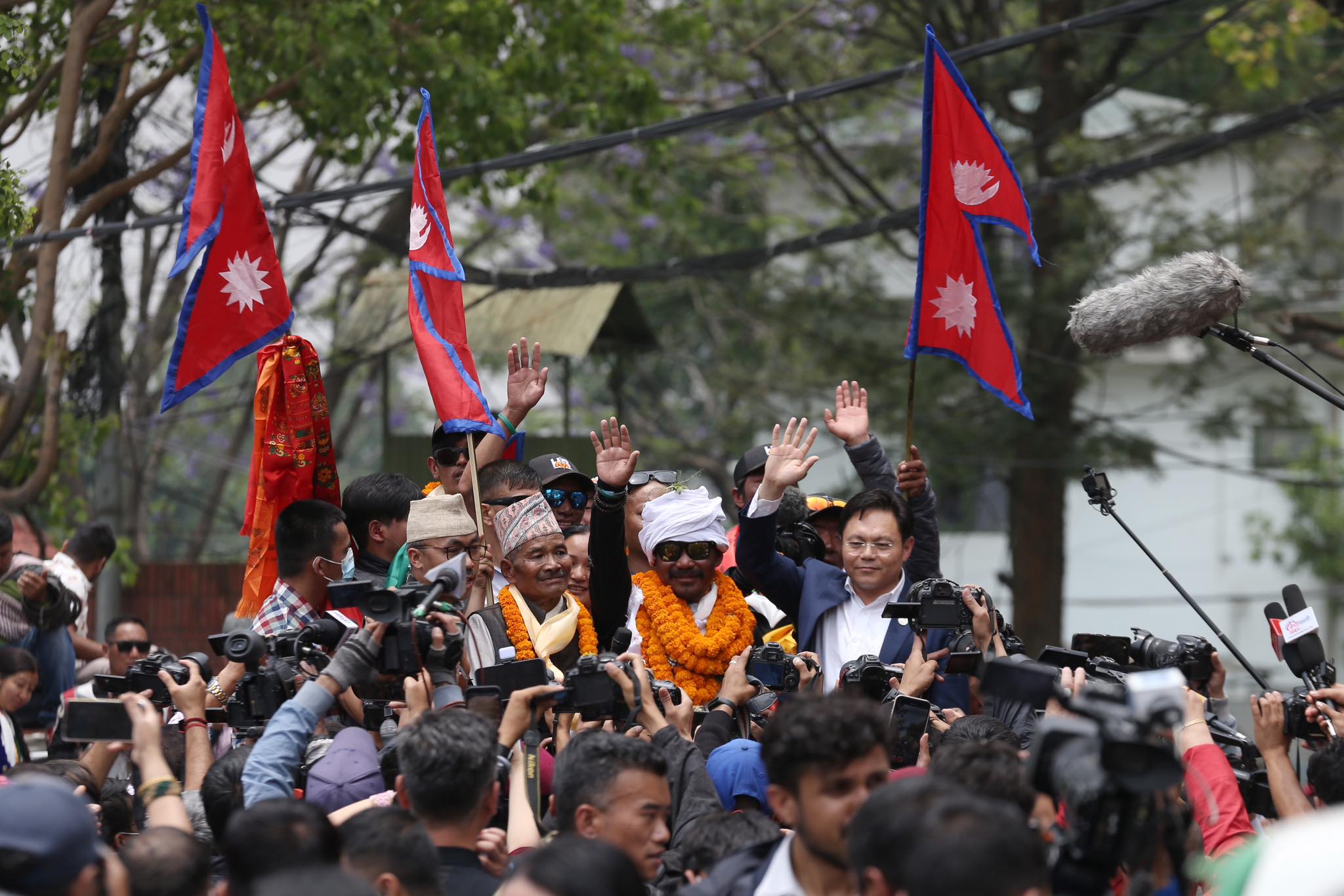
On 23 May, hundreds gathered at Kathmandu airport to greet Hari Budha Magar who created history as the world’s first double above-knee amputee to summit Everest, becoming an ultimate icon of hope and courage.
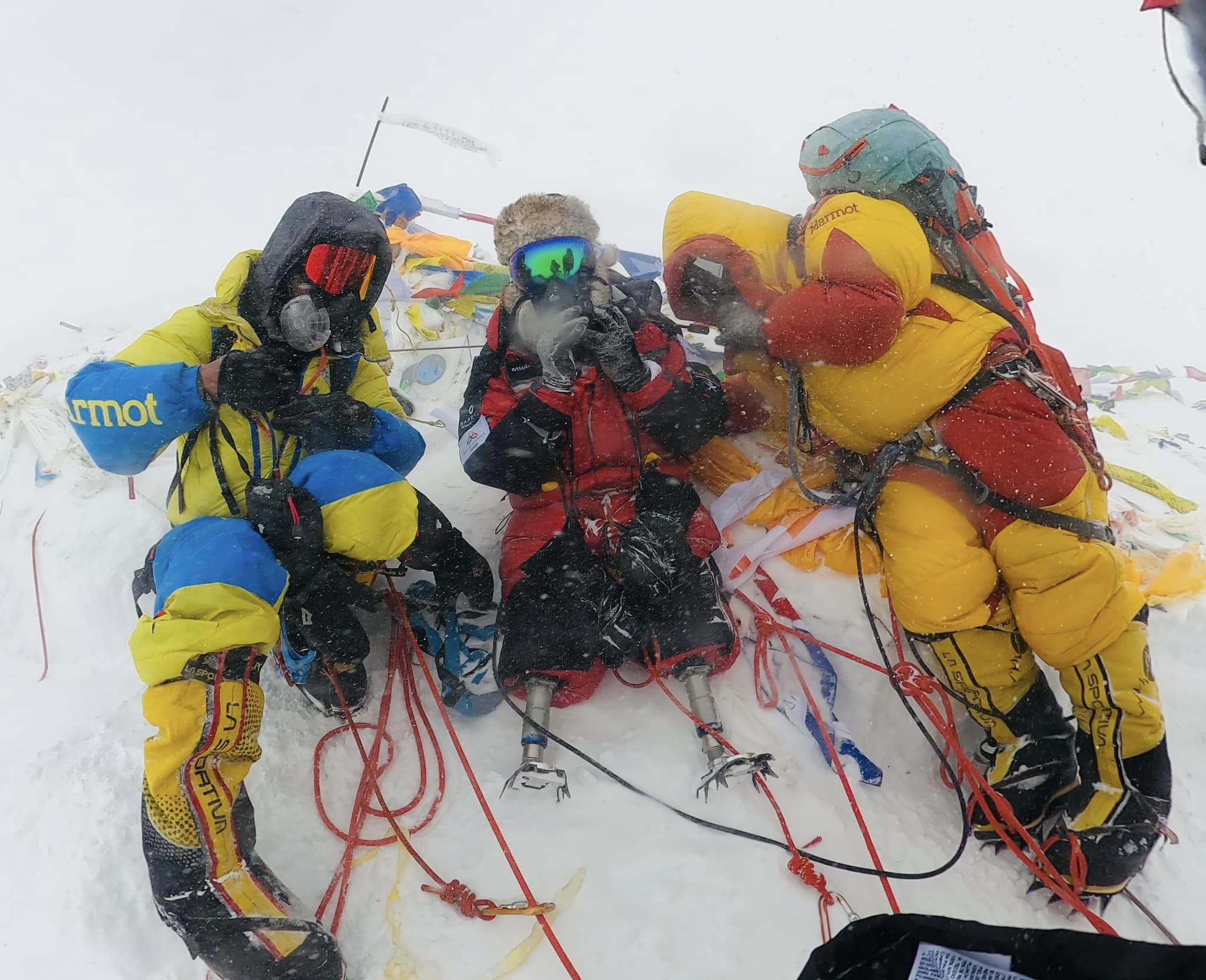
“We made it!” Magar, 45, is said to have shouted as he made it to the summit of the world’s highest mountain at 3:10PM on 19 May. Magar posed for a photo sitting on the top holding his two prosthetic legs.
Mt Everest, even in the most favorable of weather conditions, poses extreme challenges for the best of climbers. Till press time on Thursday, nearly 500 mountaineers had made it to the top, while 11 lost their lives on the mountain.
Magar climbed with the help of fellow-Nepali high altitude guides in extreme weather, defying all the odds and breaking stereotypes. The former British Gurkha soldier has since received much praise from the world over for his exceptional achievement.
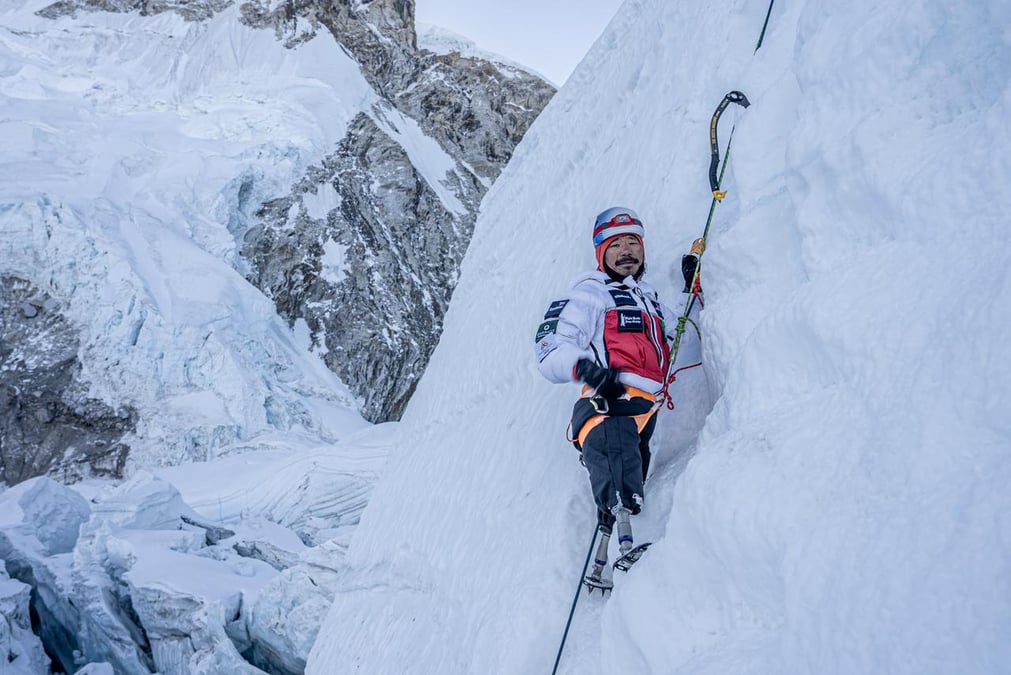
After losing his legs in a mine explosion in Afghanistan in 2010, Magar fell into hopelessness before his ambitions for the great mountains reignited. Before long, he went paragliding, ventured onto tough roads cycling and skiing, and climbed mountains with his prosthetic legs.
Eventually, he set his eyes on Everest. And led by former Chief Mountain Instructor at the British SAS commando unit, and world-renowned climber Krish Thapa, the team crossed the treacherous Khumbu Icefall paths from Base Camp to the South Col and onto the summit.
‘Congratulations, Hari Budha Magar. Unbelievable,’ wrote British actor Tom Hardy on his Instagram following the climb. Indeed, the publicity he has generated has now become an unprecedented source of inspiration, especially for individuals with disabilities, not just in Nepal but worldwide.
Says Magar: “I am climbing Mt Everest to inspire people with disabilities, to show that we can achieve the same feats as able-bodied people.”
Since the first successful ascent in 1953 by Tenzing Norgay Sherpa and Edmund Hillary, up until 2022 a total of 6,383 people have reached the summit. The proportion of individuals with physical disabilities is only 20, two of whom are Nepalis.
Born in the secluded village of Mirul in Rolpa, Magar spend much of his life grazing cattle on a hilltop from where he would view Sisne Himal and Dhaulagiri every day, igniting in him an early fascination with mountains and a longing to climb them someday.