Rice is such an important food item that most Nepalis cannot do without it, but neither, it seems, can the country’s economy.
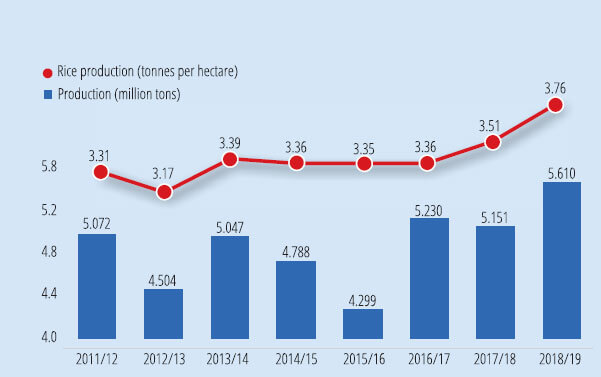
Encouraging rice harvest figures have prompted the government to raise estimates for Nepal’s economic growth rate this year. Paddy production was nearly 9% up from the previous year, reaching 5.6 million tons. Buoyed by these figures, Finance Minister Yuba Raj Khatiwada is optimistic that the country’s annual economic growth rate will touch 7% this year.
Read also: Nepal's rice economy, Editorial
The International Monetary Fund had predicted a 5% growth, but increased it to 6.5% mainly because of a healthy monsoon. However, the Asian Development Bank’s estimate is that Nepal’s annual growth rate will be 5.5% this year.
“Rice harvests account for up to 1% of Nepal’s annual economic growth rate,” said Ram Krishna Regmi, who heads the statistics division of the Ministry of Agriculture and Livestock. Agriculture and forestry contribute more than a quarter of Nepal’s GDP, of which rice makes up 21%. Two-thirds of Nepal’s population depend directly on agriculture for livelihood, and of them, one in five live below the poverty line.
Although the estimates look somewhat encouraging, they have exposed yet again just how much Nepal’s economy is dependent on the vagaries of the southwest monsoon. And with the summer rainfall becoming increasingly erratic because of climate change, Nepal’s economy will continue to be fragile.
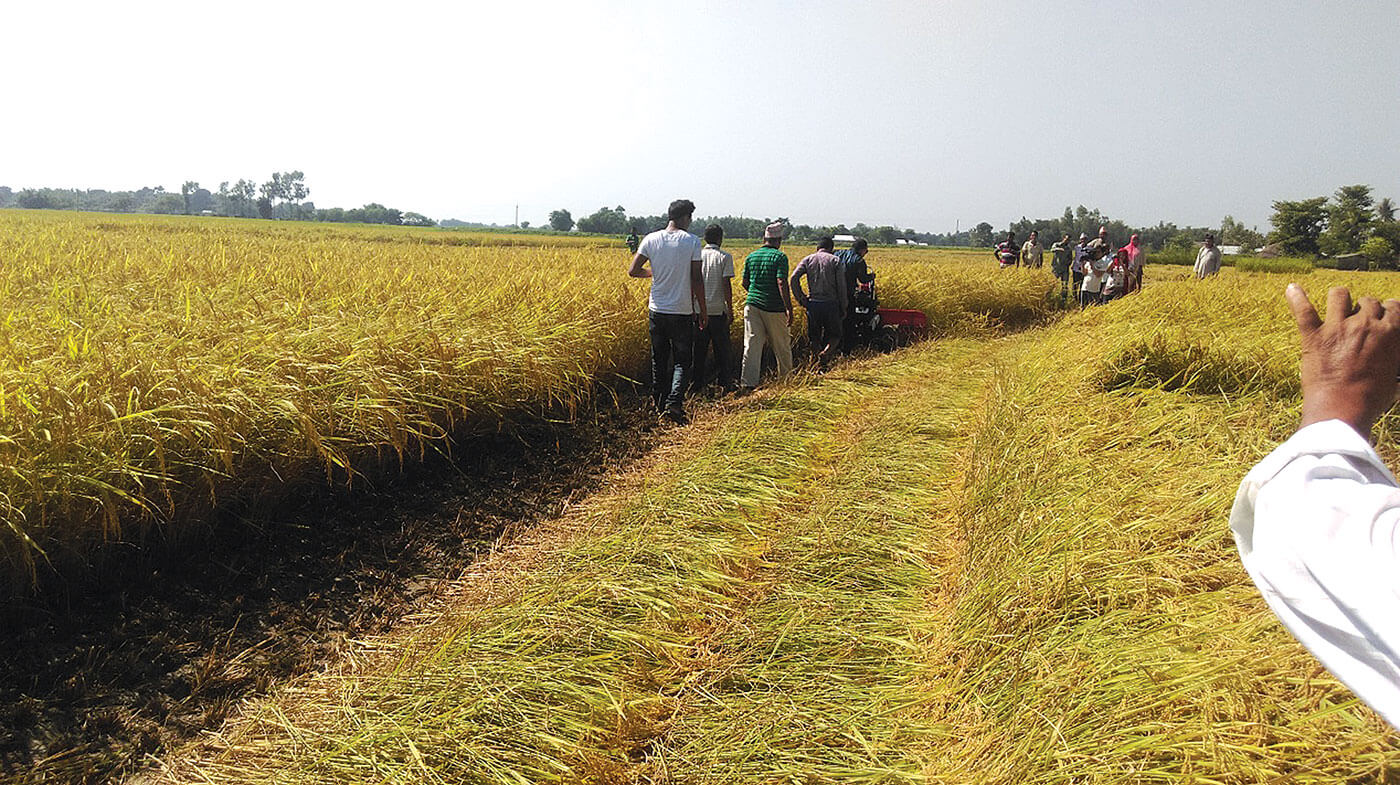
Yubak Dhoj GC of the Agriculture and Livestock Development Ministry said that besides the monsoon, the reason for the increase in paddy production is due to an increase in the area under rice cultivation, the use of high-yield seeds, timely distribution of fertiliser, and the spread of mechanisation.
“There was a healthy monsoon, and timely paddy transplantation, and there were also fewer landslides and not as much river erosion,” GC explained. Last year, paddy seedlings were transplanted in 97% of fields, up from only 86% the year before. All this also affected productivity, which increased to 3.67 tons per hectare, a 0.25 tons increase in yield per hectare from the previous year.
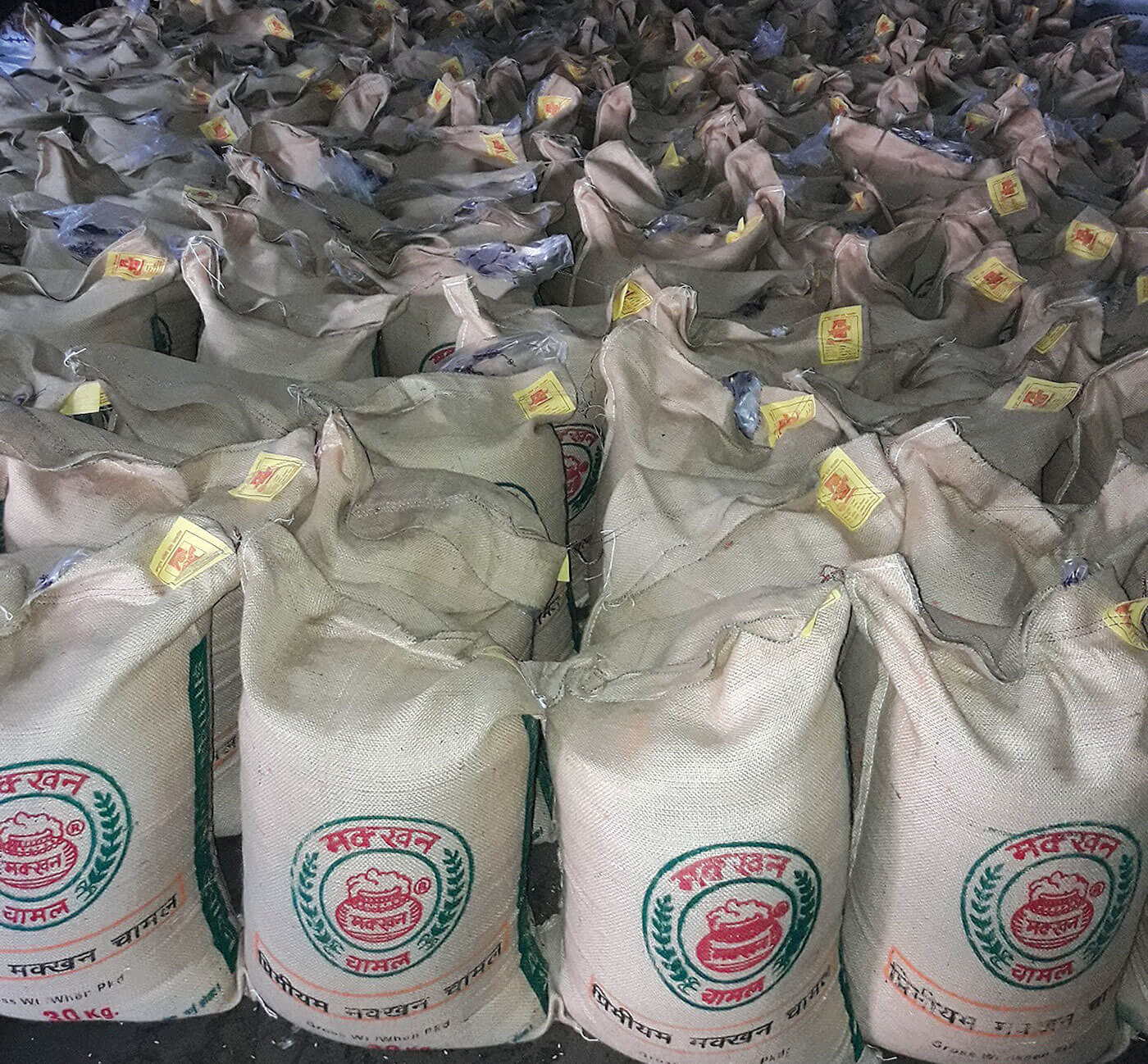
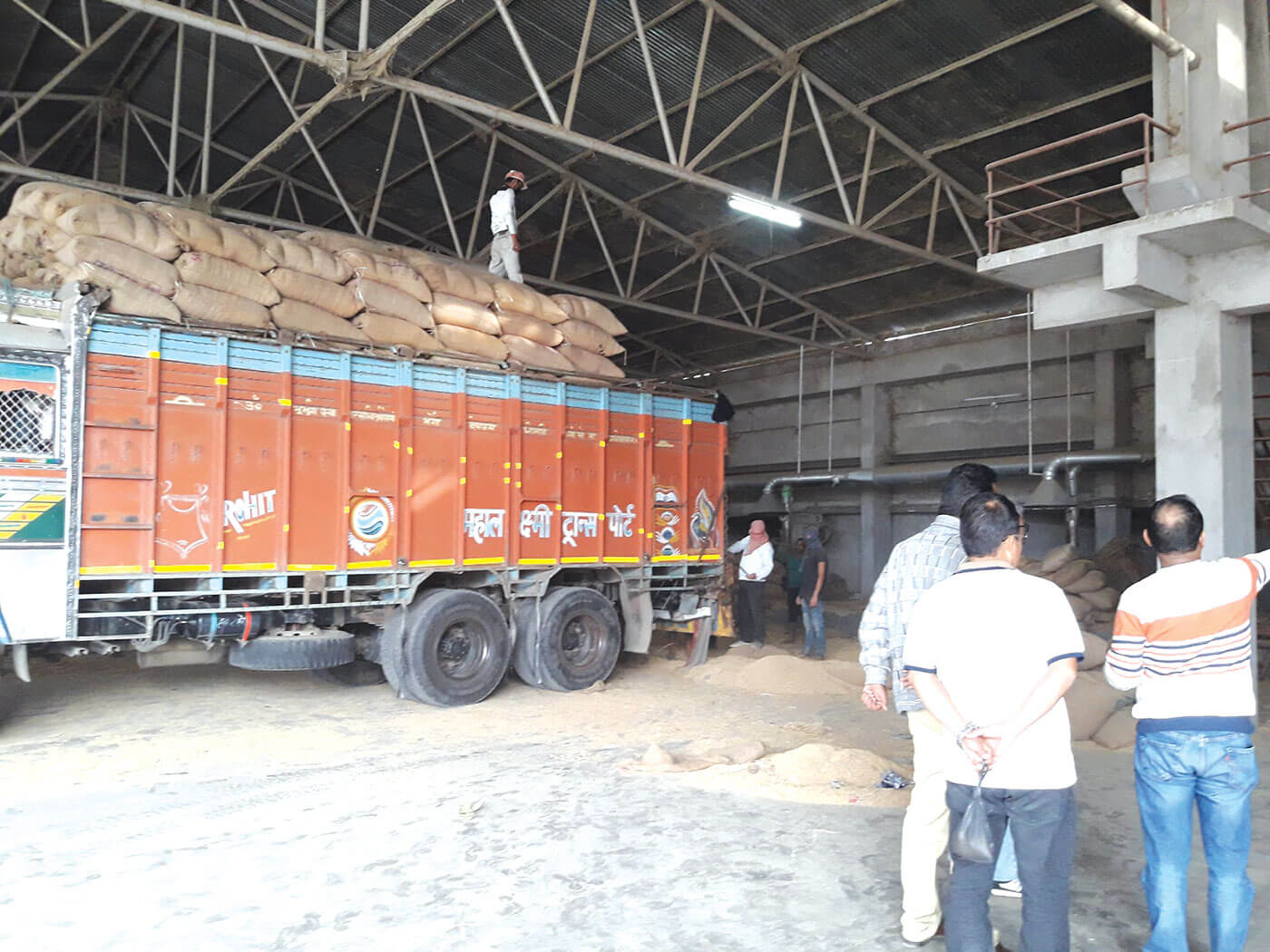
Even so, the total production could not meet Nepal’s demand for 6.1 million tons of rice, and the shortfall was met with imports from India. In the first four months of this fiscal year alone, Nepal has already imported Rs9.35 billion worth of rice from India.
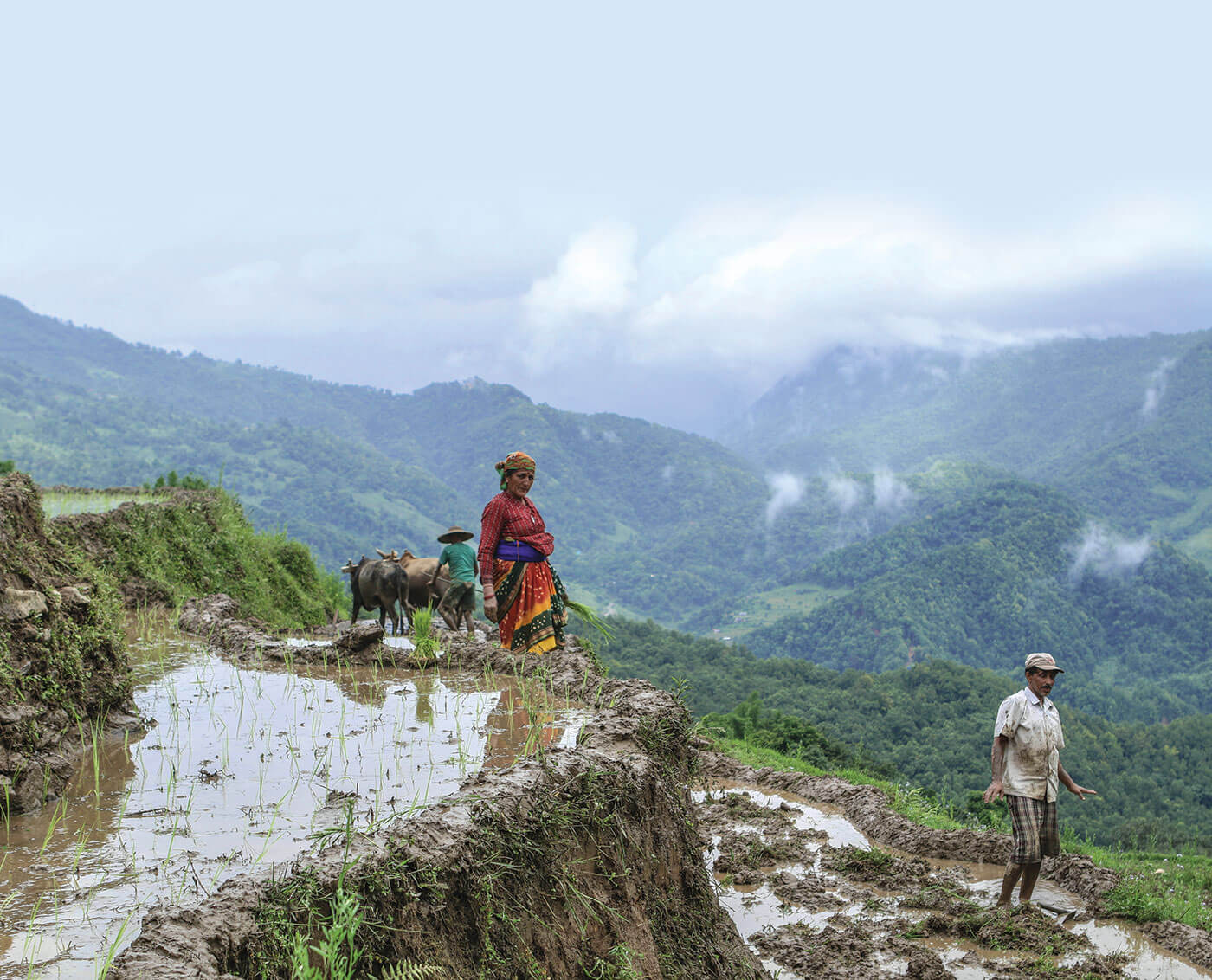
Despite the fact that educated youth, and children of farmers are either migrating or moving away from the land, agriculture is still the mainstay of Nepal's economy. Farming is also becoming increasingly feminised as most men are away in the cities or abroad for work. Which is why the increase in rice production is in one sense encouraging.
Not as encouraging, however, is that productivity is still sluggish. Paddy yield has gone up from 2.4 tons per hectare 30 years ago to only 3.6 tons today, whereas productivity is 4.1 tons in Bhutan, 6.6 in Japan, and 7.0 in South Korea. Productivity of other crops has also not gone up by much. The reason is that nearly 70% of agriculture is still rain-fed. Cheap imports of rice from India as well as the disappearance of traditional rice varieties suited to Nepal’s micro-climates have also impacted production.
The Ministry of Agriculture that includes forests, fisheries and livestock, had a budget of nearly Rs80 billion this year. But very little of that money goes into actually increasing production, most is spent on salaries and administration. The subsidies given to farmers is either misused, or doled out to party faithful. Foreign donors have invested Rs16 billion in agriculture in the past seven years specifically to improve yields, with no significant impact.
Most farmers are indebted because even if they have increased harvests, their food and cash crops have not found a market, or the prices are too low. In fact, agriculture was never a priority for successive governments and ministers who have seen farmers only as vote banks, and not food banks.
Prime Minister Oli’s slogan of ‘Prosperous Nepal and Happy Nepalis’ is intricately linked to raising agricultural productivity with investment in irrigation, farm inputs, mechanisation and land reform.