
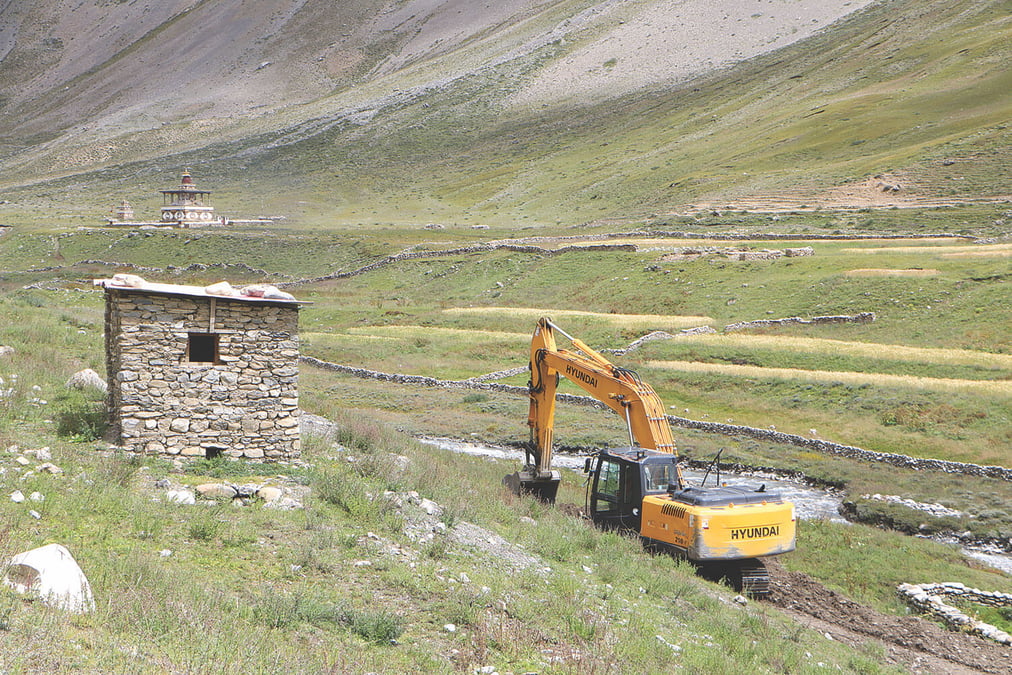
I was born in the little village of Chepka on the old trading trail in Dolpo. Even since I was a boy, I used to see the yaks and mules go up and down the path, and an increasing number of foreign trekkers and their porters.
I always yearned to see the world beyond the narrow valley to a wider horizon. We started the Gateway Inn located at the night stop point between Jufal airfield and Phoksundo, and business was getting better until the pandemic.
I went to Austria to work for two summers at the Gesäuse National Park, and that augmented my income plus gave me a lot of exposure into ecotourism. Trekking traffic is picking up again in Dolpo, so I do not need to go to Europe anymore.
Tourist footfall would increase if Dolpo was taken off the restricted area list. Because of this rule, foreign trekkers have to pay $500 per day for a 10-day trek plus $50 for every extra day to the Department of Immigration. That is in addition to the daily $150 for the trek itself, the Rs3,000 Shey Phoksundo National Park fee and the higher air fares for foreigners from Kathmandu to Jufal via Nepalganj.
Read also: Time catching up with timeless Dolpo, Alton C. Byers
All this adds up to make Dolpo more expensive than the Everest or Annapurna trails, and only the most adventurous (or well to do) come to Dolpo. Even reducing the Dolpo restricted area fee by half could double the meagre 600 trekkers who visit the national park at present every year.
I learnt a lot while in Austria. For example, the signage along the hiking trails are very well laid out so it is impossible to get lost. There is a lot of information along the paths about the animal and plant life, and to identify surrounding peaks and landmarks. There is an effort to minimise the impact of tourism.
The Austrians also do not build roads unnecessarily so as to preserve their wilderness. And that is something we could emulate here in Dolpo, where there is a road-building spree going on.
Read also: New High Way to Dolpo is not good news for trekkers, Sonam Choekyi Lama
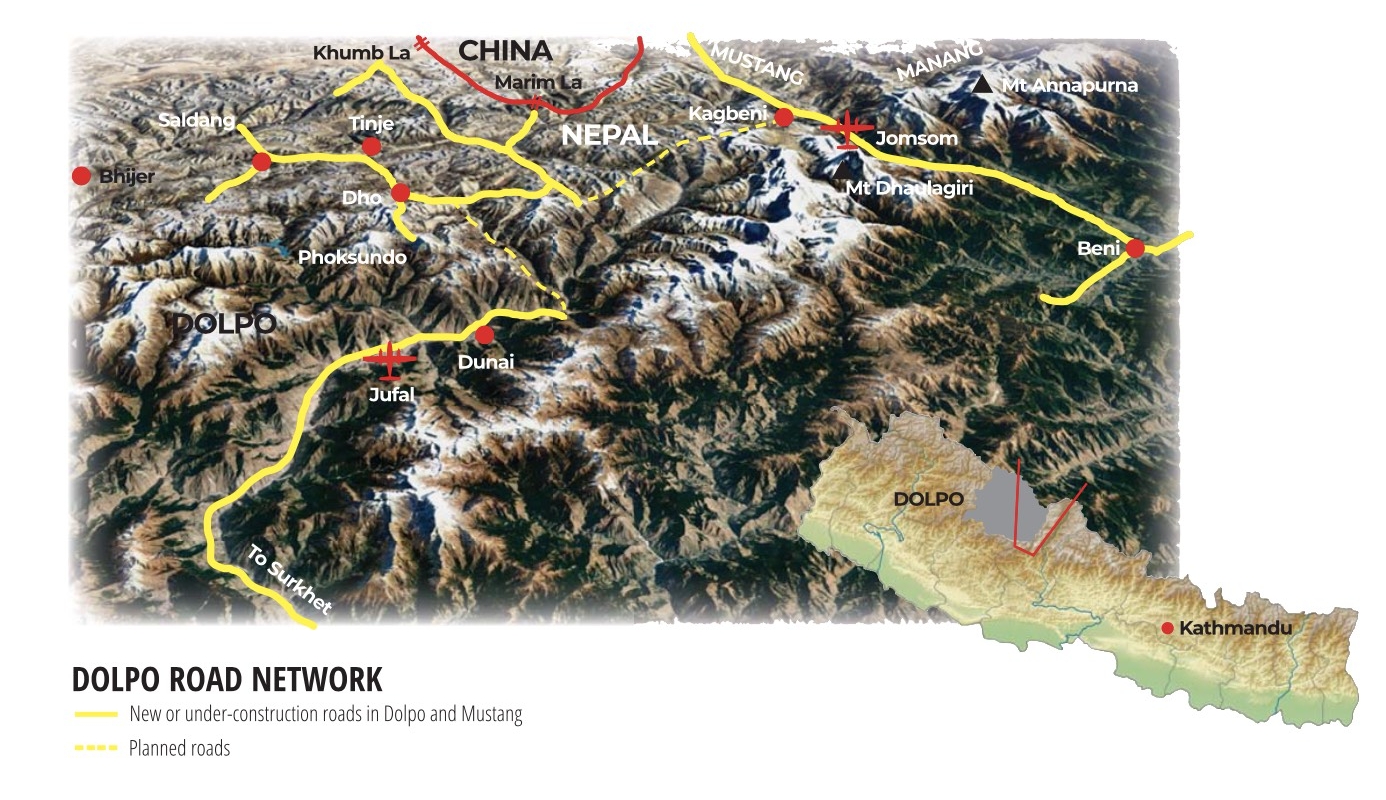
Till recently, Dolpo and Humla were the only two districts in Nepal without motorable roads. Interestingly, Dolpo is better connected to China at the moment than to the rest of Nepal. Dolpo is located on the trans-Himalayan plateau, and is Nepal’s biggest district by area, but has a population of only 45,000.
That might change with the Bheri Corridor which has already reached the district capital of Dunai. One can now travel from Surkhet to Tallo Bazar in 12 hours, cross the footbridge over the Bheri, and transfer to another jeep up to Dunai in 6 hours over very rough roads. Despite this being a national pride project, progress is rather slow.