The 240 year reign of the Shah dynasty in Nepal that ended in 2008 saw palace intrigues, coups, a revolution and massacres. And 16 years after it was abolished, there are calls to reinstate the monarchy.
After Nepal’s founding king Prithvi Narayan Shah died in 1775, there were a series of infant and/or weak kings with little to no involvement in government. The country was run by power brokers either from the royal family or its retainers. After Jang Bahadur’s coup in 1847, the kings were just puppets.
It was not until 1951 when the Rana regime ended that the Shah kings became more involved. Too involved, in fact. In 1960 King Mahendra staged a coup and dissolved an elected parliament for a 30-year experiment with the partyless system.
After the 1990 democracy movement, King Birendra gave up absolute powers to be a constitutional monarch, but the Maoists immediately launched their armed struggle to end the Hindu monarchy. However, the royal family itself imploded in the 2001 royal massacre, and it took just seven more years for Nepal to become a secular republic.
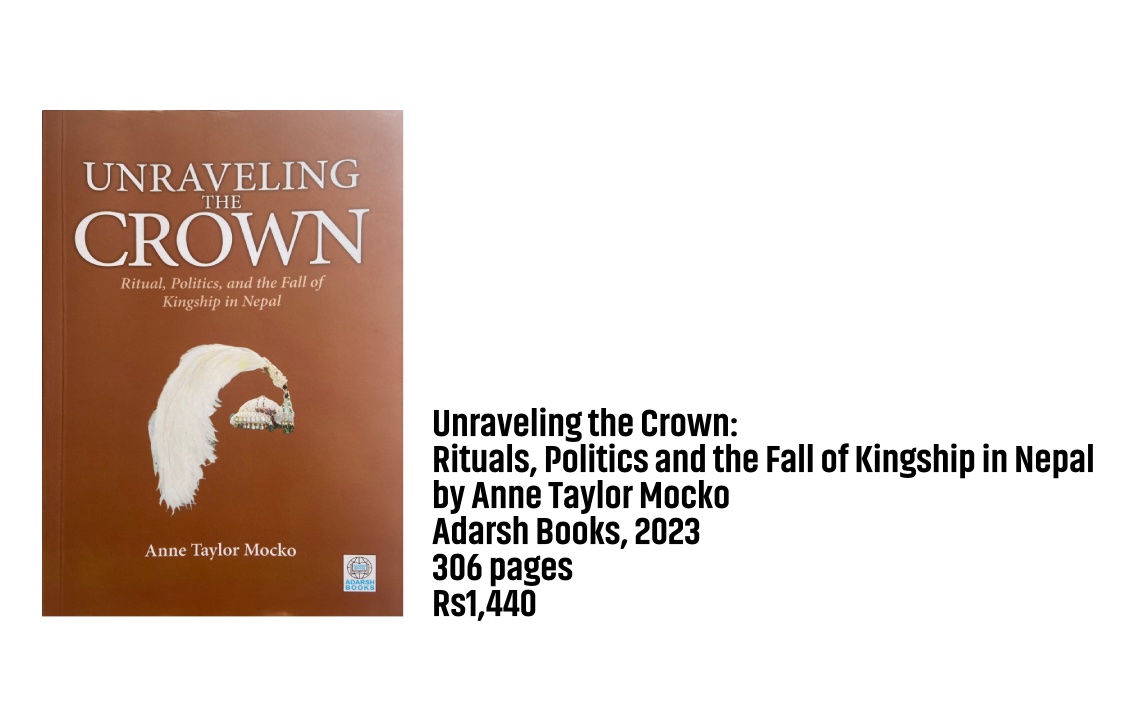
The political aspects of Nepal’s transition from monarchy to republic has been written about extensively, but Anne Taylor Mocko in her book Unraveling the Crown: Rituals, Politics and the Fall of Kingship in Nepal takes a more historical and anthropological approach. She examines the rituals that make a king a king, and why and how taking away those rituals interrupts the process.
Mocko, who is professor of religion at Concordia College in Minnesota, draws connections between ritual, politics and kingship.
She distinguishes between succession rituals (‘those which mark the end of one office-holder’s tenure and the beginning of a new office-holder’s tenure’) and reinforcement rituals (‘that permit the constant reproduction of a social office throughout the duration of the office holder’s tenure’). The reinforcement rituals appear to reflect rather than produce a social status.
Mocko expands on this by analysing the rituals following the royal massacre. The massacre left Gyanendra, King Birendra’s brother, as the only surviving royal family member eligible to rule.
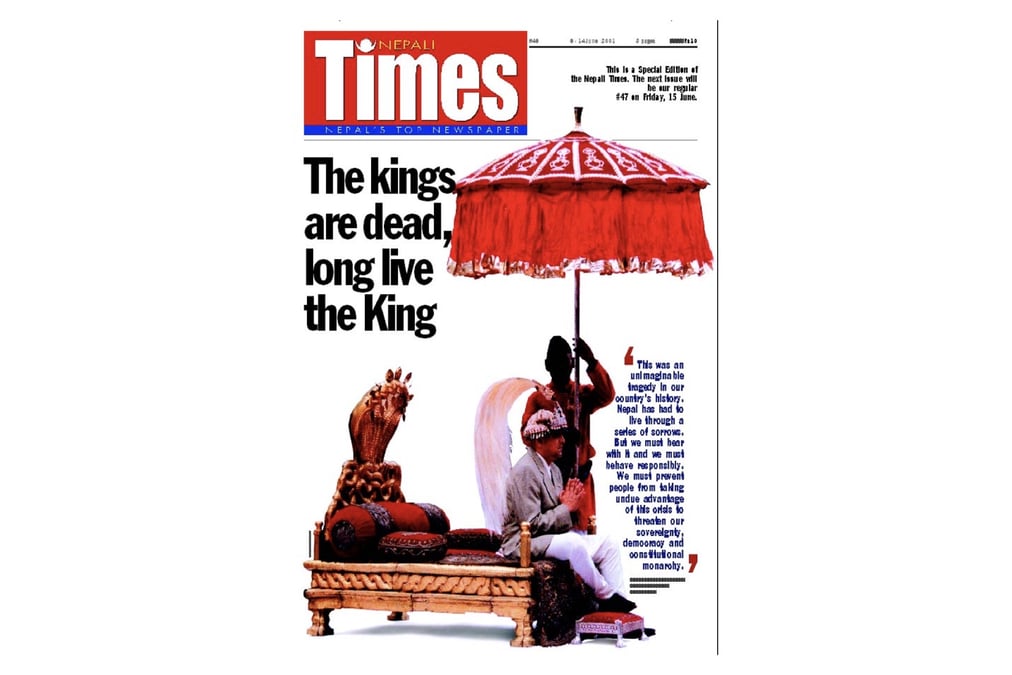
The book delves into the government handling of the murder investigation. The two-member team was given three days to investigate. The investigation did not include any forensics and the final report did not have the results of the ballistics test. It then looks into the cremations and coronation of two kings (Dipendra was crowned in a coma).