
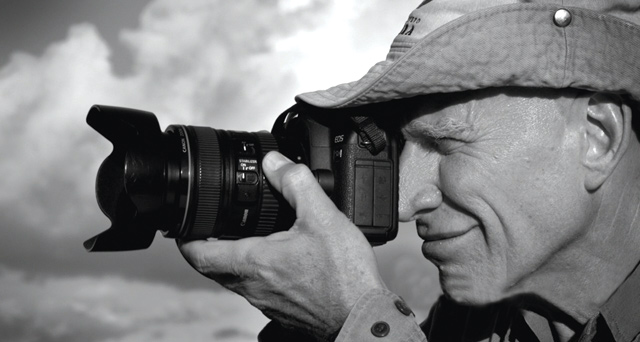
“Writing with light and shadow” (“photo” being “light” and “graph” meaning “to write” in ancient Greek) is a suitably poetic interpretation of photography and a particularly apt beginning for a film that is a deeply personal, impressionistic rendering of the life of Sebastião Salgado, the revered Brazilian photographer who is now in his early seventies.
Started as a project by Salgado’s older son Julian Ribiero Salgado, Wim Wenders, a highly experienced film-maker and family friend, was invited onboard in an effort to keep some essential perspective in a film that might have otherwise veered into a family self-portrait without much structure.
Filmed without any of the usual talking heads The Salt of the Earth explores how Salgado discovered photography as his medium, transitioning from a consulting economist for the World Bank to one of this century’s most important photographers.
Making a documentary about a photographer may seem somewhat redundant - after all both are visual mediums that can be engaged independently from each other- but the film starts to make sense as we hear Salgado’s thoughts in his very intimate, candid, trustful voiceover speaking about his own evolution as a photographer as he becomes ever more deeply engaged with his subjects. As a result, Salgado’s photography is piercing. Almost always in black and white with that essential, dramatic light and shadow - the products are likely to sear into your retina, such is the power of some of his images.