‘Get out of my house.’
‘All my sickness is because of you.’
‘You’re a millstone around my neck.’
Arundhati Roy heard these admonitions from her mother over and over throughout her life.
This must be a singular, yet universal experience. There must be very few daughters who make it through life unscathed by their mothers. And vice-versa.
How many of our mothers look at us and see in us the potential of all of the lives they could have lived? How many resent us for it, or want us to live those lives in their stead? And how many of us look back at our mothers and imagine what they would have achieved had they not been expected and assigned to play the role of wife, daughter-in-law, mother — had we never existed in their lives?
How many mothers project their experiences onto their own daughters and continue the cycle? No daughter seems to escape it — no matter how well-behaved, docile, unruly, or rebellious. Certainly not the child who would go on to become a Booker prize-winning author.
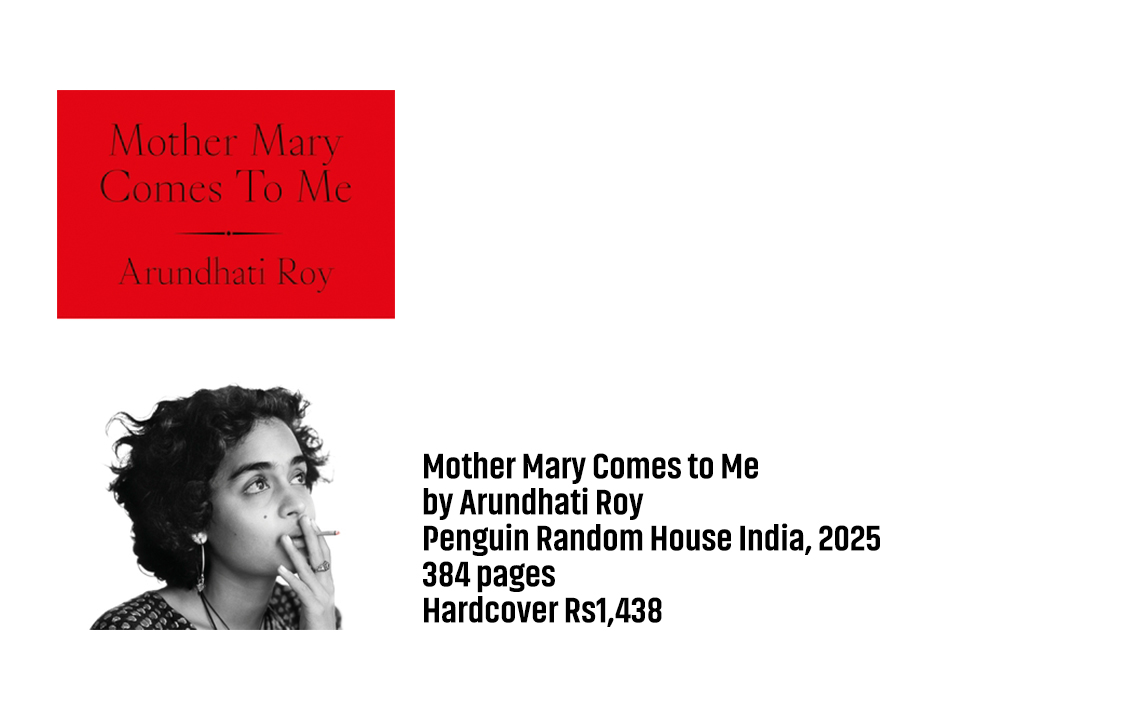
Arundhati Roy’s memoir Mother Mary Comes To Me chronicles her complex relationship with her mother Mary, or Mrs Roy, as her educator mother had her two children refer to her.
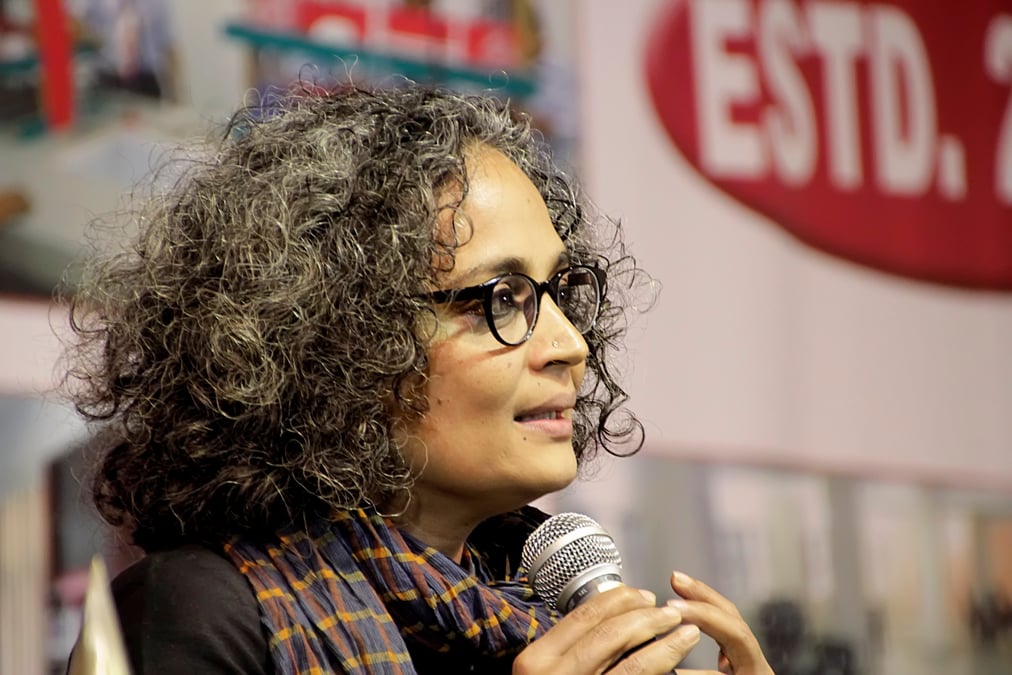
In December, Arundhati Roy was in Kathmandu to sign books and briefly interact with readers at two bookshops in the city. She describes a childhood overshadowed by her mother’s volatility towards her and her brother.
Mary herself was raised by an abusive father to escape whom she married the first man who proposed — Arundhati’s father who in her mother’s words turned out to be an alcoholic ‘Nothing Man’.
Mary left her husband in Assam and eventually wound up with her two children in her town of Aymanam in Kerala, encountering other family members along the way who did not treat her, or her children with respect.
The trauma and cruelty her mother endured could not be contained in her body, and spilled out onto her two children, towards whom she was physically, verbally, and emotionally abusive.
While she treated her children with disregard, she would build a school in the nearby town of Kottayam from the ground up, educate thousands of children, take up a legal fight that led to the Supreme Court granting Syrian Christian women in India equal inheritance rights, and uplift many orphaned children and women in Kerala.
Arundhati lived with both her mother’s brutality and brilliance. And like her daughter, readers must reconcile the indefensible parts of Mary Roy’s personality — the cruelty of calling her nine-year-old daughter a bitch, or shooting the family dog that mated with a stray — with her unyielding drive to educate thousands, fight for equal rights, and challenge the way her world viewed women.
Mrs Roy had little kindness for her own children, but plenty for the students, children, and women whose lives she shaped, and made better. And her kindness was not rooted in empathy, but in anger at the hand she had been dealt in life.
Eventually, Arundhati decided to temporarily cut all contact with Mrs Roy — not because she did not love her, she writes, but so that she could continue to love her. Her desire to get away from her abusive mother, and her fascination with the ideas inspired by the architect who built her mother’s school, would lead her to the Delhi School of Architecture at age 16.