
 |
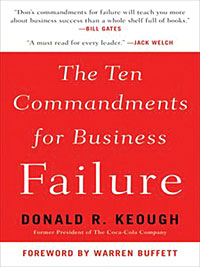
Donald R Keough is the former president of Coca-Cola, and one of multi-billionaire Warren Buffet's long-time friends. Distilling decades-long business experiences and observations from around the world, he wrote The Ten Commandments of Business Failure last year. The clarity, the brevity and the sheer common sense that the book puts forth could very well make it a thinking CEO's version of The Elements of Substance for Business.
Keough starts by saying that most businesses fail when they quit taking risks. If Min Bahadur Gurung had not taken risks to grow his one-room store at Bhatbhateni to a string of supermarkets to serve expanding middle class customers who'd drive to go shopping in urban areas, he would not have been the success he is today.
In Nepal though, since the tolerance for and acceptance of failure is low, it's better to take risks when there is evidence that opportunities are indeed increasing. The boom in housing industry, for instance, has enabled the interested to take risks in selling housing-related services such as setting up real estate marketing, computer animation, interior design and the like.
Another one of Keough's commandment for failure is that companies view their reputation and products with a combination of such arrogance and ignorance that they isolate themselves from the changing realities of the marketplace. This failure succeeds on two levels. First, Keough advises that those who run the company surround themselves 'with a collection of advisers and staff who are paid to think you are wonderful'. Second, over time, this 'bring me no bad news or else I will get angry' culture isolates the company from facing the harsh truth: paving the company's road to failure. By most accounts, this sort of culture took root at the troublesome Nepal Development Bank, whose heads routinely struck terror into the heart of those who dared to voice concerns that they did not like.