
 DEEPENDRA BAJRACHARYA |
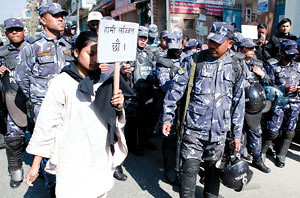
Nepali rulers were probably glad that the public's attention shifted over the new year away from deadlocked politics to escalating protests in the streets of the capital against the latest atrocities against women.
But that should be short-term relief, for the reason why gender-based violence, and stigmatisation are so persistent in Nepal is because politicians have forgotten what it is all about. As representatives of the people, it is their job to ensure the safety, security, and rights of vulenrable citizens. It is the prolonged political disarray and the ensuing impunity that has led to a breakdown in law and order and an increase in gender-based crime.
It is not enough anymore to use the excuse of entrenched patriarchy or culturally-accepted gender inequity to explain away the epidemic of violence against women in our society. We had a system in place since the restoration of democracy in 1990 to set things right, and after the 2008 elections we had the most representative legislature ever in Nepal's history. Laws were passed, but enforcement has been feeble. A male-dominated society has been slow to change behaviour, and the priority for media has been male-dominated politics.
A young woman was robbed and raped on return from Saudi Arabia, a domestic helper was murdered in Kathmandu, two young women were burnt alive by family members in Banke and Bara. These latest atrocities pushed public outrage beyond the tipping point.
But inquiries at Maiti Nepal show that there are 3-5 women every week who are robbed, exploited, blackmailed, and abused by airport personnel. Sita was just the latest, and her story only came out because relatives dared to complain to the authorities.
Ironically, the protests in Baluwatar and Singha Darbar this week have provided the government an opportunity to earn brownie points and project itself as a champion of gender equality without having to change the status quo or answer difficult questions. If the Bhattarai government can fast track these cases and put criminals behind bars, the Nepali media with its notoriously short attention span will move back to covering politics and the only women who make it to the news will be semi-nude models.