
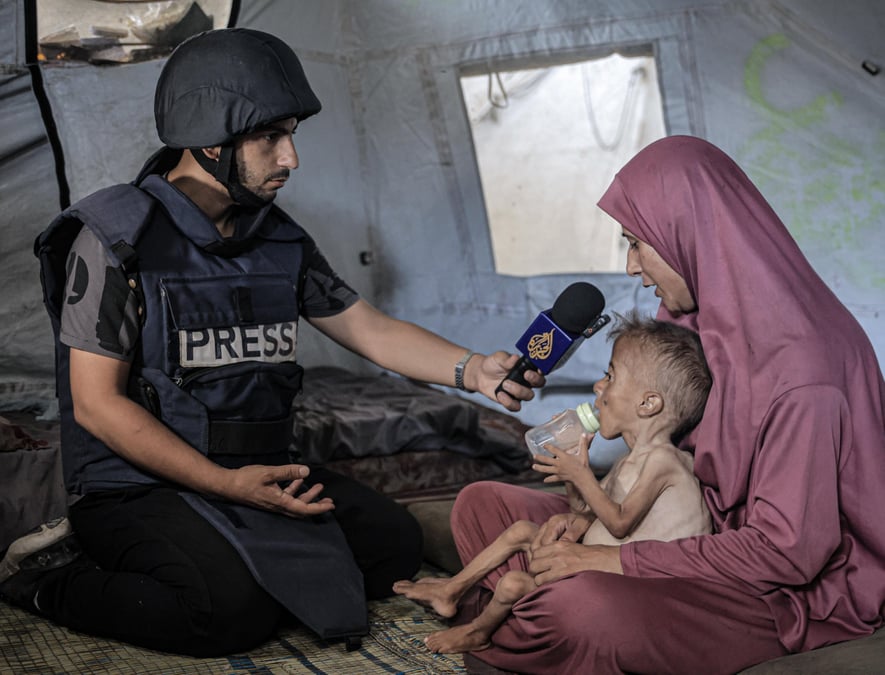
Anas al-Sharif, 28, a prominent Al Jazeera correspondent and one of the network’s most recognizable reporters in Gaza, was killed in an Israeli airstrike late Sunday while sheltering in a tent for journalists near al-Shifa Hospital in Gaza City.
Four other Al Jazeera media persons also lost their lives in the same attack: journalist Mohammed Qreiqeh, camera operators Ibrahim Zaher and Moamen Aliwa, and their assistant Mohammed Noufal. Freelance reporter Mohammad Al Khaldi was also confirmed among the casualties.
The Qatar-based network condemned the strike as a ‘deliberate assassination’ calling it a ‘desperate attempt to silence the voices exposing the impending seizure and occupation of Gaza’.
Israel’s military later acknowledged carrying out the strike, alleging without any evidence that al-Sharif was affiliated with Hamas. Rights groups and media watchdogs have repeatedly criticised Israel for labelling journalists who are bringing news of the genocide in Gaza to the outside world as combatants without any substantiation.
Read also: How Israel lost its soul, James E Jennings
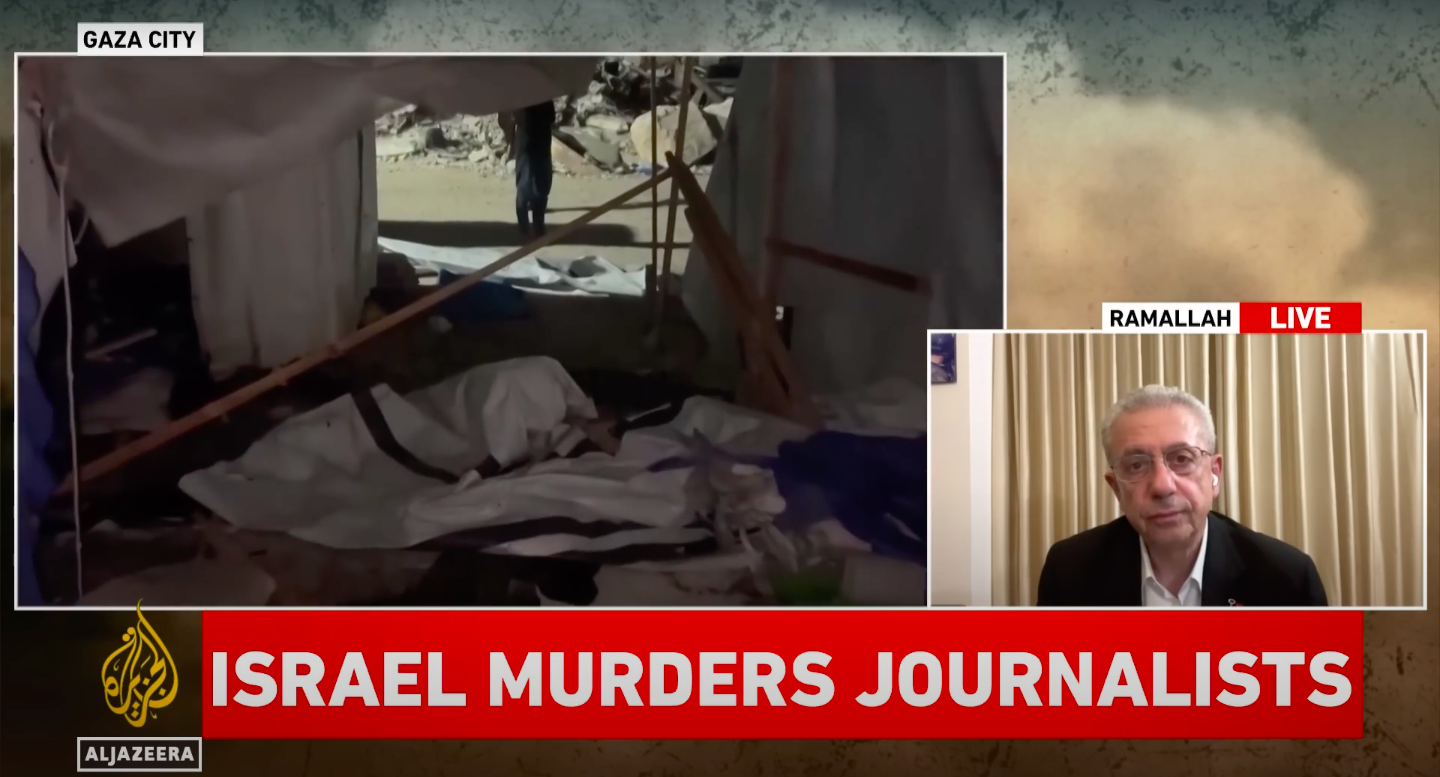
The Committee to Protect Journalists (CPJ) had previously expressed serious concerns for al-Sharif’s safety, citing what it described as ‘a military-led smear campaign’ against him. CPJ warned last month that such tactics could foreshadow a targeted killing. The campaign against al-Sharif escalated after he broke down on live television while reporting on starvation in Gaza.
CPJ on Monday strongly condemned Israel’s 10 August airstrike which killed the six journalists in the deadliest single attack on media workers since the Israel-Gaza war began in 2023.
“Israel wiped out an entire news crew,” said CPJ Regional Director Sara Qudah. “It has made no claims that any of the other journalists were terrorists. That’s murder. Plain and simple.”
She added that Israel had shown a ‘longstanding, documented pattern of accusing journalists of being terrorists without providing any credible proof’.
Read also: Saving what is left of Gaza, Melek Zahine
‘It is no coincidence that the smears against al-Sharif ... surfaced every time he reported on a major development in the war,’ Qudah noted, pointing to his coverage of famine and humanitarian crises in Gaza.