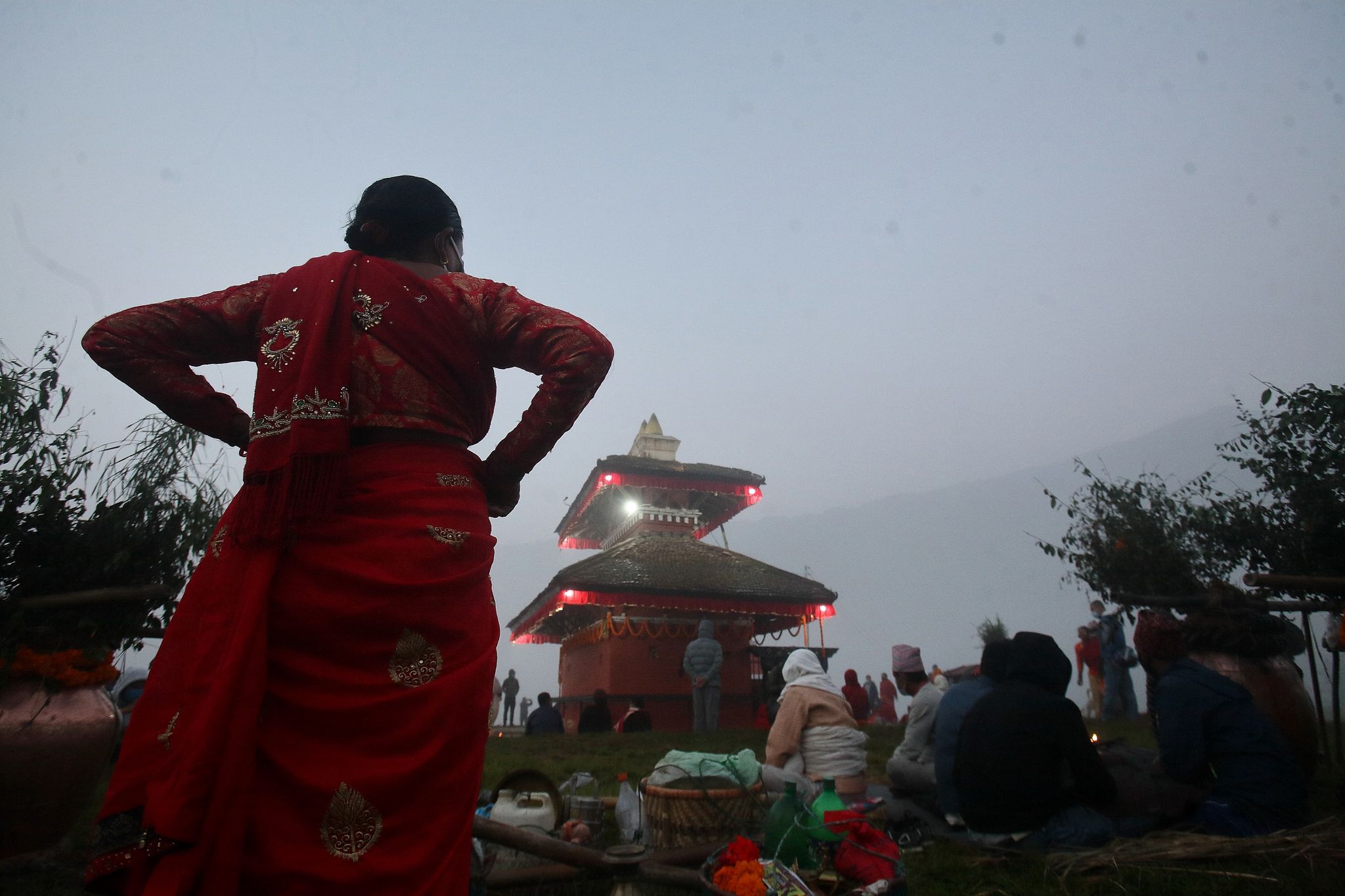
The coronavirus used to be imported, from Europe, China or India. No more. It is now here among us, and this Dasain it could be a relative who could bring it home.
Dasain is said to mark the victory of good over evil, but this year we may want it to represent the triumph of health over disease. The festival, with its family get-together and close contact, however, may itself be the reason for an even more serious surge in the pandemic.
Dasain was expected to be toned down this year owing to the exponential rise in Covid-19, but many Nepalis seem to be in a festive mood and determined to celebrate after long months being cooped up at home.
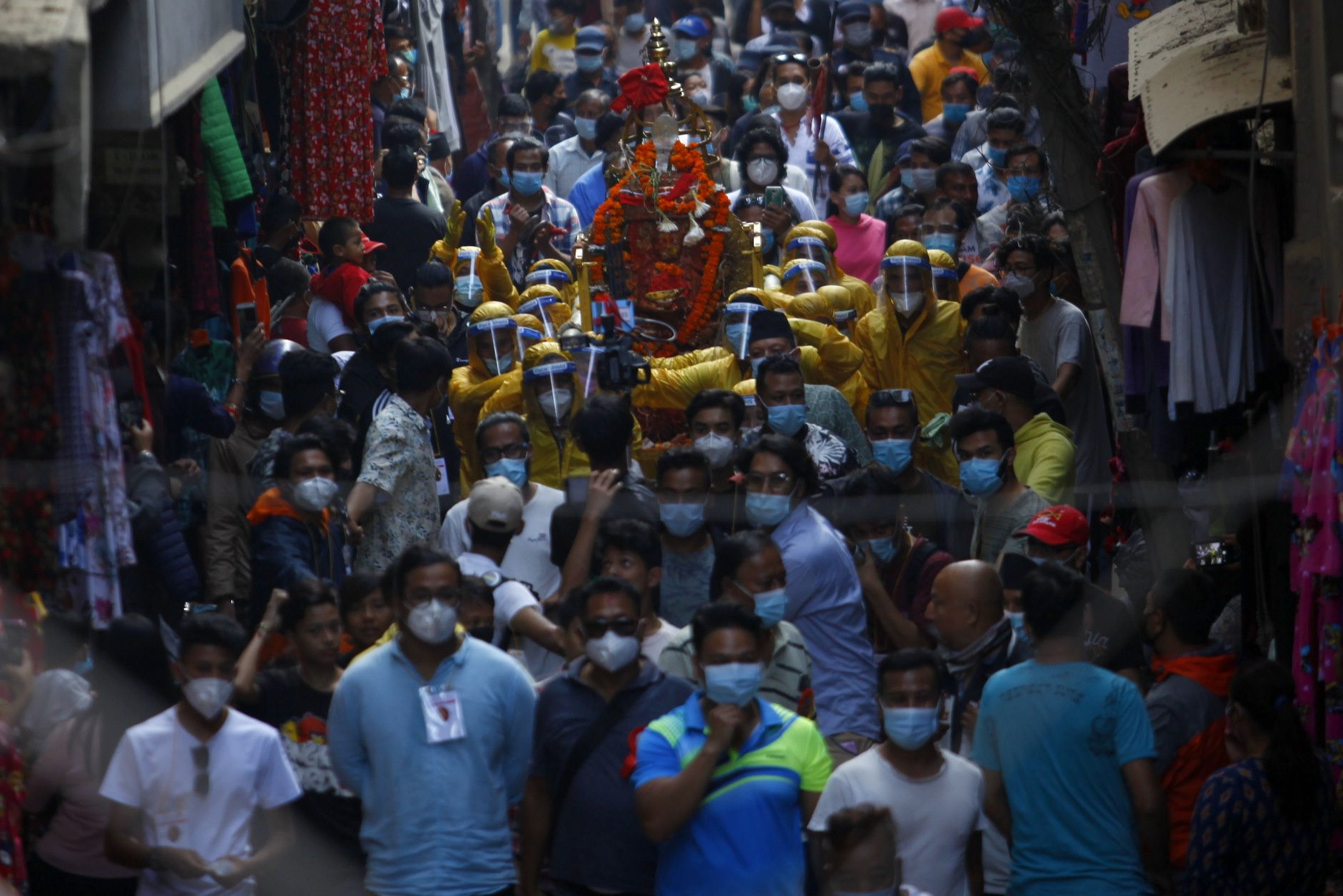
Already, city dwellers are travelling to Chitwan or Pokhara, embarking on treks, or travelling back to their home districts to meet members of the extended family. Dasain is also a time for shopping, and the markets are crowded with people, many not wearing masks properly.
"Dasain holds too much cultural importance for Nepalis to skip it,” explains Mahesh Kumar Maskey of the Nepal Public Health Foundation. “This year, it comes after months of sporadic lockdowns. People are experiencing mask and lockdown fatigue, and can only have so much self-discipline. So, the chances of people being less careful during Dasain is high.”
Maskey says people have to make compromises, even if we have to meet and greet family or travel to home districts we should take great precautions – not just for ourselves but for elderly relatives we are seeking blessings from.
Every year, around 2 million people leave Kathmandu to go to their hometowns for Dasain, according to the Federation of Nepalese National Transport Entrepreneurs that operates inter-district buses. However, this year, there are reported to be fewer people travelling out even though Kathmandu Valley is Nepal's Covid hotbed.
On Friday, the country recorded 4,499 new infections, taking the total confirmed cases to 153,008. Of these, 2,720 were in Kathmandu Valley. With 17 more deaths, the total fatalities now stands at 829. There are nearly 50,000 active cases, and the numbers needing ICU treatment and ventilators continue to rise.
"This is a very high-risk situation. Infected people from Kathmandu will become a source of transmission in their hometowns,” says Krishna Man Shakya of the Nepal Public Health Foundation. “Because of Dasain, Covid will spread to every corner of Nepal."
He says the festival will bring people in close proximity in buses, and those using long-distance transport will be much more vulnerable to contracting Covid-19 than people travelling with friends and families in private vehicles.
The Department of Transport Management has ordered that public vehicles can only carry half the passengers, conductors and drivers must wear masks, and seats should be disinfected. But the rule is not being enforced.