
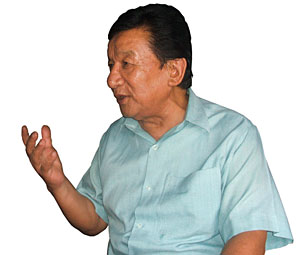
 GOPAL GARTAULA |
It has been 20 years but Bhampa Rai still dreams every night of the orange orchard and the fields of cardamom of his ancestral farm in Banda bloc of the Samchi region of southern Bhutan.
Now 61 years old, Rai was forced out of Bhutan like 110,000 other refugees in 1990 and settled in camps run by the UNHCR in eastern Nepal. The fact that he was a medical doctor who used to treat members of the Bhutan royal family did not save him.
"I will return to Bhutan one day, I am convinced of that, even if it is only my ashes," says Rai. "I have lived as a refugee for 20 years, I don't want to go any further away from my country and forget my homeland."
Last week, the 50,000th refugee has been resettled in the United States, Canada, Denmark, Netherlands, Norway, New Zealand, Australia and UK under a deal worked out with UNHCR. Of the 110,000 refugees, 96,000 have applied for resettlement. Most of those who are opting to stay behind are political activists, the elderly and those who are willing to wait out a return to Bhutan.
Rai did his medical degree in Bangladesh and India and was a doctor with a bright career in Bhutan when he and his family were evicted. For the past two decades he has been running a clinic at the Beldangi Camp in which he provides free consultations to fellow-refugees. On the street outside, white buses of the International Organisation for Migration (IOM) go back and forth everyday carrying more refugees to homes abroad.
"The Bhutan regime evicted 18 per cent of its original population, this is the biggest ethnic cleansing exercise in modern history," says Rai, who used to take the pulse of royal family members and listen to their heartbeats. "If it wasn't for India propping them up, the Bhutan monarchy would have been gone."