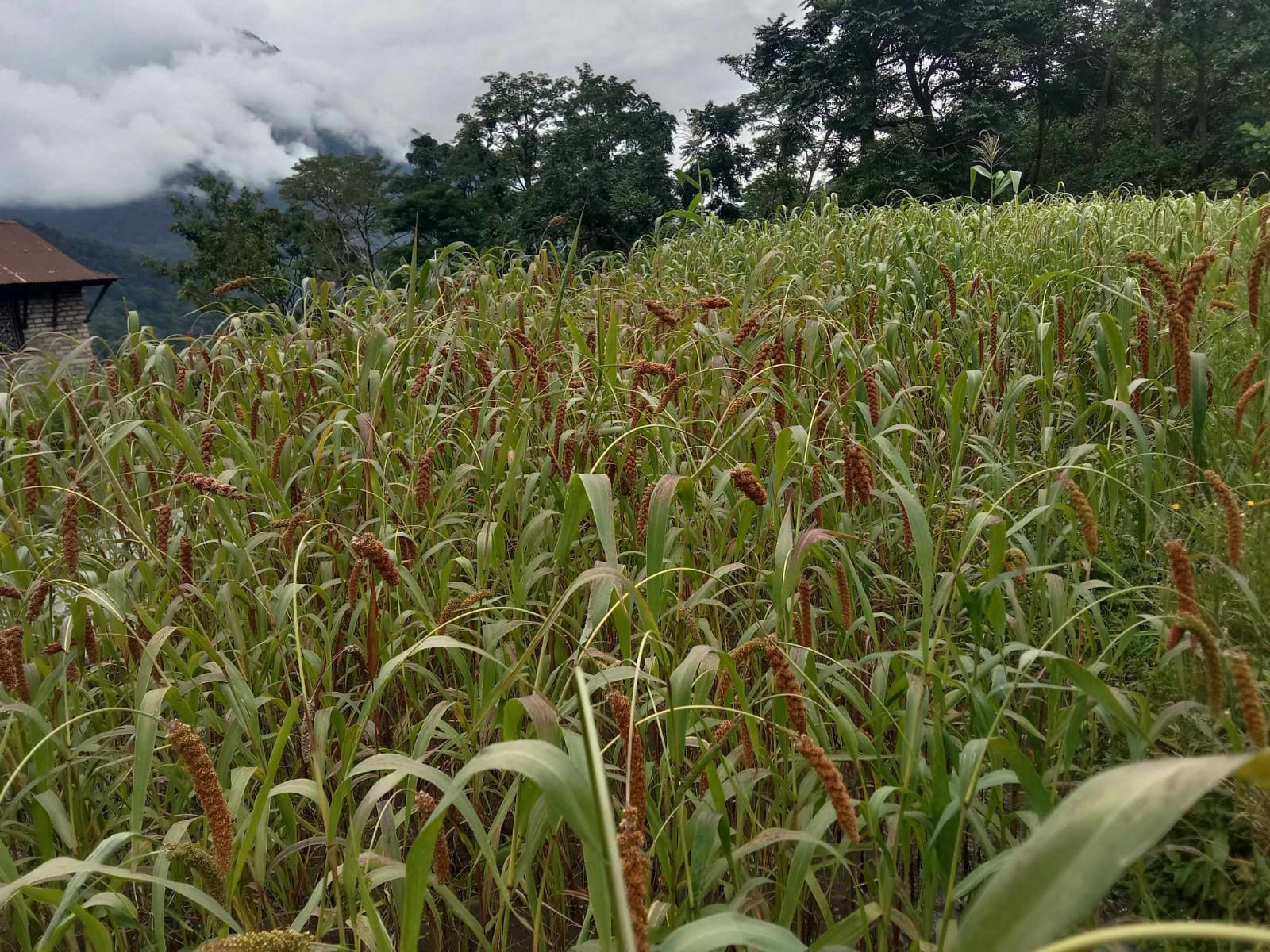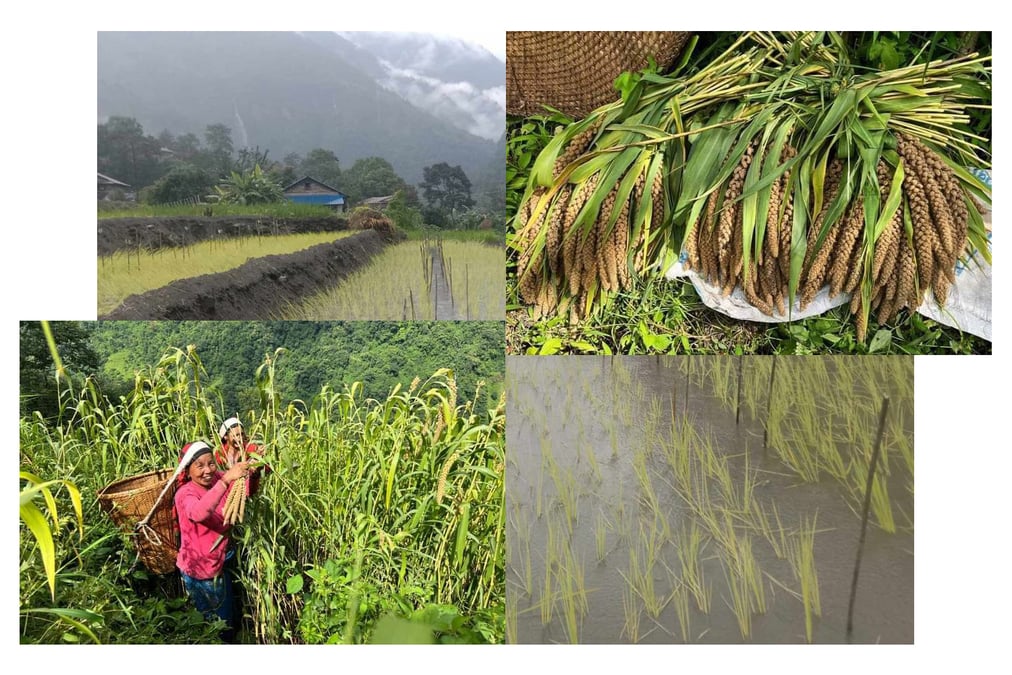
Farmers in Sundari Danda village were barely interested when proposed planting foxtail millet in their land.
They had not even heard about the crop. Nevertheless, they brought foxtail millet, locally known as Kaguno to preserve native crops.
“Kaguno was historically a staple crop for families, especially to raise children, in Nepal’s villages,” explains Pushpa Subedi of the Bioresources Conservation Movement, a local partner of the Pokhara based non-profit Local Initiatives for Biodiversity, Research and Development (LI-BIRD).
The grain along with other indigenous crops has been used as a remedy for ailments ranging from back pain to broken limbs to anaemia.
Foxtail millet production flourished in Sundari Danda, with the 2kg initially brought to from Lamjung having yielded a harvest of 72kg so far, consequently fetching good prices in the market. Locals have since become active participants in the conservation of indigenous crops.
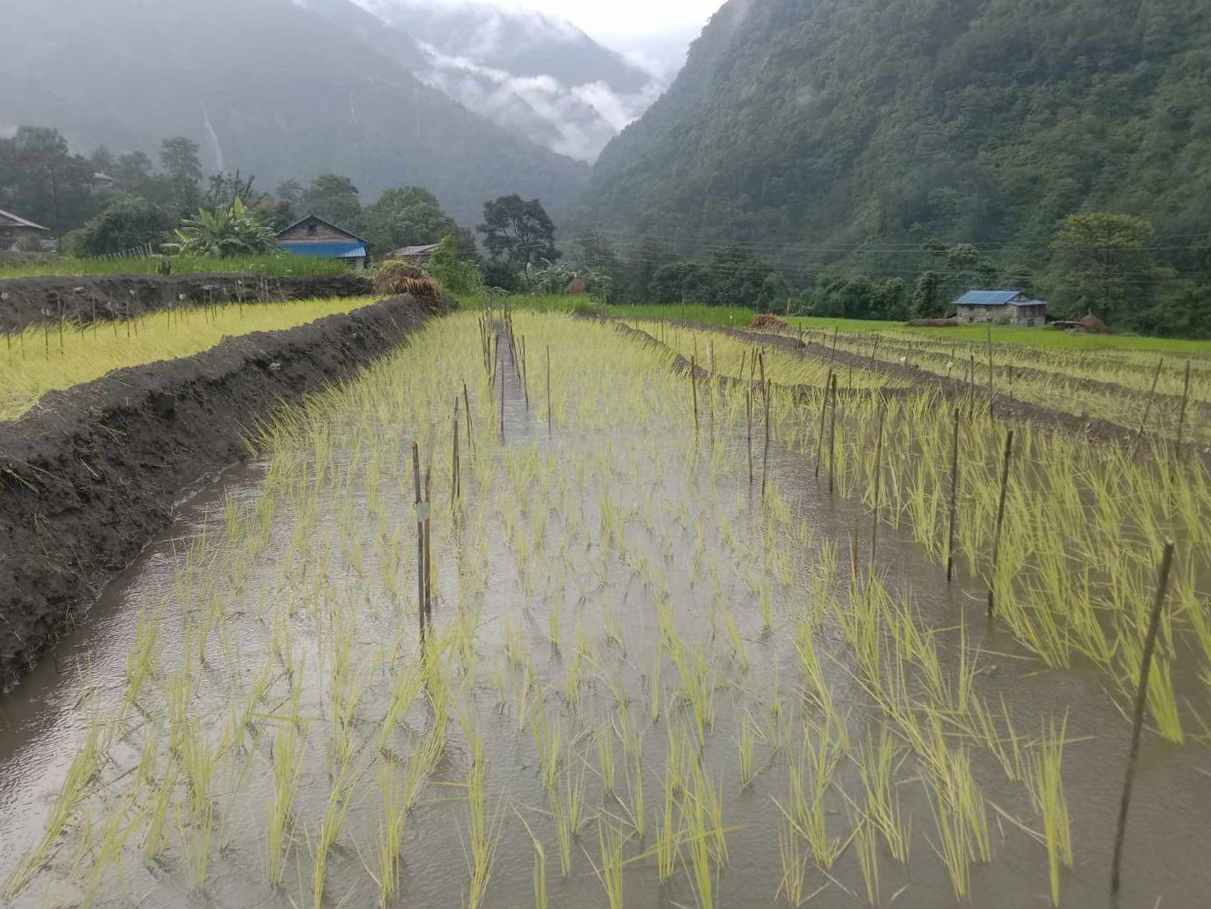
In the last 18 years, farmers here have planted and preserved 53 varieties of rice, 16 varieties of millet, eight varieties of yam, as well as gourd and cucumber. But the supply, especially for highly-demand varieties of rice, is insufficient.
Twenty-two agricultural groups are involved in the Bioresources Conservation Movement’s agricultural biodiversity conservation campaign in the watersheds of Rupa and Begnas lakes. They are involved in the protection of crops, fruits, herbs and plants native to the wetlands.
In the same period, farmers in the Rupa-Begnas wetlands have planted and preserved 53 varieties of rice, 16 varieties of millet, eight varieties of yam, as well as gourd and cucumber, cultivating them in ‘conservation blocks’ fields where endangered crops are planted exclusively.
As it stands, millet-based indigenous crops are more difficult to harvest, and yield lower profit compared to production costs, which is why farmers are not too keen to put the work in to plant them. And while paddy-based crops are associated with luxury, native millet-based grains are synonymous with the poor, says Subedi, leading to crops being branded सुअन्न (good grain) and कुअन्न (bad grain).
On the other hand, Nepal has yet to prioritise research and development into indigenous crops. Government services and subsidies have also been more focused on increasing the production of crops such as rice, maize, and wheat, while millet-based crops are put on the back burner.
Until about 30 years ago, native varieties of millet, buckwheat, barley, amaranth leaves were staples to food security in Nepal’s villages. However, road connectivity and access to markets eventually made rice-based food grains readily available across the country, leading to a decline in indigenous crops.