

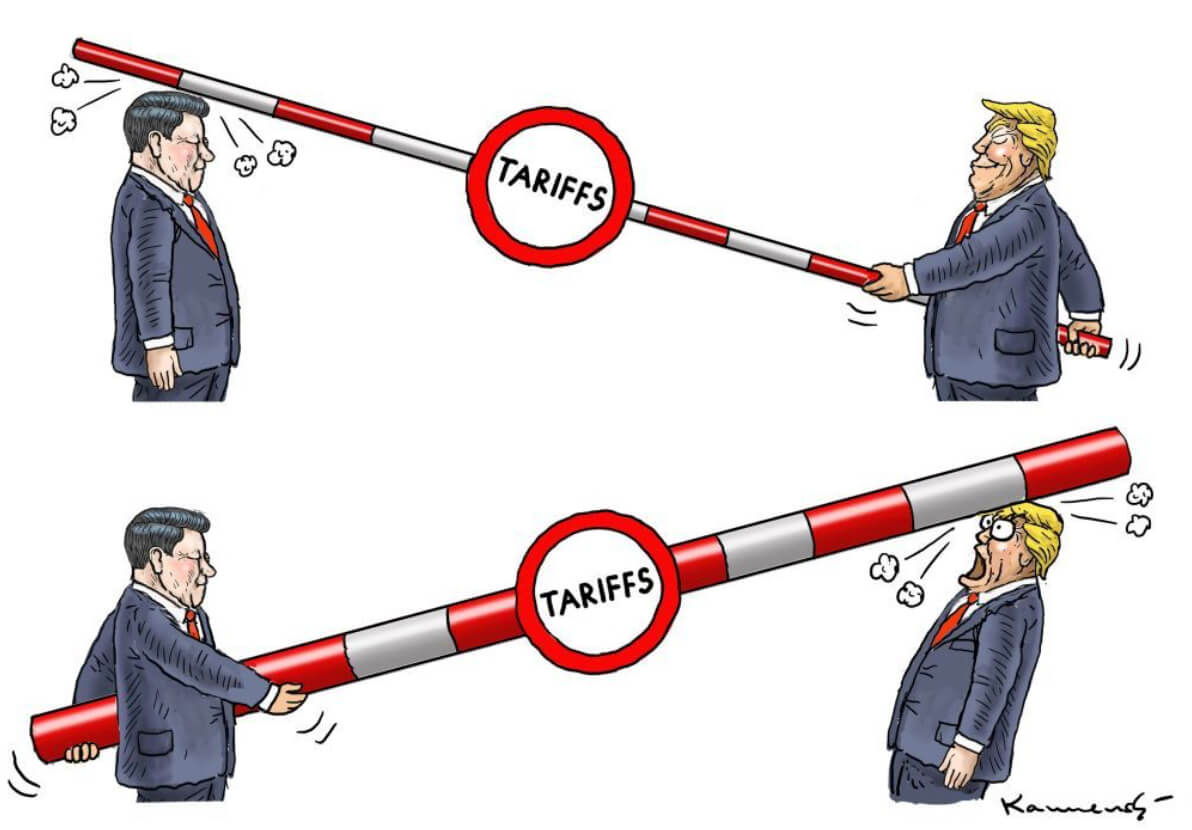
This month President Trump launched the opening salvo of a trade war by unilaterally imposing tariffs on steel and aluminum imported into the country from the European Union (EU), Canada and Mexico.
Canada immediately warned that it would announce retaliatory measures. The EU and Mexico have their guns loaded. The US and China are also at the brink of a trade war.
On 15 June, Trump announced tariffs on $50 billion worth of Chinese goods and warned that any retaliation by Beijing would trigger another round of tariffs on Chinese goods. But China struck back within hours, slapping the same amount of tariff on American imports, from agriculture and seafood to cars and energy products.
Hopefully the worst can still be avoided, but the experience of the 1930s and the subsequent Great Depression suggest that trade wars can have serious economic and social consequences on the entire global economy. The IMF has warned that Trump’s new import tariffs pose a stark threat to the global trading system and will ultimately damage the US economy.
In addition to starting trade wars, Trump’s trade policies are undermining the post-World War II rules-based multilateral trading system established by the US itself, as the hegemon, with the cooperation of other like-minded countries mainly in Europe.
Under the auspices of GATT and its successor the WTO, globally tariffs had fallen to record low levels, the volume of international trade had expanded, bringing unprecedented economic prosperity all over the world.
Seventy years on, the Doha Round has stalled and some of the WTO rules and exceptions to the rules need to be revisited. But instead of reforming the institution, Trump has threatened to withdraw the US from the WTO – which could happen if the WTO rules against the recent metal tariffs which the US imposed on national security grounds.
The US is also undermining the WTO by refusing to appoint new judges to the WTO Appellate Body, accusing it of bias against the US. The WTO has traditionally appointed judges based on consensus among its members. Perhaps it is time to change this method to save the rules-based system.
At the recent G7 summit, with a single tweet from Air Force One while flying to Singapore, Trump drove a deep wedge between the US and other countries that traditionally consider themselves Washington’s closest allies and which had cooperated closely with the US to help build the post-World War II rules-based trading system. The summit was a fiasco.