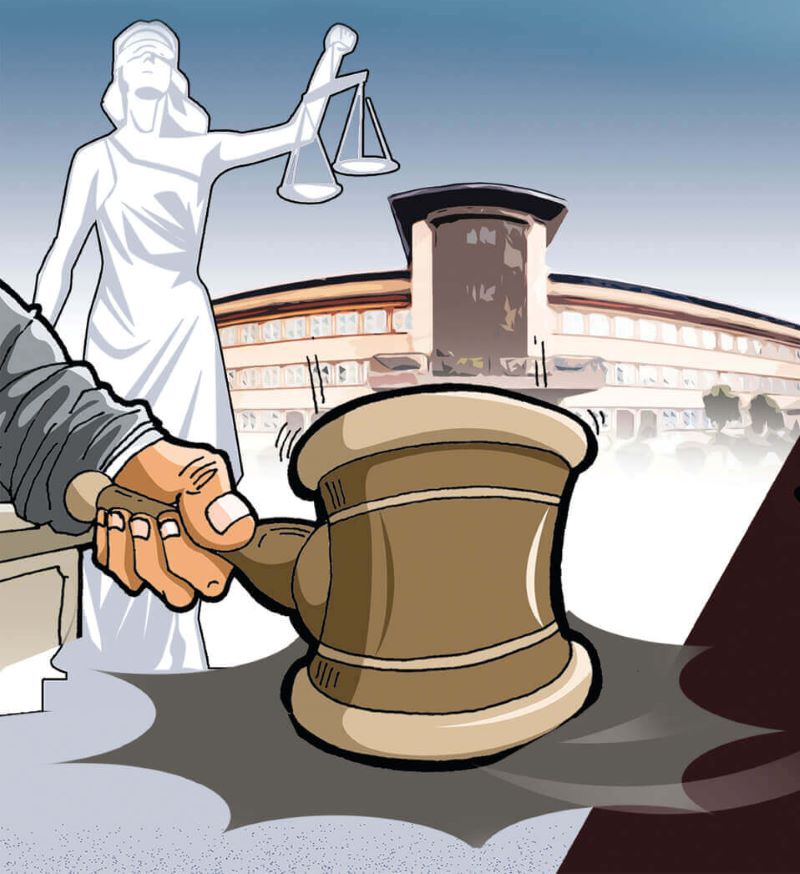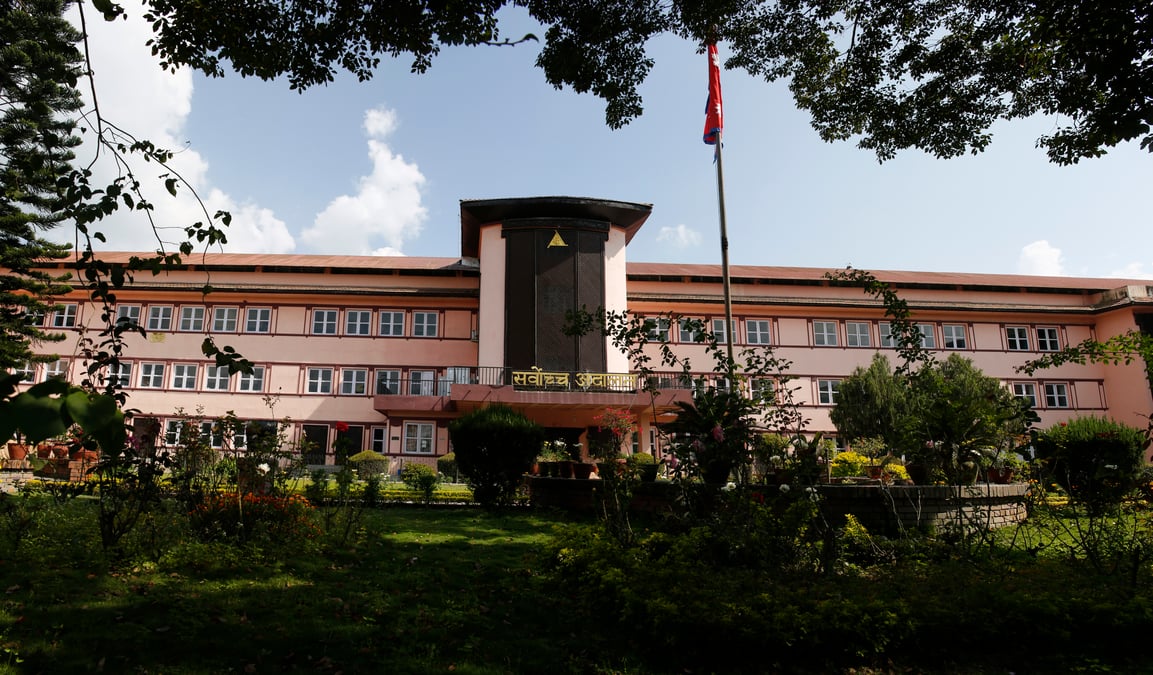
The waning faith of the public in Nepal's courtrooms and (in)justice delivered should invoke a debate in the legislature about what the fundamental philosophy of our legal system should be.
When foreigners ask us what legal system Nepal follows, we lawyers stumble a little and repeat what we were all taught in law school: ‘It is mixed with influences from the common legal system, civil legal system and Hindu legal system.’
Since Nepal was never colonised we have not fully embraced either the civil legal system from continental Europe, nor common law from Britain. Until 1990, the legal process resonated more with civil law traditions, then switching abruptly to common law practices. There has not been much legislative discourse on why we had that change of heart.
Take a criminal trial as example. The basic premise of the adversarial format is that judges sits as neutral umpires in trials. They use the arguments, facts and evidence produced by defense lawyers (representing the suspects) and prosecutors (representing the victim) to reach a decision and ruling.
Compare this to a judge in a civil law/inquisitorial tradition. The judge is an active member of the trial process who participates in fact-finding public inquiry by questioning defence lawyers, prosecutors, and witnesses. They can even order certain pieces of evidence to be examined if they find the presentation by the defense or prosecution to be inadequate.
In Nepali criminal cases, the judge is neutral so the police and prosecutors are charged with gathering evidence. The law states that the prosecutor should supervise the police as they investigate a case to ensure the police use only legal methods to obtain information.
Read also: False equivalence in Nepal academia, Aastha Dahal
However, in reality the police and prosecutors are too busy to coordinate with one another. They also tend to dislike each other. In most cases police investigation reports are copied in whole by the prosecutor who adds a few short paragraphs at the end. And that constitutes the charge sheet: the legal document which sets out which crimes a suspect has committed and should be punished for.
When Nepal’s legal system was more inquisitorial before 1992, our trial procedure was governed by the 1961 Government Cases Act (Sarkari Mudda Sambandhi Ain 2017). Prosecutors who served under this law speak fondly about their partnership with the police.
I have spoken to prosecutors who recall walking together with the police for hours and days across the rural mountains to examine crime scenes. Together they would examine bodies and draw up reports. They never forgot the smell of death.
This practice was abruptly brought to a halt when the Government Cases Act 1992 (Sarkari Mudha Sambandhi Ain 2049) repealed the 1961 law. The new law was predicated on adversarial practice. The police did the investigation in the field, prosecutors now sat in their offices and gave directives to the investigation team. The shift in power dynamics did not sit well with the police. The relationship between police and prosecutors became frosty and disrespectful as they undermined each other.
Read also: Comparing Maina Sunuwar and Resham Chaudhary cases, Aastha Dahal
What this means for a criminal case is that evidence is not verified for its thoroughness during investigation. The disintegration of the process continues into the courts. One of the primary methods of obtaining evidence in a criminal case within courtrooms is through the accounts given by witnesses of the crime. According to Nepali law witness answers must be verified by the opposing lawyers through cross-examination, and through the presiding judge.