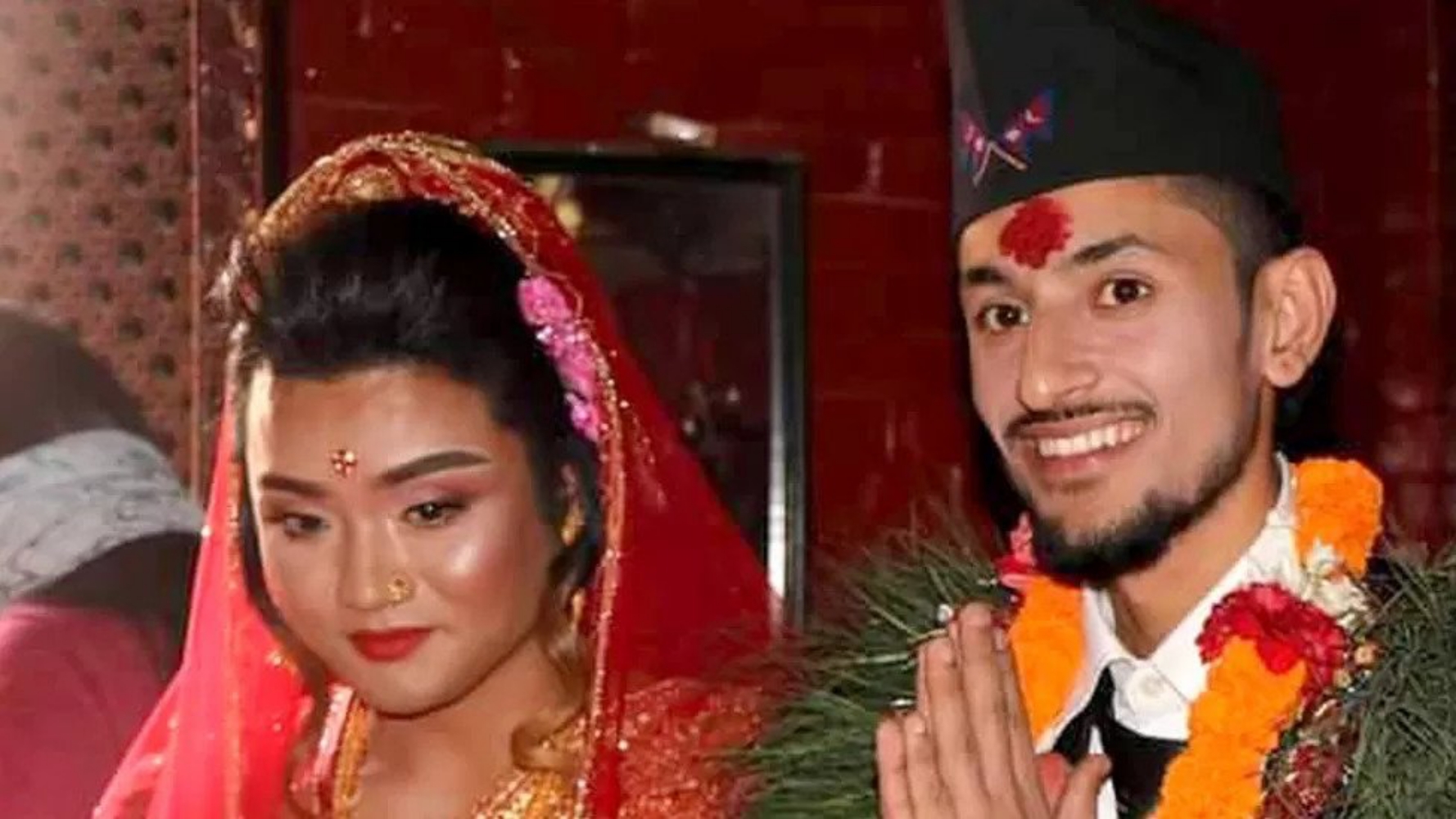
The LGBTQ+ community hailed a historical breakthrough in their rights on 28 June as Justice Til Prasad Shrestha of Nepal’s Supreme Court issued a temporary order to register same-sex marriages.
Ten days later as parties applied to the District Court to register their marriage judge Madhav Prasad Mainali of the Kathmandu District Court rejected the application for marriage registration. A sub ordinate court appeared to be defying a Supreme Court ruling.
The applicant Maya Gurung (legally named Ram Bahadur Gurung in court documents) filed a petition at the High Court Patan asking it to quash the District Court’s illegal order that stopped the registration of their marriage. Last week the High Court upheld the District Court’s ruling calling the refusal to register same-sex marriage legal. The High Court has predicated its decisions on legal procedure as opposed to substantive rights. There are also lawyers on both sides who believe in the human rights and equality of LGBTQ+ community but battle lines have been drawn on legal technicalities.
Supreme Court Justice Til Prasad Shrestha in an ex parte hearing ordered the Government of Nepal to make temporary provisions to register no-heterosexual marriages. ‘This came out of an ex parte hearing!’ several friends who are lawyers (and vocal proponents of LGBTQ+ rights) exclaimed, ‘It might be judicial over-reach’ one observed. Their comments are based on legal principles.
Ex parte hearings are hearings in which only one party to a case presents arguments and evidence to a judge. The other party is absent. An interim order through an ex parte hearing is sought when the matter at hand is urgent and there is no time to invite both parties to a case to hear the arguments and reach a decision.
Read also: One step forward two steps back on same-sex marriage
To take a hypothetical example, a person’s house is about to be knocked down by a commercial builder. The person may seek to challenge the decision to knock down her house. However, it takes time till the builder is served notice of the lawsuit and invited to court to make their counter arguments. In this instance an emergency interim order may be sought to ‘not knock down the house’ until the case is finally decided.
The question is, does the registration of non-heterosexual marriage qualify as an issue of urgency that merited an interim order issued by an ex parte hearing?
Marriage registration, unlike other civil matters, invites a complex web of legal repercussions. It affects laws on divorce, domestic violence, polygamy, adoption, child adoption, custody, property inheritance and property division amongst spouses. Barring domestic violence Nepali laws in all these matters only envision a spousal relationship between a heterosexual man and woman.
Justice Til Prasad Shrestha is not one to shy away from activism from the bench and issue bold orders. However, his order does not appear to have contemplated any of subsequent effects of marriage on issues of children, property or divorce. His order simply directs the registration of non-heterosexual marriages until subsequent laws are amended to accommodate rights of the LGBTQ+ community. Thus his ex parte order on an issue with expansive legal scope can resonate with perceptions that it is judicial over reach.
The Supreme Court order is also issued for the Government of Nepal to make provisions to register same-sex marriages. It is not explicitly issued to the District Courts that are charged with the authority to register all marriages in Nepal. It is a legal technicality but one that is important as it does not compel any courts in Nepal to follow the order. It is a pronouncement for the executive government not the judiciary was one of the arguments presented by a government attorney who defended the Kathmandu District Court’s decision at the High Court. This argument was upheld in the High Court’s ruling.