
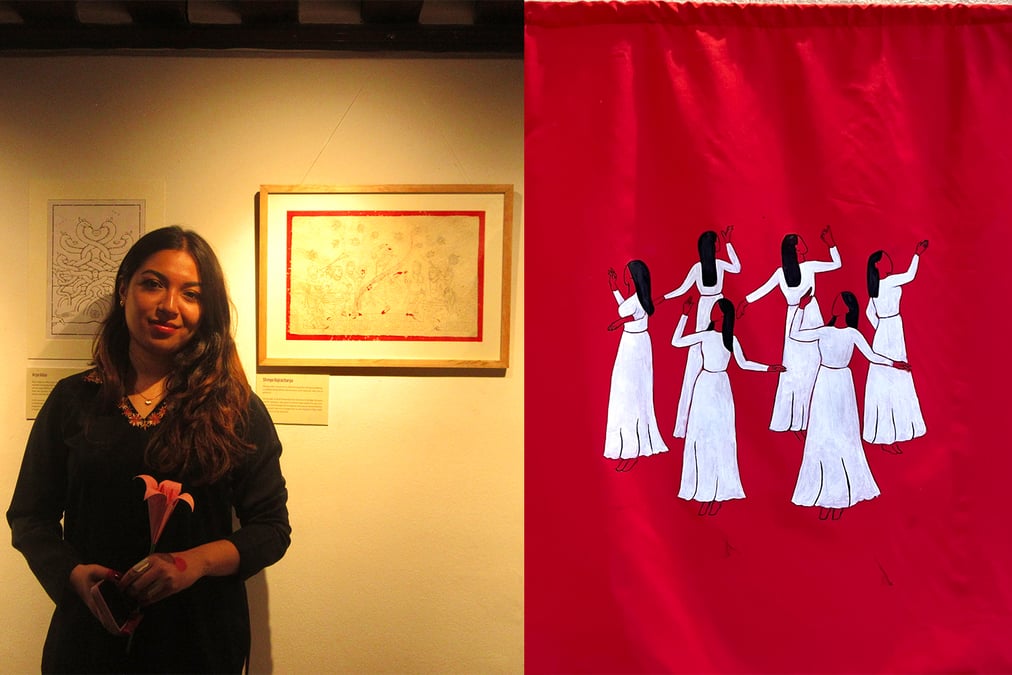
As a young girl growing up in a Newa household, Shreya Bajracharya was always drawn to the vibrant red colour painted on the toes and fingers of family members during important life and death rituals.
Over time, that curiosity grew into desire to explore its possibilities beyond ritual use. Now 22, the art student has turned it into a medium for contemporary fabric art.
Locally known as ala, it is a red pigment made after mixing red powder with water, which when applied on the skin and nails leaves lasting red stain. Red is an auspicious colour, and ala is applied to women’s hands and feet during rituals such as ihi, gufa and weddings.
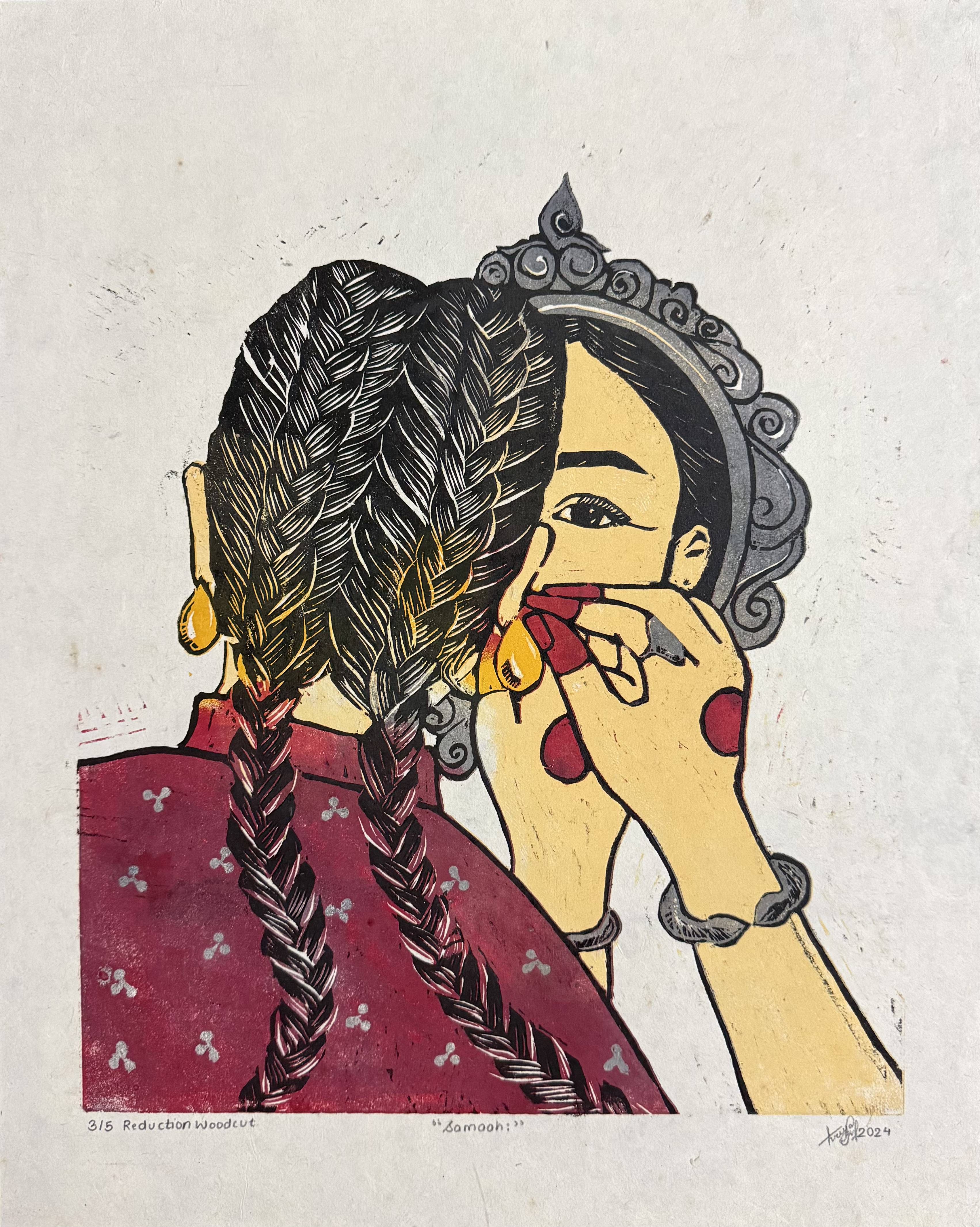
During mourning rituals, a traditional manicurist and pedicurist known as a nauni clips the nails of family members and applies ala to their hands and feet as part of a purification practice. Ala is also believed to have antiseptic properties.
Because the colour red is central to many Newar rituals and traditions, Bajracharya says she was always attracted to red visuals. She especially looked forward to wearing ala on special occasions.
This cultural familiarity came together with early interest in making things by hand. She says, “Art and craft have been a part of me since childhood. Seeing my mother doing crochet work inspired me to take up art.”
The artist since age 10 has been performing Charya Nritya, a dance form that originated in the Buddhist Newa community of Kathmandu traditionally practiced by Bajracharya priests. Charya nritya includes devotional songs and mudra that help dancers embody various deities.
Bajracharya had always toyed with the idea of melding this traditional dance with her art, and it was during the pandemic that she finally found the space to give that idea shape. She enrolled for a Bachelors in fine arts and began developing paintings that connected movement, ritual and memory.
“Whenever I imagined Charya Nritya in a physical form, it appeared red to me. That is when I decided to incorporate the dance into my art,” says Bajracharya. “I also wanted people to know about Charya Nritya.”
Bajracharya has practiced Charya Nritya since grade 7, making it a part of her life for nearly 10 years. She also performs the dance form at events and special occasions when invited.
While exploring her skills during a course assignment that allowed students to work with any medium or art form, she decided to use ala in her artwork. She began painting Charya Nritya mudras with ala on plain white fabric.
“I always wanted my creations to be transparent and flowy, not rigid. And the format fit perfectly,” says Bajracharya.
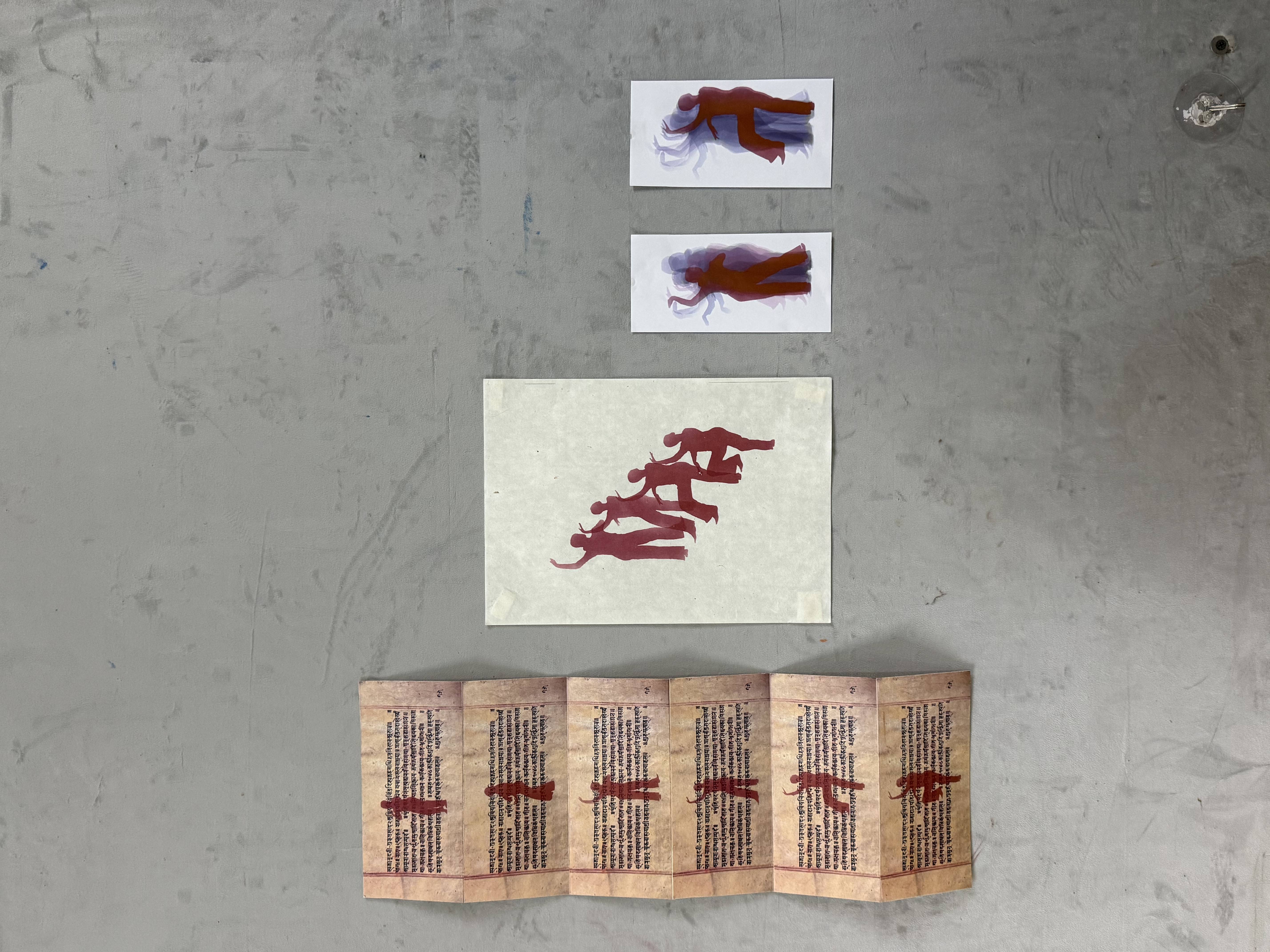
A final-year fine arts student at Kathmandu University, Bajracharya is majoring in studio arts. She also has a group exhibition coming up later this month, where she will also exhibit works that do not use ala.
Either in dance or art, her specialty is human figures and movement, while she continues to explore and experiment with this one-of-a-kind contemporary art form.
“Ala has become a part of my identity,” she says. “It is an art form that I will continue working with and exploring in the future.”