
 KIRAN PANDAY |
The president of the Traditional Religion and Culture Protection Committee lives up a narrow alley opposite the western gate of Pashupatinath. Shiva Sharan Rajbhandari does not seem to be a particularly hurt or angry man. The temple bhandari is clearly enjoying being in the limelight, is enthused by the support of "Hindus across the world" and thrilled at pushing the Maoists on the defensive.
Meeting him with an Indian television news crew is revealing, for it shows the symbiotic relationship between the jingoistic Delhi based channels which have blown up the issue and the local protestors.
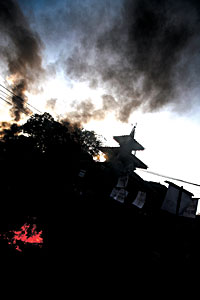
Rajbhandari was all charm with the Indian reporters. He offered tea, took down numbers ("Can I call you if something happens here again?"), spoke in Hindi and then English for the network's different channels, posed on the terrace, and guided them to the next protest. "Tyres will burn, it will look good on tv," he winked.
The reporters played along, focusing on responses that said the Maoist intervention was a "threat to Hinduism" and asking constantly if it was an anti-India move.
Some distance away, the Gaushala road was blocked. Middle aged and young men in tight jeans and caps, the same ones you see during every road block, were negotiating with the police about what to burn. Starting with about 50 people, they began chanting slogans asking for Prachanda to "be hanged" as soon as they saw tv cameras. The crowd swelled to about 400 as speeches began.
So what has this drama been all about? Here is what the bhandaris said: this is a political intervention in temple affairs, there was no need for the Maoists to break with tradition in the appointment of priests, the allegations of corruption are false, the status quo should be restored.
The Maoists and temple administrators countered: the Indian priests had resigned voluntarily, what was wrong in getting qualified Nepali priests when the core issue was having a transparent financial system. They said Rs 30-35,000 was now being deposited daily while no one had any clue where the money went earlier.
Privately, pro-Maoist temple authorities said their mistake was in opening two fronts at the same time: appointing new priests and tackling the finances. They said the row had been played up by those who were scared of losing the chance to skim off the money.