
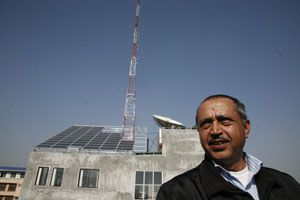
Aptly named Ujyaalo Ghar (Bright home), the four-story building is powered by 10 KW solar panels which caters to the energy needs of its 60 employees, enabling round the clock media production for both radio and internet. “Going solar had been our long overdue plan since we moved to our new building and the switch has finally given us the much needed stable electricity,” says Gopal Guragain, director of Ujyaalo, of the month old hybrid solar system.
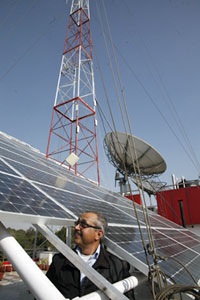
According to Guragain, Ujyaalo Ghar was designed with sustainable use of energy in mind. The building is not just solar powered but also harnesses rain water to replenish ground water. “We want to be as energy efficient as possible,” he says.
With ample sunshine this winter,things have been good so far for the new converts to solar power. “Even on cloudy days, enough power is generated to last us throughout the day,” says Guragain, who is more than happy about the hassle free solar panels that will last for the next 15-20 years. “The initial investment might be high, but the returns far outweigh the cost,” he says.
See also:
Bright spots
Kathmandu has become a city that sleeps before nine at night. The streets are practically deserted as dusk sets in, and thanks to load shedding, the street lights render no help. However in the past few months major intersections of the city have become dotted with new solar powered bus stops that lights up the city even during the pitch dark hours of load shedding. It is the brainchild of Shine Exhibits, an infrastructure development company, that set up these bus stops with 180-watt solar panels with a six-volt battery and LED lights. “Many companies are now eager to advertise in these bus stops which has assisted the public during night travel,” says Harish Agarwal of Shine Exhibits. The company has already set up 15 such solar powered bus stops, and plans to add more in the next few months. The revenue generated from these bus stops goes back into their maintenance.