
 |
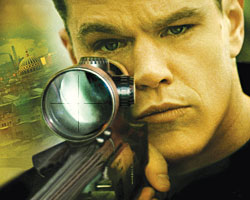
The Bourne Ultimatum, the third offering in the Bourne series, is distinguishable from its predecessor only in a matter of degrees. Jason Bourne once again attempts to piece together his past, while the nervous CIA attempts to eliminate him. Director Paul Greengrass has honed his craft from his previous projects, giving us more of what made the previous incarnation so successful. And Matt Damon has perfected the silent morose poses-leaving you to read all sorts of weighty and troubling thoughts on his furrowed brows and unsmiling face. Bourne is the Bond of our time: a glum, gritty, reluctant killer as opposed to the slick and glamorous spy of yesteryear.
Ultimatum engages both in a kind of escapism and fantasy: on the one hand the war on terror is banished to the faint margins of the frame; on the other hand, the CIA is fantastically equipped in tracking a determinedly elusive character (a certain turbaned bearded Saudi notwithstanding). And yet, the present situation in Iraq creeps into the film, albeit obliquely, mostly presented by the ripostes lobbed back and forth in the CIA war room that mirror the right and the left in American editorials and talk shows. For instance, the villainous Deputy Director of the CIA (David Strathairn), embodying the hawks' position, admits "mistakes were made" at the censure of subordinate Pamela Landy (Joan Allen), a tough blonde soft on Bourne (Hillary for president?), but chides her "armchair criticism". The flashbacks Bourne suffers are also loaded with images like hooded figures resonating with Abu Ghraib and other sundry torture scenes, and reflect the amnesia that seems to inflict the American populace. This kind of veiled political criticism is almost a habit for films coming out of Hollywood, as if the filmmakers feel that their audience needs a spoonful of sugar for their political analysis to go down.