
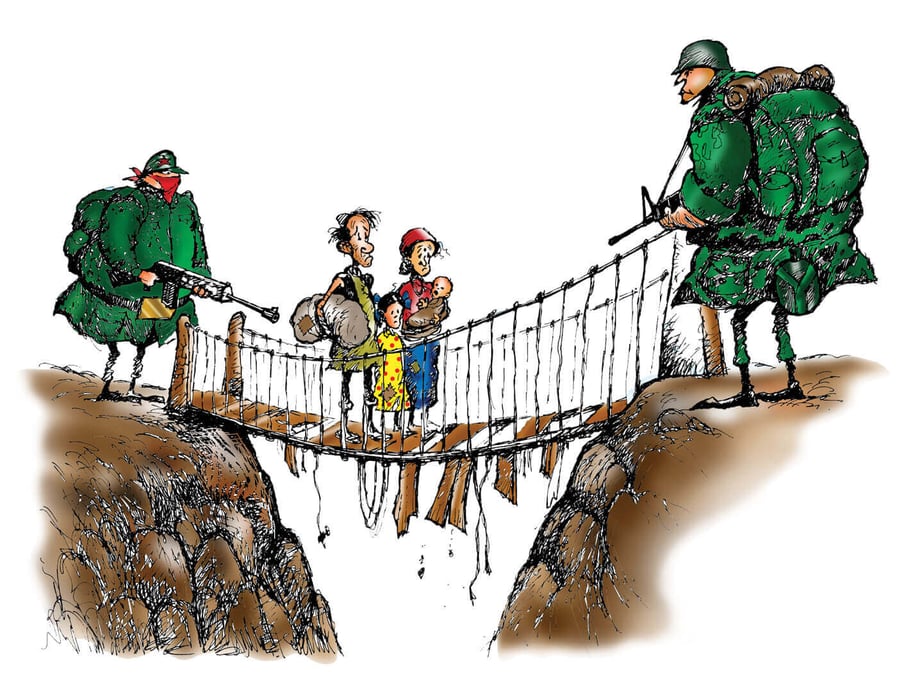
United Nations experts have criticised a bill to amend Nepal’s transitional justice law that would allow those responsible for war crimes to get off scot free.
The bill is before Parliament in Kathmandu, and if it goes into law would prevent the investigation of crimes including rape, murder, torture, war crimes, and crimes against humanity that were committed during the conflict, the UN experts say.
They say the draft law violates the government’s international legal obligations, as well as the rulings of Nepal’s Supreme Court, adding that truth and accountability risks being set back by years.
Read also: Nepal’s Transitional Justice and the West’s recalibration, Kanak Mani Dixit
Nepal has two transitional justice bodies, which have received more than 60,000 complaints relating to the 1996-2006 Maoist conflict since they were established in 2015. Not a single one has been completed.
The process has been stalled since a 2015 Supreme Court ruling struck down key parts of the transitional justice law establishing those bodies, especially over sweeping amnesty provisions. The UN also found in 2014 that the law that established these bodies does not meet international legal standards.
The new bill, which is before parliament, is supposed to restart the process by amending the law. The UN experts welcomed “some positive aspects introduced by the Bill, such as … examin[ing] the root causes of the conflict and recommending institutional reform, as well as guaranteeing victims’ right to reparation.”
But they warned adopting it would “place Nepal in contravention of its international human rights obligation to investigate and punish serious human rights violations, as well as the ruling of the Supreme Court.”