Ten years later, it doesn’t seem to matter which side killed them. Whether they were disappeared by the Army, or tortured and killed by the Maoists, the un-ending grief of the parents they left behind is the same.
The only difference seems to be that some were killed because they were fighting for a cause and others were innocent civilians who had nothing to do with the conflict. Nearly 17,000 Nepalis were killed in the ten-year war that began in February 1996 and 1,400 are still missing. Most of them were young men.
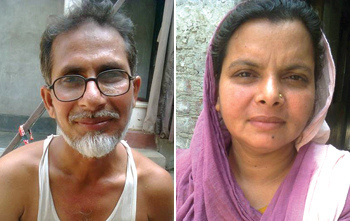
Kajal Khatun was eight years old, she was travelling from Kathmandu to Birganj with her uncle when the Maoists torched their bus in Bhandar of Chitwan in February 2002. “She would have been 19 now,” says Kajal’s mother Rajita, wiping her eyes, but she has no tears left. Kajal’s father Haider used to be a tailor and is now jobless. The family received no compensation. Surprisingly, neither Haider nor Rojita harbour any sense of revenge. “If the Maoists mend their ways, we might even vote for them. But it doesn’t look like they will,” says Haider.
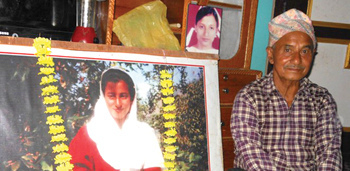
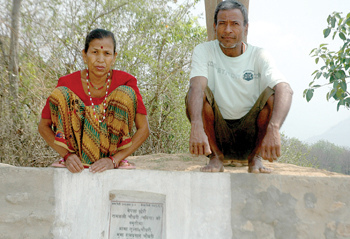
Sharada Shrestha was always smiling and because she sang well, was popular in the village even among non-Maoists. She was a member of the rebel cultural group in Chitwan and was travelling to Palpa in June 2004, when she was captured by the Army, and her body dumped into the Seti. Sharada’s father, Narayan, is 74 and tried to tell himself his daughter died for the country’s future. But he is no longer so sure. “So many Nepalis died for their country, let’s hope they don’t have to die anymore,” he says.
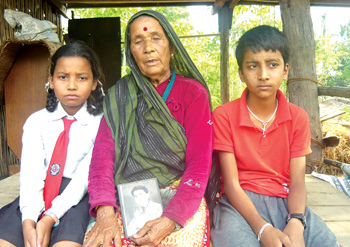
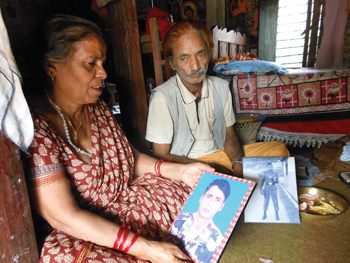
All that Mana Kumari BK has now are her two grandchildren. Her son, Barun, was killed by the Army in 2003 and they buried him behind her home in Morang. The family migrated to Pune in India, but didn’t like it there. Mana Kumari’s husband died last year and now she takes care of her grandchildren from the money Barun’s wife sends from the Gulf. “They should have killed me instead,” says Mana Kumari, “those who killed my son are now rich. Wish I could meet them and tell them what they did to us.”
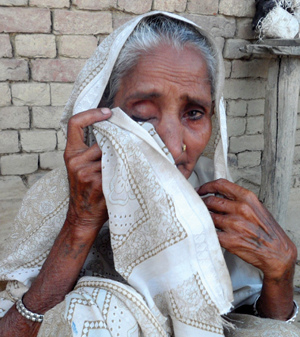
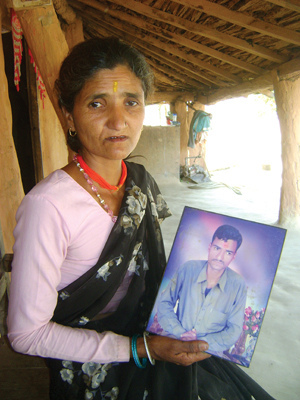
Kailashwati Yadav was proud of her son, Sohanlal, who was respected in the entire community for his generosity. The Maoists took him away while they were having dinner. Kailashwati watched as they hacked his legs with an axe and slashed his neck with a khukuri. He was rushed to hospital, but didn’t survive. When they returned from the funeral they found the Maoists had blasted their home and captured their land. Kailashwati still looks at her son’s picture several times a day. “His soul would rest in peace if his murderers were brought to justice,” she says. The Maoists admitted they executed Sohanlal, but now say it may have been a case of mistaken identity.