
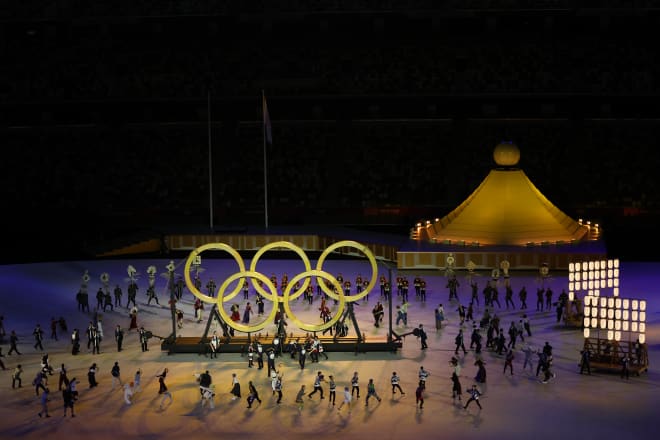
Kaori Yamaguchi, an Olympic medalist in judo and an executive member of the Japanese Olympic Committee, made an astonishing statement – astonishing, that is, for an Olympic official. She said that Japan had been “cornered” into holding this year’s Games during a pandemic: “What will these Olympics be for, and for whom?
The Games have already lost meaning and are being held just for the sake of them. I believe we have already missed the opportunity to cancel.”
She is not alone. A top Japanese medical expert warned that the Games could trigger fresh Covid-19 outbreaks, and that going ahead under present conditions would “not be normal.” Over 80% of the Japanese population want the Games to be either postponed or canceled. The Asahi Shimbun newspaper, an official sponsor of the Games, has urged the government to abandon the enterprise. If the Games do go ahead, which seems most likely, the events will take place in mostly empty stadiums built at huge expense.
Yamaguchi’s question is a valid one. For whom are the Olympics? The athletes already have ample opportunity to compete in all kinds of international championships. And the Japanese should not pay the price for entertaining television viewers. Perhaps the Games are for Japanese politicians who hoped the spectacle would burnish their prestige, or for the fat cats of the International Olympic Committee (IOC), those blazered worthies who believe their juggernaut’s interests should trump those of everyone else?
The question of what the Olympics are really for has haunted the Games ever since Baron Pierre de Coubertin “revived” them in Athens in 1896. The Baron, like other French conservatives at the time, was worried about national virility, especially after losing the war against Prussia in 1871. He thought competitive sports would be the answer to the shortcomings of French manhood.
Apart from restoring French masculinity, Coubertin also hoped that an international sporting event would promote peace by bringing the world’s peoples together. Like World Fairs and Boy Scout Jamborees, the Games would encourage international friendship as well as patriotism. After clean and fair competition, the healthiest specimens from many nations would march together to a better future.
Charles Maurras, the far-right ideologue who joined the ultra-nationalist Action française, ridiculed Coubertin’s idealism at first. He despised the idea of international friendship. But then he changed his mind. Competing on track and field would make people from different nations hate one another even more. And that, in his view, would be a very good thing.
In the end, neither Coubertin’s idealism nor Maurras’ cynicism prevailed. World peace did not come about, but wars were hardly the result of national partisanship in sports stadiums. The hollowness of Coubertin’s pretensions became pathetically clear when his shaky voice extolled the virtues of friendship and fair play at the Berlin Olympics in 1936, as Hitler and Goering sat smirking in their luxury seats.