The world’s most vulnerable people are already bearing the brunt of the climate and nature crises. Climate change- and weather-related disasters have increased 40% over the last 20 years, and those disasters are being felt mostly in developing countries.
Despite Nepal’s negligible contribution to global greenhouse gas emissions, the country is highly vulnerable to climate change and is ranked as the 10th most vulnerable country in the global climate risk index 2021.
This vulnerability is compounded by its unique geography, socioeconomic factors, including increasing pressure on natural resources ultimately impacting nature and people. Nepal is facing increasingly severe water-induced disasters and hydrometeorological extreme events such as droughts, storms, floods, landslides, debris flow, soil erosion, and avalanches.
Between 1971 and 2019, on average 647 people died in Nepal each year because of climate-induced disasters such as floods, landslides, epidemics, and fires. Furthermore, these disasters have caused significant human, economic and environmental impacts.
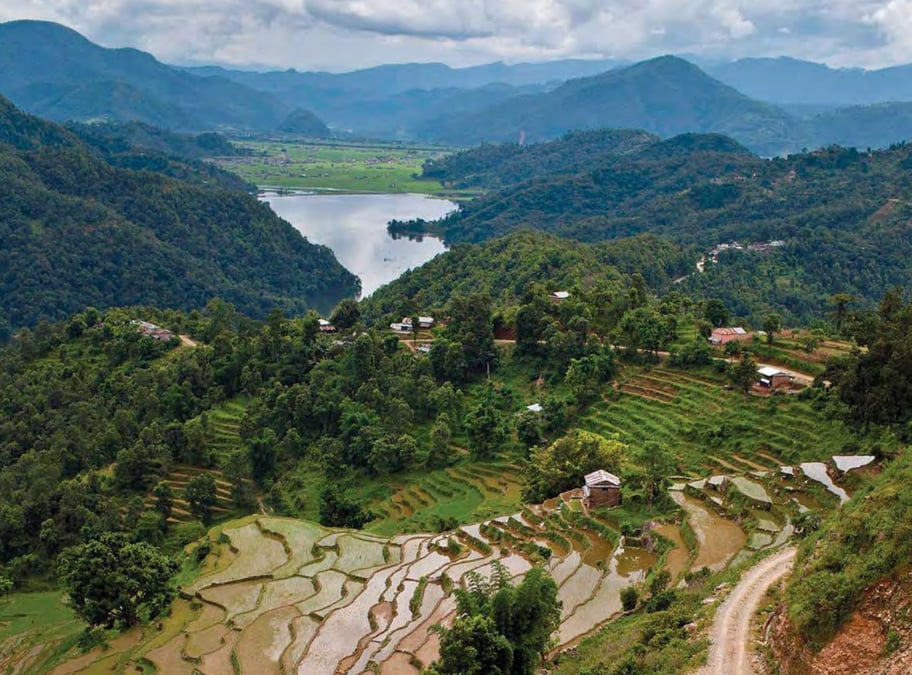
In Nepal, 50% of the population relies on livelihoods such as agriculture, forestry and fishing that are directly impacted by the climate variability. Climate threats to these livelihoods drive rural to urban migration, leading to the rapid acceleration of unsustainable land development and increasing economic desperation for those left behind in rural areas.
According to the National Adaptation Plan of Nepal, the future economic cost of climate change is projected to be between 2 to 3% additional losses of Gross Domestic Product (GDP). Humanitarian needs are likely to grow at an extraordinary pace due to climate change, outstripping the resources available to respond to climate-related disasters and emergencies.
Climate change is a complex issue having a far-reaching impact across many sectors inter alia impacts on agriculture and food security, forest and biodiversity, natural disaster, health, drinking water and sanitation etc. with manifestations as cross-cutting impacts.
Changes in temperature and precipitation is showing visible impact on shirking of glaciers, snow cover and increase in frequency of water related hazards which can severely affect energy production and water dependent livelihoods.
The disadvantaged groups are bearing the burden of the increasing trend of damage to shelter and infrastructure, malnutrition and diseases, displacement of communities, loss of productivity in agriculture, etc.
With all these phenomena, nature’s contribution to humanity is weakening and our chances to promote a well-balanced development where people and nature live in harmony are deeply undermined.
However, we are not helpless in the face of climate and environment related disasters. There is much that we can do to mitigate the impacts, to adapt to a warming world, and to build resilience among communities on the front line of the climate crisis. We can work together with nature to protect people.
In addition to sharply reducing greenhouse gas emissions, transformational nature-based solutions are one of the most powerful tools we have at our disposal to help protect communities against disasters and increase their ability to adapt to a changing climate. Such solutions have proved successful in Nepal, they include forest restoration, water source management, wetland rehabilitation, river-bank plantations etc.