
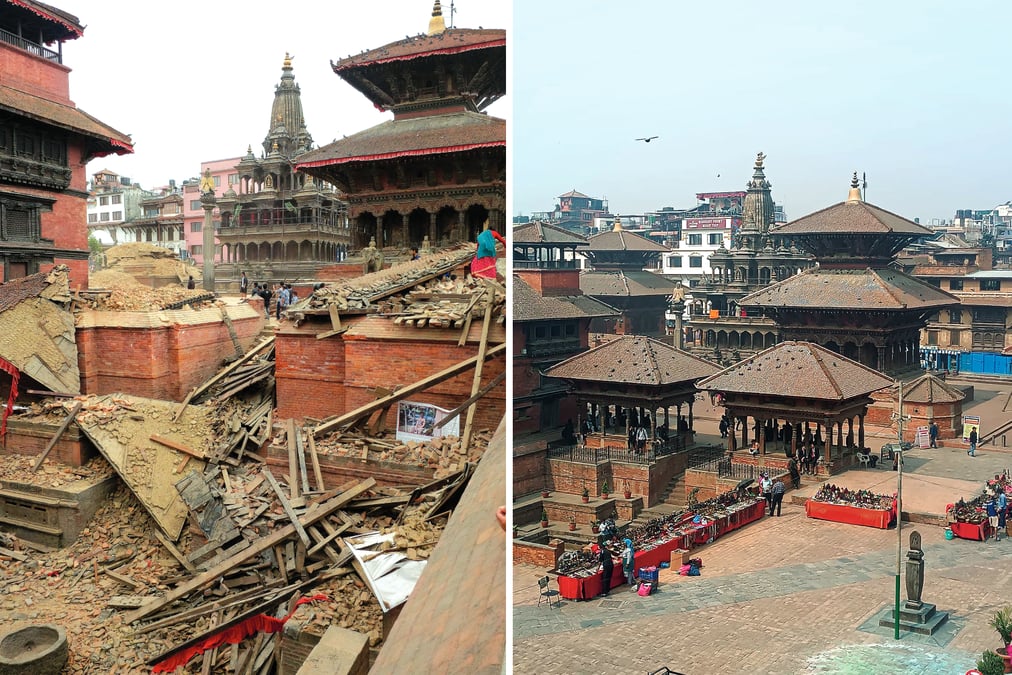
On 15 January 2015 on National Earthquake Safety Day, an Editorial in Nepali Times titled ‘Preparing To Be Prepared’ warned: ‘When (not if) the next earthquake strikes Nepal, don’t ask what the government can do for you, ask what your community can do for itself.’
Just over three months later, Kathmandu was struck at 11:56AM on 25 April by a 7.8M earthquake epicentred in Gorkha. Nearly 9,000 people were killed, tens of thousands wounded, and entire neighbourhoods were destroyed.
There were tragic scenes in the immediate aftermath, followed by days of uncertainty, rumours and disinformation. But it was the same community spirit cited in the Editorial that helped Nepalis pull together to get through the calamity.
Relief groups sprang up spontaneously through the Internet to rush relief and help survivors to rebuild. Government agencies that were initially slow to respond ultimately stepped in.
The Nepal Army, APF, and Police pulled out most people from the ruins, even though international search and rescue teams got most high profile media coverage.
It was clear from the outset that despite the loss of life and the destruction, things could have been much worse. Had it not been a Saturday, schools would be open and filled with children. Nearly 35,000 class rooms in 7,000 schools in 14 districts were destroyed.
Read also: Lessons not learned from 2015, Sonia Awale
Even if there were only 10 children per class, a mind boggling number of students and teachers would have been killed.