The Maoist war was at its peak, the rebels were attacking one district headquarters after another, people were being disappeared, Nepalis were killing fellow Nepalis.
King Gyanendra had dismissed Prime Minister Sher Bahadur Deuba for failing to hold elections and negotiate with the insurgents. By this point, the Maoists were also organised into the People’s Liberation Army (PLA), a centralised military force with battalion-level formations. The eastern division was led by Nanda Kishor Pun (later vice president), and the western division by Barshaman Pun (later finance minister).
The night of terror which has since been dubbed the Battle of Beni started at 10:30PM on Saturday, 20 March, and the fighting continued until 6AM the next day.
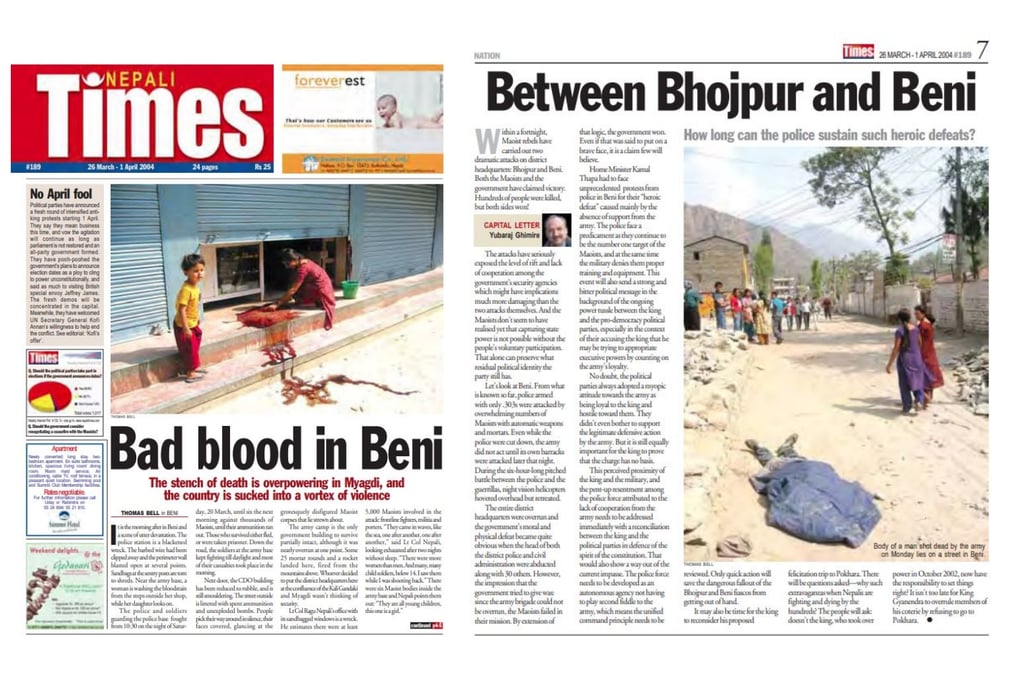
Soldiers and police guarding the police station fought until ammunition ran out, the CDO building next door was reduced to rubble, and the army camp was the only government building standing, albeit barely.
Thomas Bell, a Kathmandu-based correspondent for the Daily Telegraph, was one of the first foreign journalists on the scene, and had a dramatic eyewitness account in Nepali Times issue #189:
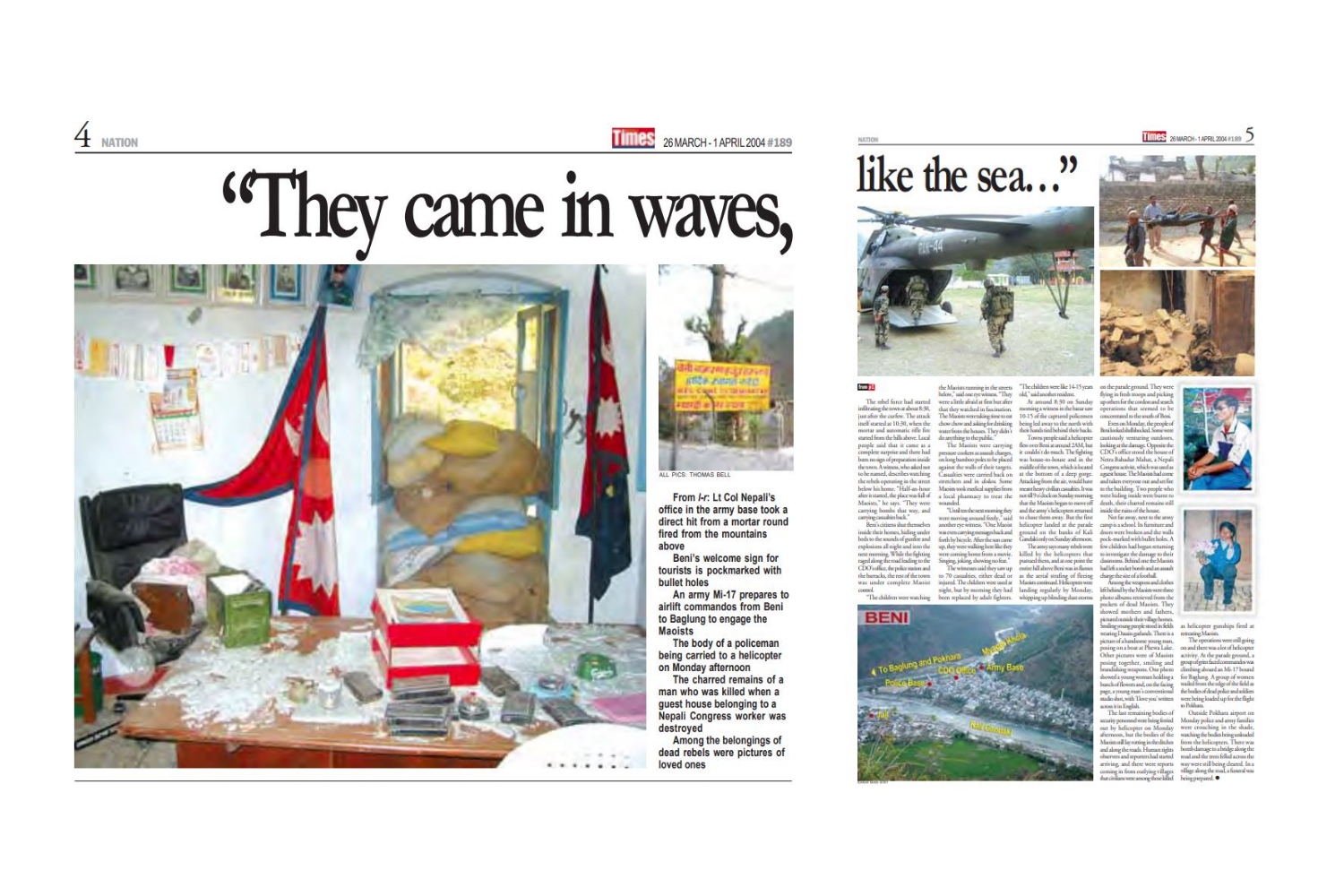
‘Lt Col Ragu Nepali’s office with its sandbagged windows is a wreck. He estimates there were at least 5,000 Maoists involved in the attack: frontline fighters, militia and porters.
“They came in waves, like the sea, one after another, one after another,” said Lt Col Nepali, looking exhausted after two nights without sleep. “There were more women than men. And many, many child soldiers, below 14. I saw them while I was shooting back.” There were six Maoist bodies inside the army base and Nepali points them out: “They are all young children, this one is a girl.”…