Fifteen years after a post-conflict Constituent Assembly abolished Nepal’s monarchy, growing public discontent with the successive governments is fuelling a drive to restore the country’s Hindu monarchy.
There were last-ditch attempts to retain the monarchy in some form, but the assembly voted on 28 May 2008 to turn Nepal into a federal, democratic and secular republic. King Gyanendra held a chaotic press conference at Narayanhiti Palace and drove off to his residence, where he has remained a private citizen since.
It was Nepal’s own ‘velvet revolution’--the country went from monarchy to republic without the king being hounded into exile or executed. And Gyanendra, till recently, has not made any overt political statements.
But with the rise of the Hindu-right in BJP-ruled India, the ex-king has been attending large pro-monarchy rallies by the RPP possibly thinking that the time is now ripe to sit on the Serpent Throne for the third time.
Journalist Kiran Nepal attended Gyanendra’s last press conference at the palace in 2008, and remembers how the palace guards abandoned their posts and media colleagues rowdily wrestled to sit on the royal chair to take photos.
“The chaos after the king left the room was a striking illustration of what was to come, and I remember thinking--is this the country’s future under republicanism?” Nepal recalls.
Indeed, although there have been 13 governments since the abolition of monarchy, most of the politicians are the same. Pushpa Kamal Dahal is Prime Minister for the third time, his coalition partner Sher Bahadur Deuba has been premier five times, the opposition UML’s K P Oli has also led the country three times.
Most Nepalis say there is little to show for Nepal becoming a federal, secular republic. War crimes and high-profile corruption cases go unpunished, the president pardons a murderer serving a life sentence. Nepalis have one of the lowest per capita income in Asia, and half of all Nepalis in the 20-45 age group are working abroad--yet the government does not want to give them the right to vote.
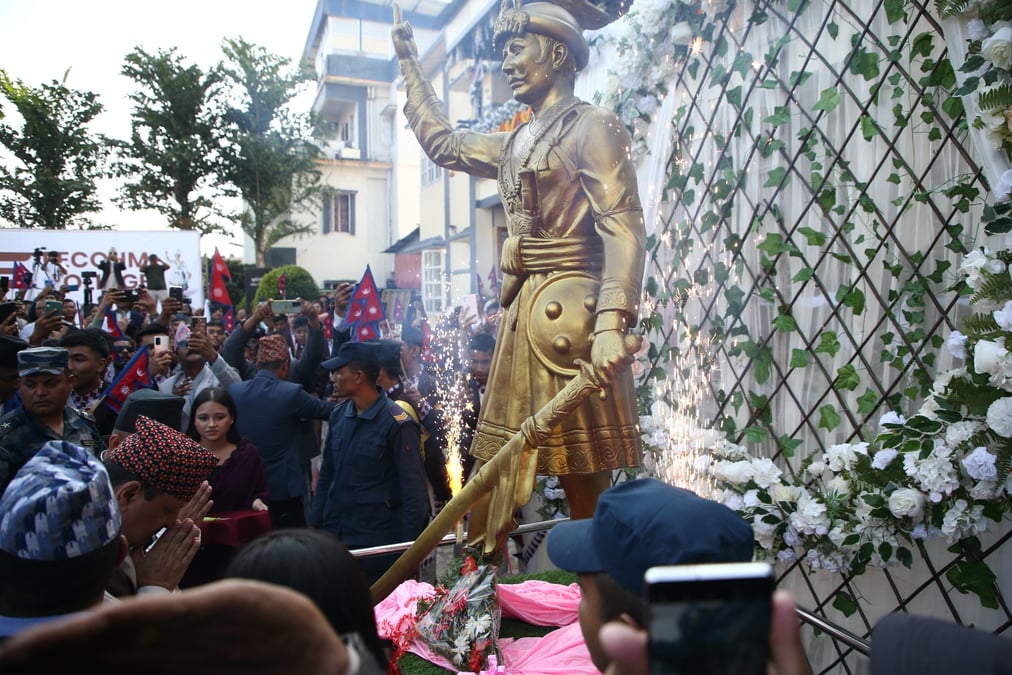
Besides those who genuinely feel that Nepal should have never abolished the monarchy, there are unsavoury characters who have also latched on to the bandwagon. A pro-monarchy demo last week in Kathmandu was organised by a bank defaulter who rallied others like him. Gyanendra kept away from this protest, travelling instead to attend the installation of a statue of Prithvi Narayan Shah in Jhapa organised by Rajendra Lingden of the Rastriya Prajatantra Party (RPP).
Lingden and former journalist Rabindra Mishra of the RPP believe Nepal needs a strong symbol of national unity embodied by a king. They point to the long queues at Gyanendra’s tika ceremony this Dasain, comparing that to the few who attended the President’s ritual down the road.
While keeping in the background, Gyanendra manages his social media presence to appeal to young Nepalis with clips of himself dancing to nationalistic songs at popular nightclubs. Even in Communist strongholds like Bhaktapur, there are large flag-waving crowds coming out to welcome him.
Read also: Street politics, Shristi Karki
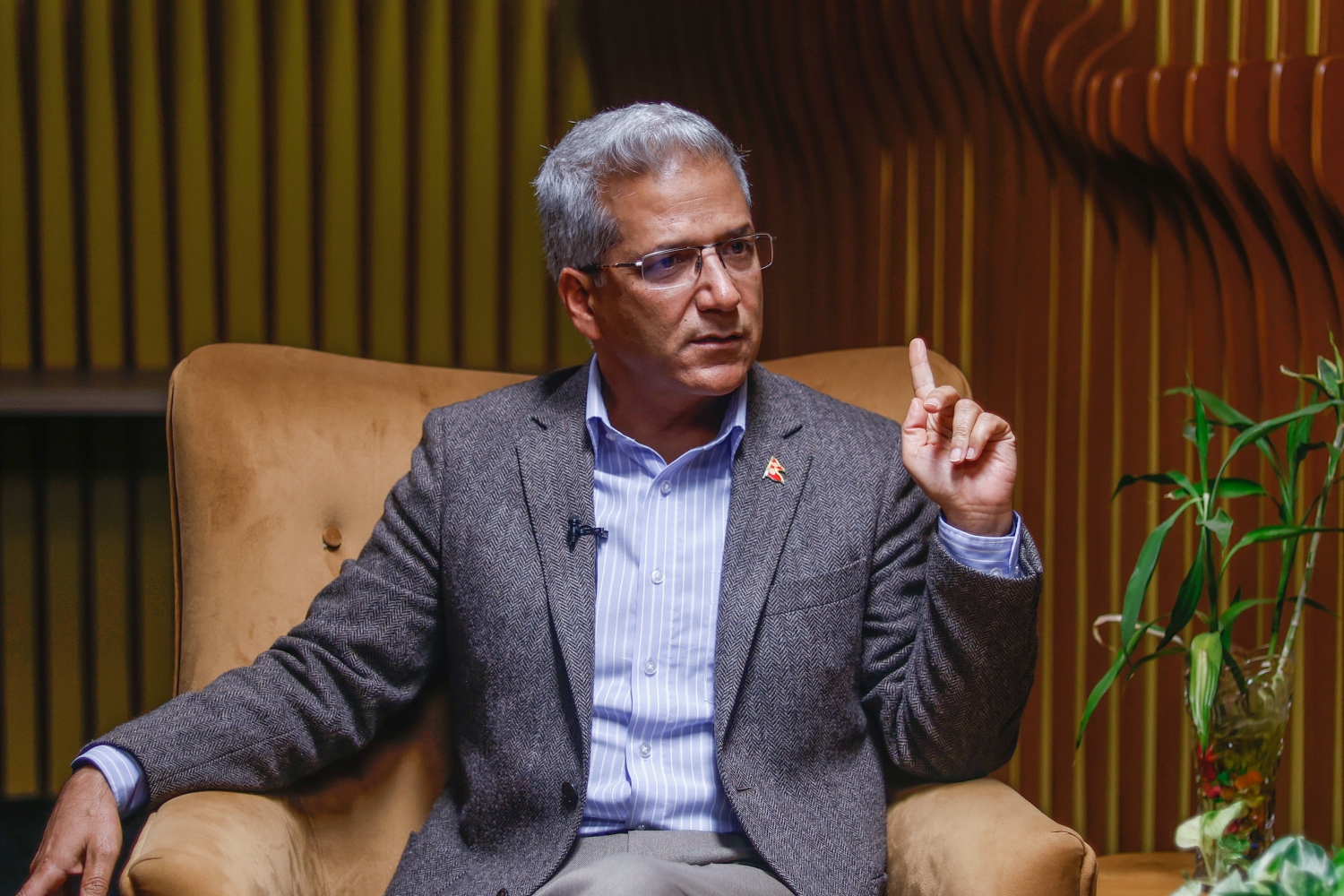
“I strongly believe in preserving the institution of the monarchy because the country's future might be jeopardised without it,” the RPP’s Rabindra Mishra told us. “Prachanda’s ideology is taking the country into decline.”
Although past public opinion polls have shown that a majority of Nepalis would want Nepal to revert to a Hindu state, it is not clear if there is similar support for the restoration of the monarchy because of the persona of Gyanendra and his son, Paras.
Support for a Hindu state is due to most Nepalis taking the Nepali translation of secularism (धर्मनिरपेक्षता) to mean atheism, as well as the perception that there is rampant proselytisation by evangelical Christians.
Into this mix, add geopolitics. Nepal’s federal, secular republican Constitution was guided by India’s centre-left parties. But since then New Delhi has seen regime change, and while foreign policy architects there may not necessarily want Nepal’s monarchy back, the BJP (with an eye on elections next year) may not be averse to erasing ‘secular’ from the Constitution.
Gyanendra has been visiting India often, and on his last trip had a meeting with Uttar Pradesh Chief Minister Yogi Adityanath, who is also the high priest of the Gorkahnath monastic order linked to the kingdom of Gorkha, the seat of the Shah dynasty.
Even though nearly 80% of Nepalis say they are Hindu, says Kiran Nepal, it is different from the political Hindutva spreading in India. Secularism was added to the Constitution to defuse ethnic tensions that arose while demarcating and naming the new provinces. Reverting this process may lead to instability in Nepal.
Perhaps the person most responsible for Nepal becoming a republic is Gyanendra himself. Historians have noted that before 2008, Gyanendra was presented with various proposals under India’s ‘twin pillar’ policy to retain a ‘cultural monarchy’ or under a ‘baby king’ formula.
Rabindra Mishra concedes: “His refusal to accept those options undeniably led to the end of the monarchy, influencing the current trajectory of our nation. But the former king is someone who has love, passion and aspiration for his country and its people, he is not hungry for power and money. He should return.”
One of the foremost proponents of a secular republic was Maoist ideologue and one-time Prime Minister Baburam Bhattarai. He is increasingly worried that the political trends in India will affect Nepal, and wrote on X: ‘The return to a Hindu monarchy will plunge Nepal into a quagmire of counter-revolutionary instability which will also impact India.’