B P Koirala’s famous advice to fellow Nepalis was that they should not necessarily strive to be great. “Just try to be a decent person,” he used to say.
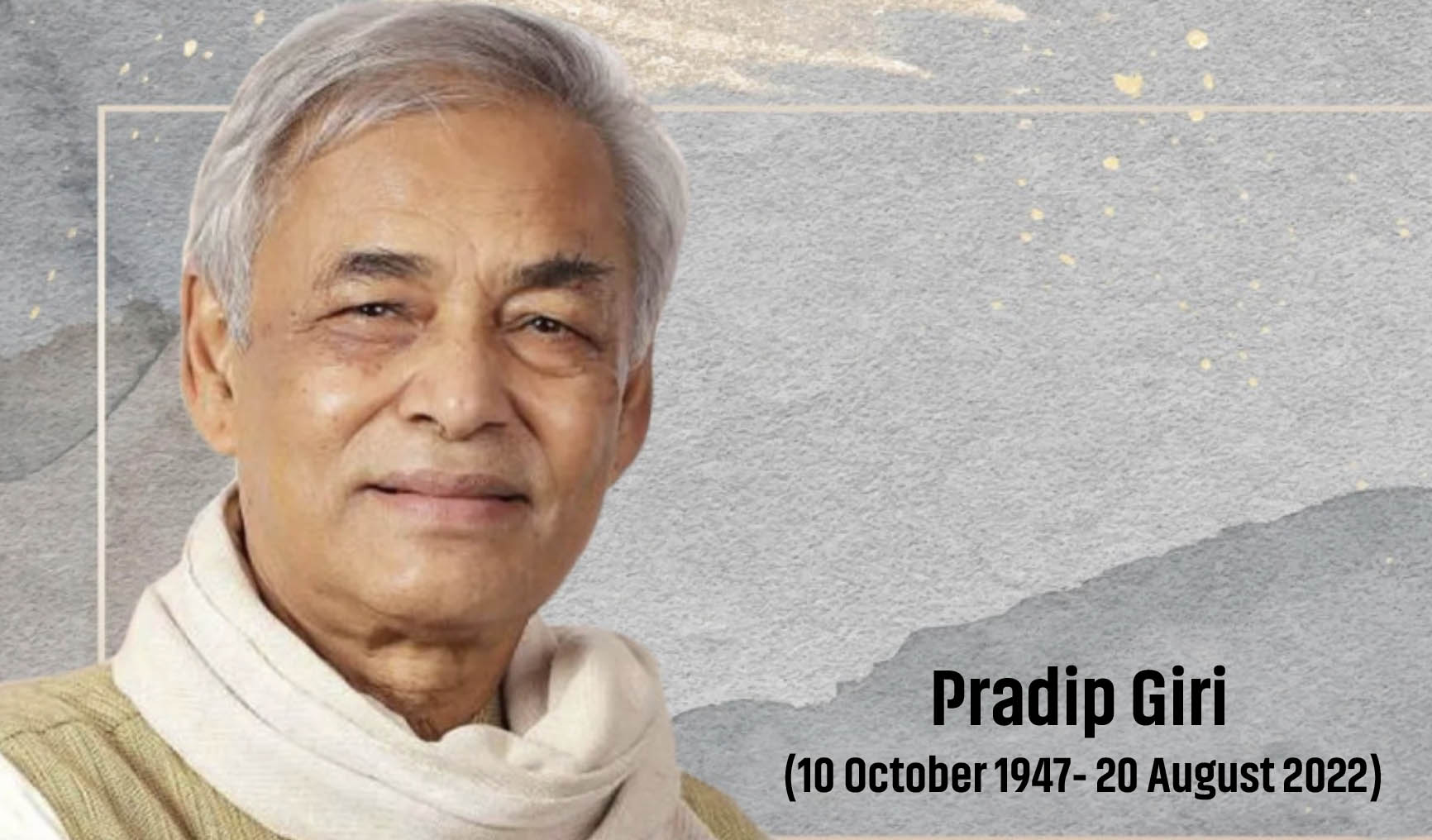
Many Nepali Congress (NC) leaders who succeeded B P continue to disregard that dictum, most so his own relatives. But one leader who took the sage advice to heart and lived it was Pradip Giri, who died in Kathmandu on Saturday at age 74.
Pradip Giri was an iconoclast, and a gentle giant of Nepali politics. He never craved power and position, preferring to remain behind the scenes to be the conscience of his party and nation. He was elected member of parliament several times, and always spoke up for those left behind by the Nepali state, refusing repeatedly to serve in government.
While in exile in Banaras during the Panchayat years, Giri fell out with the Koirala clan. And after B P’s death in 1982, he became closer to another Congress leader with whom he shared traits of austerity, humility and honesty: Krishna Prasad Bhattarai.
Ironically, it was throat cancer that prematurely claimed the lives of both Koirala and Giri -- 40 years apart. And just as he struggled for democracy, struggled to keep the Nepali Congress true to its social democratic roots, he struggled against the malignancy in Nepal’s body politic, and in his own body.
Pradip Giri is the last of a generation of Nepali politicians who witnessed India’s freedom struggle, and knew many of its post-independence leaders. He was inspired by Mahatma Gandhi to lead a frugal and honest life, and to adopt satyagraha as a strategy of nonviolent civil disobedience to confront the structural violence of the state.
When B P was imprisoned in 1960 and Nepal’s first democratically elected government was driven underground, Giri was arrested several times and cumulatively spent more than four years in detention.
After the restoration of multiparty democracy in 1990, Giri was elected member of parliament from his home district of Siraha, although he lost the seat in 1999. He drifted away from Girija Koirala, and joined the Nepali Congress (Democratic) of Sher Bahadur Deuba in 2002.
He was nominated to the Constituent Assembly, but disagreed on a matter of principle with the 2015 Constitution for not meeting the aspirations of the people of the Madhes.